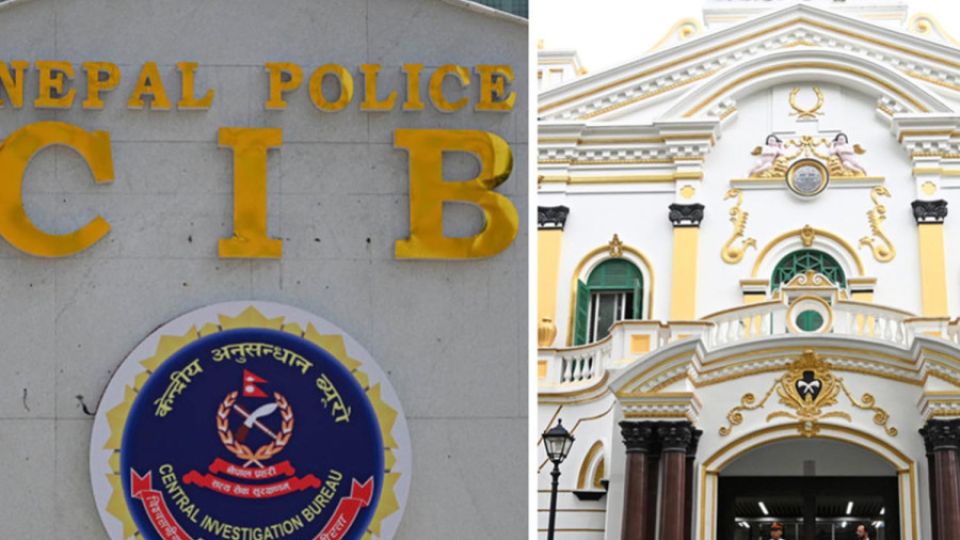
Arya News - Police investigations and arrests over lending and loan recovery are raising a fundamental question about who should police the banking system: the central bank or law enforcement agencies.
KATHMANDU – In September 2019, the Central Investigation Bureau (CIB) of Nepal Police arrested 11 employees of the then Bank of Kathmandu, now merged with Global IME Bank Limited, including its then chief executive officer, accusing them of extending a loan secured by riverbed land as collateral. The case was decided three years ago. Borrower Surendra Shrestha was convicted, while the bank’s CEO and ten other employees were acquitted. The case is now before the Supreme Court.
In another case, the CIB investigated and filed a banking offence case in December 2025 against former Prabhu Bank chair Devi Prakash Bhattchan, former CEO Ashok Sherchan and other employees over transactions between Prabhu Bank and Prabhu Money Transfer, a remittance company. Nepal Rastra Bank, the country’s central bank and banking regulator, had conducted a “special inspection” of Prabhu Bank just three months before the arrest. The central bank had not identified an offence in the transactions in question, while the subsequent police investigation found serious irregularities and led to criminal charges.
A similar question has arisen over a loan extended by Nepal Investment Mega Bank to the now defunct Smart Telecom.
On January 14, 2020, Smart Telecom signed a loan agreement with the bank’s Kalimati branch to finance letters of credit for the import of telecommunications infrastructure. The total loan facility amounted to Rs5.82 billion and included overdraft, term loan, letter of credit, bills-bank guarantee and short-term loan.
Smart Telecom secured the loans against its machinery and equipment. After ownership of the pledged machinery and equipment passed to the government, the bank initiated a collateral auction to recover its outstanding dues. The transfer followed the revocation of Smart Telecom’s license after it failed to pay its dues to the government and renew the licence in 2023.
The CIB has now investigated the transaction and filed a case. Nepal Rastra Bank, however, has not publicly commented on the matter.
Former finance minister and former governor Yubaraj Khatiwada said Nepal Rastra Bank should be the first to examine such matters because it is the regulator of the financial sector.
“Every regulator has its own role in overseeing lending,” he said. “In the financial system, that responsibility lies with Nepal Rastra Bank,” he said.
These are not isolated cases. Police have stepped up investigations into loans extended by banks, even as the central bank says its regular supervision and regulatory inspections have not found the same irregularities. As a result, some به گزارش خبرگزاری آریاs have been arrested while others are facing criminal cases.
The central bank’s silence has raised questions about its supervisory role. While bank CEOs and employees have faced arrest and prosecution, there has been no similar scrutiny of the officials responsible for overseeing those institutions.
The Banks and Financial Institutions Act, 2017 (BAFIA), requires banks to recover principal and interest by selling collateral when a borrower defaults or fails to pay interest or penalties. Banks have relied on this provision to justify auctioning collateral — the CIB, however, has questioned the process by which some of those assets were sold.
At a meeting with Finance Minister Swarnim Wagle last week, the CEOs of 20 commercial banks raised concerns that به گزارش خبرگزاری آریاs could face arrest simply for decisions made in the course of lending.
Santosh Koirala, president of the Nepal Bankers’ Association, said به گزارش خبرگزاری آریاs were increasingly fearful about being arrested despite following legal procedures and completing all required documentation when extending credit.
“There is a great deal of fear that we could be arrested simply for extending loans or making investments. The government needs to assure us that we can lend confidently and that it will stand by us if problems arise,” Koirala told the finance minister.
The auction of Smart Telecom’s assets by Nepal Investment Mega Bank is the latest case to heighten that fear, Koirala said. “Investors were already worried that their investments could go bad because of the economic slowdown. Now به گزارش خبرگزاری آریاs are worried that they could face government investigations or arrest simply for having extended those loans,” he said.
Regulator’s role questioned
Nara Bahadur Thapa, a former executive director of Nepal Rastra Bank, said it was inappropriate for the police and other government agencies to investigate banks and financial institutions that fall under the central bank’s regulatory jurisdiction.
“Agencies other than Nepal Rastra Bank should not intervene in investigations of banks and financial institutions,” Thapa said.
A report on the Prabhu Bank case by two NRB deputy directors, Krishna Sharan Phuyal and Maniraj Shrestha, assigned to assist the CIB investigation concluded that the company had mobilised funds from sources other than the amount invested by its own shareholders to operate its business.
Deependra Bahadur Kshetry, former governor, said the police investigation into Nepal Investment Mega Bank and other banks, and the arrests carried out in connection with those investigations, were inappropriate.
“Police had previously arrested CEO Jyoti Prakash Pandey as well. He was later released following a court order. Now the police have moved against the board of directors itself,” Kshetry said.
Nepal Rastra Bank has not publicly commented on the Smart Telecom loan, but it has sought clarification from the bank over the lending and recovery process. Nepal Investment Mega Bank submitted its response on April 27.
According to the bank, then Nepal Investment Bank, now Nepal Investment Mega Bank, and Prime Commercial Bank jointly extended loans to Smart Telecom under a consortium lending arrangement.
The loans, which were extended from fiscal year 2017-18 onwards, were secured against telecommunications equipment and other assets related to Smart Telecom’s operations. Most of those assets had been imported through letters of credit issued by the bank. The bank says the machinery and equipment were hypothecated under a deed registered at the Secured Transaction Registry Office, as required by law.
The loans remained performing for some time. After Smart Telecom failed to make its scheduled payments, however, the banks began recovery proceedings.
Invoking Section 57 of BAFIA, the bank published a 35-day notice on August 8, 2025, asking the borrower to settle its outstanding loan.
When Smart Telecom failed to repay within the stipulated period, the company itself wrote to the bank on September 5, 2025, asking it to auction the secured assets and recover the outstanding amount.
The bank subsequently published a 15-day public auction notice on September 19.
Three companies submitted applications. According to the bank, Axiata-owned Ncell was selected in accordance with the law and purchased the assets on October 6, 2025.
The bank acknowledges that it reached an understanding with Ncell regarding the purchase before publishing the auction notice.
Pramod Acharya, information officer at Nepal Investment Bank, said it was normal for a bank to identify potential buyers before putting collateral up for auction.
“If a potential buyer is not identified, there is no guarantee that applications will come simply because an advertisement has been published in a newspaper. Finding potential buyers is a normal practice when auctioning collateral,” he said.
The police, however, have treated that arrangement as evidence of collusion and are investigating it.
The CIB’s 2019 arrest of then Bank of Kathmandu employees was initiated after the bank itself asked the bureau to investigate its lending process.The bank had extended a loan against riverbed land as collateral. The CIB subsequently filed a case at the high court alleging banking offences and forgery.
A former Bank of Kathmandu employee named in that 2019 case said the verdict offered little redress for the years of anxiety and reputational harm they had suffered.
“When you work in a bank’s credit department, a loan goes through multiple layers of scrutiny. Different employees review and sign off on the file depending on the size and nature of the loan, before it is approved by the branch manager and ultimately the CEO,” the former employee said. “Not everyone involved in a process this complex can be presumed to have criminal intent. Yet the police treat everyone as equally culpable, leaving people like me to bear the consequences of an injustice.”
Former governor Chiranjibi Nepal said police have the legal authority to investigate banking offences, but criticised the growing practice of arresting به گزارش خبرگزاری آریاs as if they were hardened criminals.
“Bankers should not be treated like criminals or murderers and subjected to arbitrary arrest. There should be a proper investigation and sufficient evidence before anyone is taken into custody,” Nepal said.
“What happens when someone’s reputation is ruined, their accounts are frozen, and their business activities are restricted, only to be cleared in the end? There is no way to fully undo the damage,” Nepal said.
Arresting به گزارش خبرگزاری آریاs merely for extending loans could make them reluctant to lend in the future, Nepal warned. Banks could become particularly wary of financing projects that might eventually come under government ownership, potentially worsening liquidity problems in the financial system.
“Credit expansion in the banking sector is already weak. This case will further reduce the likelihood of banks financing large projects because banks have a legal right to recover loans,” he said.
Legally, the police do not have that authority. The Banking Offence and Punishment Act classifies banking offences as state cases, prosecuted by the government rather than private parties (Section 18); allows police to detain suspects and form specialised investigation teams (Section 19); and requires banks to cooperate with investigations (Section 20).
Superintendent of Police, Anupam Shamsher JBR, spokesperson for the CIB, said the bureau investigates banking offences on the basis of complaints from Nepal Rastra Bank, banks and financial institutions, as well as individuals. “The police have the authority to investigate banking offences under BAFIA, the Banking Offence and Punishment Act and several other laws,” Rana told Kantipur.
He said the CIB had completed its investigation into the alleged illegal auction of Smart Telecom’s assets, which are now under government ownership, and submitted its investigation report to the Kathmandu District Government Attorney’s Office.
“We completed the investigation in accordance with the law and submitted the report. A case was filed on Wednesday. The claimed loss is Rs95 billion and 22 people have been named as defendants,” Rana said.
The police allege that Nepal Investment Bank and Ncell colluded to carry out an unlawful auction and that the case involves fraud, criminal breach of trust and organised crime.
Asked whether the CIB is required to inform Nepal Rastra Bank when investigating banking offences, Rana said the regulator is involved when necessary. “We do not keep Nepal Rastra Bank in the dark. Experts with knowledge of the banking sector are brought in from the central bank when necessary. So the central bank is informed as required,” he said.
A police source said the investigation into the loan recovery process involving Investment Bank and Smart Telecom was launched following instructions from the government, including the Office of the Prime Minister and Council of Ministers, on three grounds: a letter from that office and the report of a committee headed by former attorney general Tankamani Sharma, which investigated the purchase and sale of Ncell’s shares in 2023; an application filed with the police by Usha Pradhan, the landlord of the premises occupied by Smart Telecom, seeking recovery of rent through the bank; and an alleged BAFIA violation covering irregularities in lending, collateral valuation, and loan recovery — including assigning an artificial value when auctioning collateral or accepting non-banking assets.
The report of the study and investigation committee led by Sharma, which examined the purchase and sale of Ncell shares, also specifically recommended that Nepal Rastra Bank investigate loans extended by banks and financial institutions to telecommunications companies. It made no mention of police involvement.
“Given that banks and financial institutions appear to have created financial risks by extending unusually large funded and non-funded loans to Nepali telecommunications service providers, including Ncell Axiata, Smart Telecom and Sunivera Capital Ventures, Nepal Rastra Bank should conduct further investigation in relation to the banks and financial institutions,” the report said.
A central bank official maintained that they are unaware of the police investigations. “In many cases, experts from Nepal Rastra Bank are assigned to the CIB investigation team,” he said. “In some investigations where no expert is assigned, there are discussions between the police and the governor or senior officials of the central bank. But those discussions are informal.”
Sudha Shrestha, NRB’s deputy spokesperson, said the central bank has the primary responsibility for investigating loans extended by banks and financial institutions.
“Nepal Rastra Bank should examine such matters first,” she said. “But in some cases, complaints are filed directly with the police, or other state cases may also involve loan transactions. In such situations, the police may conduct their own investigation, but they also coordinate closely with Nepal Rastra Bank.”
She added the central bank was aware of the dispute over the Smart Telecom auction.
“Nepal Rastra Bank is seeking legal advice on the auction of Smart Telecom’s collateral,” she said.