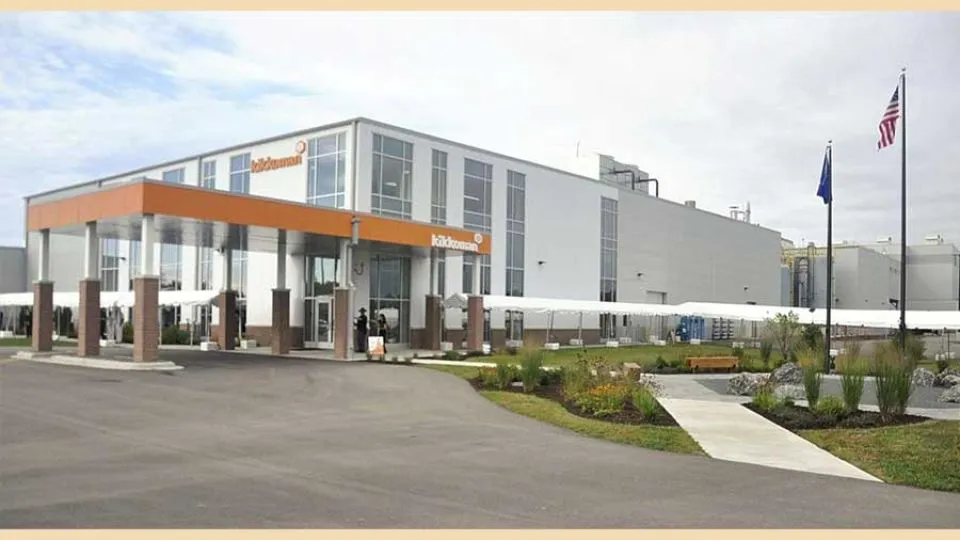
Arya News - The new factory built in Jefferson, Wis., has a production target of 4,000 kilolitres of soy sauce, or equivalent to about 13 million bottles of its flagship product, for its first year.
JEFFERSON – After more than half a century since Kikkoman Corp. started local soy sauce production in the U.S. back in 1973, the company launched full-scale operations of its third U.S. factory in October, aiming to increase its soy sauce production amid rising demand.
Rising growth in the U.S.
The new factory built in Jefferson, Wis., has a production target of 4,000 kiloliters of soy sauce, or equivalent to about 13 million bottles of its flagship product, for its first year. The total investment, which includes factory construction costs, is projected to reach $560 million (about ¥87 billion) over 10 years, with potential expansion plans in the future.
Kikkoman generates more than 50% of its revenue in North America, primarily in the U.S., with soy sauce sales in this market steadily growing. The company expects an additional 30% to 40% market growth in the country over the next 10 years.
“We will respond to rising demand with the consistent quality expected by our customers and respect for craftsmanship,” said Yuzaburo Mogi, the firm’s honorary CEO and chairman, at the opening ceremony.
Half a century of local production
The company’s entry into the U.S. market dates to 1957. After establishing a sales subsidiary in California, it began operations at its first U.S. soy sauce factory in Walworth, Wis., in 1973, and in 1998, it opened a second factory in Folsom, Calif.
Since the start of U.S. soy sauce production, the product has become a staple of American households. Wisconsin Gov. Tony Evers, who attended the opening ceremony, said in a press conference that soy sauce is used daily at the Governor’s Executive Residence, both with meat and vegetable dishes.
Integration with local cuisine
Kikkoman’s share of the U.S. household soy sauce market stands at 57%. What helped the product take root in the U.S. market is a strategy of not only marketing soy sauce as a seasoning for Japanese cuisine, but also integrating it into local food culture. The company notably highlighted how well soy sauce complements meat dishes through tasting events at supermarkets. It also focused on developing recipes that positioned soy sauce as a staple in everyday American cooking.
These steady promotional efforts continue to this day: The firm releases 200 new recipes every year. Moreover, at a cooking event held in the suburbs of New York in September, the company demonstrated how soy sauce, ponzu and teriyaki sauce can be used in dishes beyond Asian cuisine.
Bernard Janssen of Zwilling, a major German cutlery manufacturer that co-hosted the event, said that soy sauce is not limited to Asian cuisine. He explained that the sauce adds a depth of flavor to stews and can also be used in marinades for traditional American-style barbecue.
“Soy sauce is becoming a national condiment in the U.S.,” Mogi said. The firm’s next challenge is to replicate its successful U.S. strategy in Europe and Asia, integrating its products into local culinary cultures to drive its next wave of international growth.