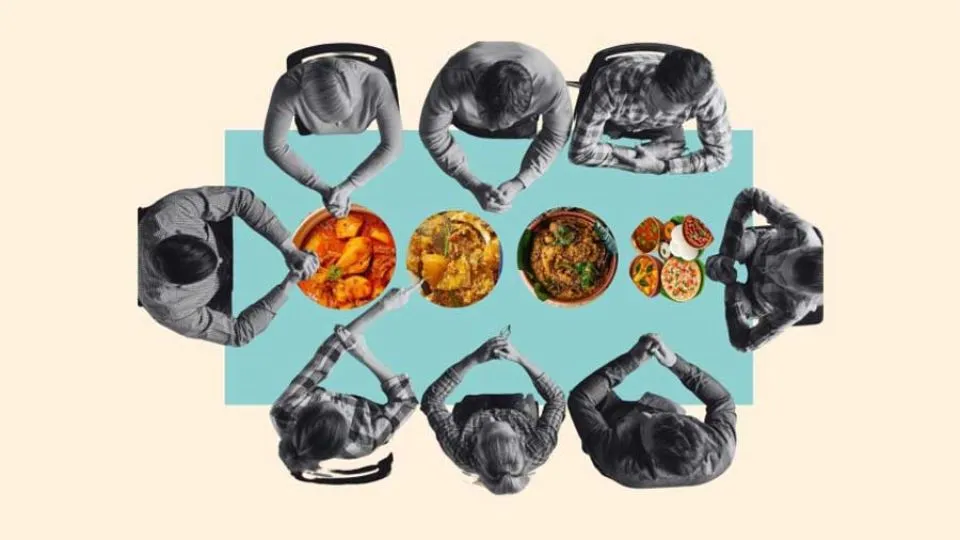
Arya News - "Our family dining table has always been adorned with lovingly prepared homemade dishes that reflect the distinct yet deeply intertwined culinary cultures of two neighbouring countries," the author reflects on her family`s Bengali cuisine, and their ancestral ties to both India and Bangladesh.
DHAKA – I was born to Bengali Muslim parents, one from Bangladesh and the other from India, who raised me amid a comforting blend of cultures that, on countless occasions, seemed to exist in parallel. Whatever differences existed (and still exist) between my parents’ ancestral backgrounds, I personally feel that they made my life more interesting than that of many others.
When my mother, a young woman of 20 from a beautiful village named Dighalia in Narail district, arrived in Dhaka in the early 1990s, she had not the slightest idea that, within the next few months, she would meet her lifelong partner, my father. Back then, my father, an Indian from West Bengal, was struggling to establish himself far from his homeland, sleeping on the floors of his distant relatives’ homes. Fate brought them together, and the newly married couple, coming from two different cultural backgrounds, began their married life in a tiny, dreary house.
Much of my young parents’ free time was devoted to learning how to cook basic dishes. My mother had hardly ever cooked before her marriage, although she had often watched her mother and grandmother prepare meals in their family kitchen. Moreover, her initial training was largely shaped by the limited culinary knowledge and experience my father had acquired in India. This is the primary reason why our food habits, as well as the meals my mother eventually learnt to prepare, were heavily influenced by both Bangladeshi and Indian culinary traditions.
Narail delicacies
It was only on a few occasions during my childhood, usually after my school exams were over, that I visited my maternal grandparents’ house with my mother. Narail has long been known for its traditional sweet delicacies and products, such as Para Sandesh, Khejurer Gur, Khejurer Rosh and Kheer made from date-palm sap. As someone who has always been averse to sweet dishes, I could barely bring myself to try those sugary treats that many others, including my father, find heavenly. Even though these sweet delicacies and winter date-palm products largely dominate Narail’s culinary identity, several distinctive cooked dishes, traditional ingredients and unique cooking techniques continue to define its home cooking.
One such dish is Chhita Ruti with Kura Meat, a classic comfort meal from rural Narail that found its way onto our family dining table, thanks to my mother. Now prepared and enjoyed in many regions, Chhita Ruti consists of delicate, lacy, net-like rice-flour crêpes, made by skilfully scattering a thin batter by hand onto a hot skillet. It is often paired with a slow-cooked, richly spiced curry made with country chicken or duck. Admittedly, Chhita Ruti failed to appeal to my younger self because of its unusual texture, but over time, I finally learnt to appreciate its distinctive charm.
Another Narail speciality is the Furan tempering technique, which differs significantly from conventional methods of tempering spices. This technique involves preparing a distinctive regional blend of fried onions, garlic and cumin, ground together into a thick, aromatic paste. My mother also adds fried red chillies to the mixture to give it an extra spicy kick. Ever since I began taking an interest in cooking, I have watched my mother use this tempering technique in almost all her cooking, particularly in curry-based dishes. To extract the maximum flavour from the ingredients, my mother uses a shil pata, a traditional flat grinding stone or mortar slab, to prepare the paste. This single tempering technique can easily make the difference between an ordinary dish and an extraordinary one.
Wonderful delicacies from India
In our household, many of our food habits were directly influenced by Indian culture, particularly in terms of ingredients and cooking styles. Several Indian dishes from West Bengal and neighbouring states were also incorporated into our family meals. One such dish is beef with vegetables, with numerous variations prepared according to individual preferences and the availability of ingredients. The variation most frequently prepared in our family is beef with cabbage. In northeastern India, particularly in states such as Nagaland, Mizoram, Meghalaya and Manipur, similar dishes are often prepared as stews by simmering meat with leafy green vegetables, usually without the use of heavy spices. However, in our household, we have always had a preference for spicy food, especially after my sister and I grew old enough to develop a greater tolerance for heat and spices. So, it was unofficially decided that a fusion of Bangladeshi and Indian cooking styles would be adopted to prepare our family’s version of beef with cabbage.
Another dish recognised as a celebrated speciality of South Indian cuisine is Thengai Paal Sadam, or coconut milk polao, popularly known as Narkeli Polao in Bengali cuisine. This particular dish is one of my father’s favourites, and sometimes, during festivals, my mother would prepare two separate pots of polao, one containing regular polao and the other Narkeli Polao. It is a savoury, mildly spiced and highly aromatic rice dish, cooked and simmered directly in fresh, creamy coconut milk instead of water. The rice is seasoned with whole spices such as cardamom, cloves and bay leaves, along with ginger, garlic and green chillies, and is often garnished with cashews and raisins fried in ghee. The combination of these rich ingredients and delicate flavours makes it an indulgent accompaniment to festive meals, lending a distinctly celebratory touch to the family dining table.
The chicken curry my mother cooked after nearly a year
In a typical Bengali household, the quintessential weekend lunch often consists of a bowl of hot, moderately spiced chicken curry served with freshly cooked rice. One of my most vivid early childhood memories dates back to a time when my family was living in straitened financial circumstances, and for almost an entire year, no chicken curry was cooked in our house. During that difficult period, my father’s teaching job barely paid him enough to cover the house rent and put three meals a day on the table. To make matters worse, he was also drowning in debt that would later take him years to repay. My parents never, not even once, made us feel as though their lives were falling apart, so I have only faint memories of their struggle to make ends meet for our family of four during those years. What I do remember, however, is the day my father brought home two country chickens from our local bazaar, and my mother, after nearly a year, cooked them together in a large pot for dinner. I also vividly remember my mother taking a whole chicken leg out of the pot, carefully mixing the hot curry with rice and gently feeding me morsels of the meal with her own hands.
To be frank, it was not the most delicious chicken curry my mother has ever cooked. She had deliberately kept the spices to a minimum to make the curry palatable for her young children. Moreover, she gradually mastered the art of cooking in the years that followed, and on countless occasions, her chicken curry tasted far more delicious than the one she had prepared on that particular day. Nevertheless, there was something quite inexplicable about the taste of that special chicken curry, cooked by my mother after almost a year, that has remained inextricably bound to my childhood memories. Neither my mother nor anyone else has been able to recreate that particular taste in all the years since. Although my innocent seven-year-old mind could not fully comprehend the financial hardships my family was enduring at the time, I now believe it was my parents’ boundless love and their relentless struggle against a cold, unforgiving world that transformed a simple dish of chicken curry into one of the most heartwarming and unforgettable meals of my life.
A packet of chicken biriyani after every exam result
My family did not have much when I was a young child. My mother, who was still in her twenties and gradually discovering the art of cooking, would prepare simple but delicious meals on weekdays. Occasionally, on weekends, when there was a little extra money to spare and all four of us were home to enjoy lunch together, a deeply comforting meal of polao made with Chinigura rice, accompanied by mildly spiced chicken roast, beef curry or mutton rezala, would add a touch of glamour to our lower-middle-class dining table.
But beyond all these sumptuous homemade meals, what remains most vividly etched in my memory is a single paper-wrapped packet of chicken biriyani that my father would buy from a local restaurant somewhere in Dhaka on his way home every time my school examination results were announced. Mobile phones were not widely used by ordinary people like us back then, so there was really no way for my father to know how well I had performed in my exams before returning home. Yet, without fail, he would buy that packet of biriyani for me at the end of every single term, regardless of what my results might turn out to be.
Like the basic chicken biriyani served at an average local restaurant, the biriyani my father brought home consisted of just half a plate of rice cooked in oil, accompanied by a medium-sized piece of chicken cooked separately with spices. There was genuinely nothing extraordinary about its quality, ingredients or taste. But to my younger self, who would return home from school and wait patiently, often without having lunch, for her father to come home with that familiar packet, the biriyani was the most delicious food in the entire world. Only four times a year would my father bring home this simple packet of biriyani to celebrate my examination results, but those four occasions were among the happiest and most eagerly anticipated days of my childhood.
Muri Ghonto with lentils vs Muri Ghonto with rice
Muri Ghonto is a rich, traditional Bengali delicacy commonly enjoyed by people on both sides of Bengal. One longstanding debate surrounding this dish concerns whether its proper name is Muri Ghonto or Muro Ghonto, as people from different regions of Bangladesh and West Bengal tend to use one name or the other. However, in most cases, the version of the name that people prefer is simply the one they have inherited from their ancestors.
For me, before I could even settle on which name was more appropriate, I found myself caught in another, more complicated debate: Muri Ghonto with lentils versus Muri Ghonto with rice. Before my young palate could fully become accustomed to the taste of the Bangladeshi version of Muri Ghonto, a rich stew of fish head cooked with lentils, I was introduced to its West Bengal counterpart, which is generally prepared by combining fried fish head and potatoes with fragrant rice.
For those unfamiliar with these variations, an obvious question might arise: which version tastes better? However, there is no definitive answer to this question. Anyone favouring a particular version may do so because of a lifelong familiarity with its taste and the comfort it brings, which inevitably makes such preferences deeply personal and somewhat subjective. The Bangladeshi version of Muri Ghonto is a rich, unctuous stew made with the heads of popular large freshwater fish, such as Katla (catla) or Rui (rohu), cooked with mung bean lentils and slowly braised in a fragrant blend of spices and aromatics. The West Bengal version, on the other hand, has several variations, often shaped by the culinary heritage, traditions and individual preferences of different families.
One such variation is a rich, delicious, sticky mixture of fried fish head, small pieces of fried potatoes and fragrant Gobindobhog rice (or broken basmati rice). A magnificent symphony of flavours and textures, this particular version of Muri Ghonto is prepared with onions and garlic, while the fried pieces of fish head are vigorously broken apart during cooking. This allows the fragrant rice grains to absorb the rich, savoury juices and flavours released from the fish head, creating a deeply satisfying combination of ingredients. Another variation omits onions and garlic altogether and keeps the fish head largely intact, while the rice remains relatively dry, giving the dish an appearance rather similar to polao with fish head. This style of Muri Ghonto might appeal more to those who prefer to preserve the natural fragrance of Gobindobhog rice and the delicate flavours of whole spices, without mixing the rice too thoroughly with the fish bones and other ingredients.
As my mother is Bangladeshi, the version of Muri Ghonto most frequently prepared and enjoyed in our household has always been the one made with lentils. One particularly interesting thing about this version is that leftover Muri Ghonto, especially when it is two or three days old and has been properly refrigerated, often tastes even better than when it is freshly cooked. The more frequently the stew is reheated, the more the remaining pieces of fish head gradually break apart and become incorporated into the mung bean lentils, while the spices and aromatics blend more deeply into the mixture. As a result, by the third day, what remains in the pot is often an even richer, more flavourful and satisfying version of the original dish. Unsurprisingly, this frequently leads to a rather silly but affectionate argument around our family dining table over who will get to savour the very last portion of Muri Ghonto.
Friends from India became part of the family
My connection with India through my father was one of the crucial factors that helped me forge friendships with people from different parts of the country. Many of these friends hail from Delhi, Punjab, Kolkata and various regions of South India. Meeting them not only enriched my life but also introduced me to numerous wonderful dishes from these regions and their diverse culinary traditions. Some of the dishes that have become my personal favourites include Sambar, Rasam, Uttapam, Idli and Rajma.
Sambar is a savoury South Indian dish prepared with a variety of vegetables, lentils, tamarind and a distinctive blend of aromatic spices, sometimes with coconut added as well. Preparing this particular spice blend from scratch can be a rather time-consuming and laborious process, so I usually look for ready-made spice mixes at supermarkets or online shops. Rasam is a tangy, spicy and light South Indian soup, typically made with a tamarind base, tomatoes, sometimes lentils and a warming blend of fragrant spices. Both Sambar and Rasam are commonly enjoyed with steamed rice or idli.
Uttapam is a thick, savoury South Indian pancake made from a fermented batter of rice and urad lentils, usually topped with finely chopped onions, tomatoes and green chillies. Idli, another popular delicacy from the same region, is a soft, fluffy, savoury steamed cake made from a similar fermented batter of rice and urad lentils. Unlike uttapam, which is cooked on a hot griddle, idli is prepared by steaming the batter in specially designed moulds, giving it its characteristic light and spongy texture.
Rajma, on the other hand, is a rich North Indian red kidney bean curry prepared by slowly cooking the beans in a thick, generously spiced tomato-and-onion gravy. It is particularly popular as a comforting accompaniment to steamed rice. In our household, a typical lunch menu frequently includes a hearty bowl of warmly spiced sambar, tangy rasam or flavourful rajma, served alongside plain steamed rice. These dishes have gradually become familiar and much-loved additions to our family meals, reflecting the culinary influences that have shaped my life beyond the traditions I inherited from my parents.
A beautiful blend of cultures enriching my life
In many South Asian households, food is widely regarded as one of the most meaningful expressions of love among family members. When words fail to articulate the love and affection we feel for our loved ones, food steps in, extending its comforting and benevolent hand. My life has been no exception. When I look back on my childhood and the years that followed, I feel nothing but gratitude for having been born to parents who come from two different cultures yet share remarkably similar values. Despite all the hardships they have endured and the countless odds they have overcome, my parents have raised me with an abundance of love and care, never allowing me to feel that I lacked anything, even when they themselves had so little. Our family dining table has always been adorned with lovingly prepared homemade dishes that reflect the distinct yet deeply intertwined culinary cultures of two neighbouring countries. And for this beautiful inheritance of love, food and shared traditions, I will always remain profoundly grateful for my roots.