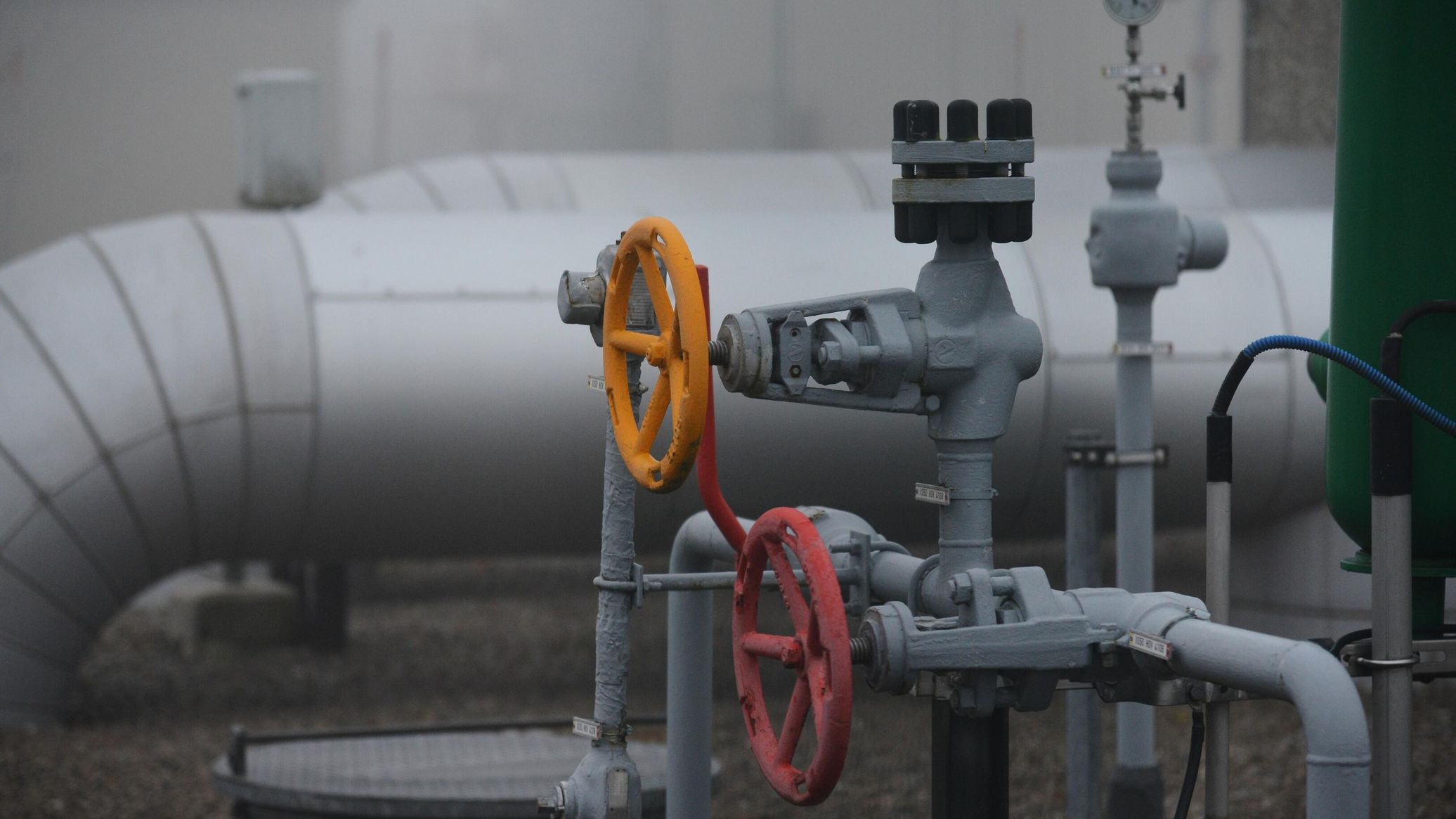
Arya News - The level of gas in underground gas storage facilities in the European Union as of early November has gone down for the third consecutive year, falling below 75%, down from nearly 100% in 2023, according to Gas Infrastructure Europe (GIE) and the European Commission data analyzed by Sputnik.
According to data, the figure had fallen to a record low of 74.68% by the beginning of November this year. For comparison, European gas storage facilities were 83% full on November 1, 2025, and 99% full on November 1, 2023. However, the situation varies significantly from country to country. In Germany, the EU’s largest economy, gas storage facilities are only 61.17% full. In France, which continues to purchase liquefied natural gas from Russia, the figure stands at 86.82%, while it is 91.05% in Italy, 65.78% in the Netherlands, and 65.63% in Belgium. This decline in reserves is taking place amid high gas prices. According to the EU Agency for the Cooperation of Energy Regulators (ACER), the estimated upper limit of costs for purchasing gas to fill European storage facilities this year has risen to $30 billion from $21.8 billion the previous year. In 2022, the EU set a mandatory target for gas storage facilities to be 90% full by November 1 of each year. In 2025, these rules were extended through the end of 2027, while granting member states greater flexibility. The target can now be met anytime between October 1 and December 1, and deviations are permitted under difficult market conditions. Following the outbreak of the conflict in Ukraine, the EU set itself the goal to reduce its imports of Russian energy, increasing its purchases of liquefied natural gas from alternative suppliers, primarily the United States, though it has not been possible to effectively replace Russian supplies.