Arya News - DHAKA, Feb 6 (Reuters) - Bangladesh’s leading prime ministerial contender, Tarique Rahman, on Friday rejected a proposal from his main rival for a unity government after elections next week, saying hi...
By Tora Agarwala , Krishna N. Das and Ruma Paul
DHAKA, Feb 6 (Reuters) - Bangladesh’s leading prime ministerial contender, Tarique Rahman, on Friday rejected a proposal from his main rival for a unity government after elections next week, saying his party was confident of winning on its own.
Rahman, 60, who heads the Bangladesh Nationalist Party (BNP), returned home in December after nearly two decades in exile in London following a youth-led uprising that toppled long-time leader Sheikh Hasina, a bitter rival of his mother, the country"s first woman Prime Minister Khaleda Zia.
The BNP"s main rival in the February 12 election is the Islamist group Jamaat-e-Islami, once banned but now resurgent.
The two parties governed together between 2001 and 2006, and Jamaat has said it is open to renewing the partnership for a unity government to help stabilise the country, whose giant garments industry was badly disrupted by months of turmoil in 2024.
Bangladesh has been run by an interim government since August 2024 when Hasina fled to long-time ally India, where she remains.
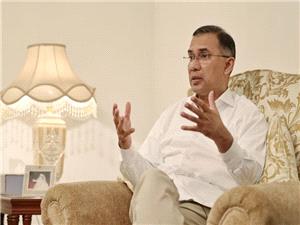
“How can I form a government with my political opponents, and then who would be in the opposition?” Rahman said in an interview at his party office, sitting beneath portraits of his mother and his father, a former president.
“I don"t know what will be their seat number, but if they are in the opposition, I hope to have them as a good opposition.”
His aides said the BNP was confident of winning more than two thirds of the 300 parliamentary seats up for grabs. The party is contesting 292 of them, with allies vying for the rest.
Rahman declined to give a number but said "we are confident that we"ll have enough to form a government".
All opinion polls have forecast a BNP victory but also a stiff challenge from the Jamaat alliance, which includes a Gen Z party that emerged from the youth-led anti-Hasina protests.
GOOD RELATIONS GLOBALLY
New Delhi"s decision to shelter Hasina, whom a Dhaka court last year sentenced to death for her role in the crackdown, has badly strained Bangladesh-India relations while giving China an opening to expand its investments and political outreach.
Asked whether he would pivot away from India toward China should he win, Rahman said Bangladesh needed partners capable of boosting economic growth for its nearly 175 million people.
“If we are in the government, we need to provide jobs for young people. We need to bring businesses into the country so that jobs can be created and people can have a better life,” he said.
“So whoever, while protecting the interests and sovereignty of Bangladesh, offers what is suitable for my people and my country, we will have friendship with them, not with any particular country.”
Asked whether Hasina"s children were free to return from abroad and engage in politics, he said: “If someone is accepted by the people, if people welcome them, then anyone has the right to do politics.”
Hasina"s Awami League is banned from contesting the election. Many senior leaders and members of her family were already abroad before her fall or fled around that time.
ROHINGYA WELCOME TO STAY UNTIL SAFE TO RETURN
Bangladesh, one of the world’s most densely populated countries with high rates of extreme poverty, hosts nearly 1.2 million Rohingya Muslim refugees, many of whom fled multiple crackdowns in neighbouring Buddhist-majority Myanmar, where they are treated as outsiders.
The interim government said last year it had no capacity to allocate additional resources for the refugees “given our numerous challenges” and called on the international community to help repatriate them.
Rahman said he too wanted them to return home but only when conditions were safe.
“We will try to work on the issue so that these people can go back to their own land,” he said. “The situation has to be safe for them to go back there. As long as it is not safe, they are very welcome to stay here.”
(Reporting by Tora Agarwala, Krishna N. Das and Ruma Paul in Dhaka; Additional reporting by Sam Jahan and Zia Chowudhury in Dhaka; Editing by Andrew Heavens)