Arya News - Iran-backed groups in the Middle East should exercise the “greatest restraint” if there is regional escalation between Iran and the United States to avoid destabilizing the region, France’s foreign mi...
BEIRUT (AP) — Iran-backed groups in the Middle East should exercise the “greatest restraint” if there is regional escalation between Iran and the United States to avoid destabilizing the region, France’s foreign minister said Friday.
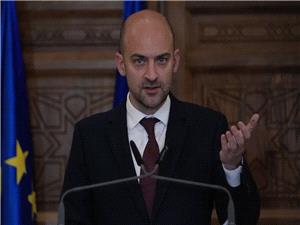
Jean-Noël Barrot made his comments in Beirut, where he arrived earlier in the day after visiting Syria and Iraq. His visit also comes as the U.S. and Iran held indirect talks in Oman on how to approach discussions over Tehran’s nuclear program.
There have been concerns in the region that if the United States attacks Iran, Iran-backed groups in Iraq, Yemen and Lebanon could join the war, worsening the situation.
“If, however, we witness a regional escalation, it would be appropriate for groups supported by Iran to exercise the greatest restraint in the whole region so as not to worsen a situation,” Barrot said after holding talks with Lebanese leaders. “That would profoundly destabilize the Near and Middle East,” he warned.
He added that a military escalation in the region is a risk that must be avoided at all cost, adding that it is neither in the interest of the countries in the region, nor in the interests of France.
The French official discussed the ongoing process to disarm Lebanon’s Iran-backed Hezbollah group and a conference that is scheduled to be held next month in France to support the Lebanese army that has been expanding its presence in southern Lebanon along the border with Israel after the 14-month Israel-Hezbollah war.
Barrot said France is working in close coordination with the United States, Saudi Arabia, Qatar and Egypt, who will co-organize the conference “with us to a targeted collective contribution, built with the Lebanese authorities.”
Lebanon’s army has been badly affected by the country’s historic economic meltdown that broke out in late 2019. The country’s political class has done little since then to get the small nation out of the crisis that is rooted in decades of corruption and mismanagement.