Arya News - Rich in biodiversity, six areas across Bhutan are being positioned as flagship nature-based tourism destinations – potentially also generating long-term financing for conservation efforts.
THIMPHU – Rich in biodiversity, six areas across Bhutan are being positioned as flagship nature-based tourism destinations, with the potential to generate long-term financing for conservation while creating new livelihood opportunities for local communities.
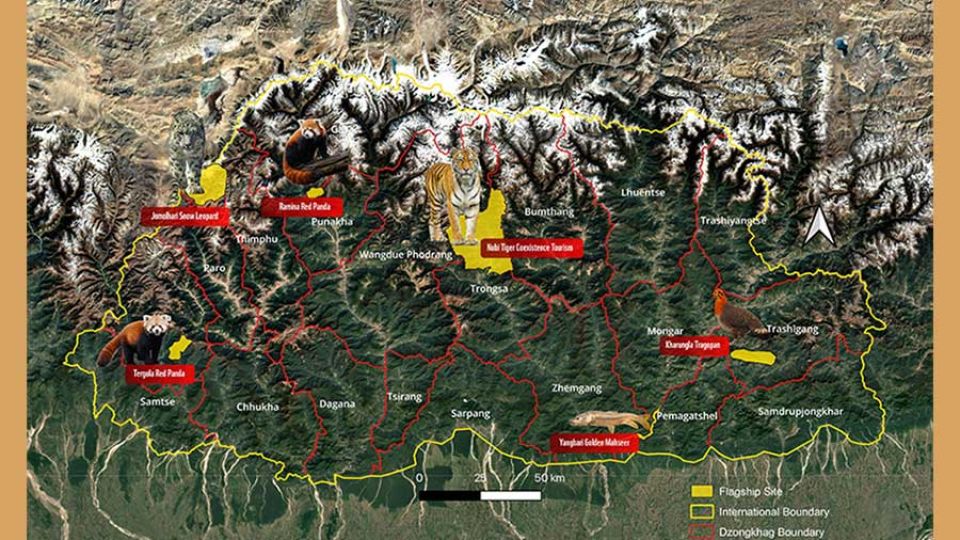
The proposed sites are Yangbari in Mongar for golden mahseer, Kharungla in Trashigang for tragopan, Tergola in Haa and Ramina in Lunana for red panda, Nubi in Trongsa for tiger, and Jomolhari for snow leopard.
This initiative is developed by WWF-Bhutan together with Department of Forests and Park Services under the guidance of the National Task Force for Nature-based and Wildlife Tourism.
The taskforce constitutes of Department of Tourism, Ministry of Finance, Office of Cabinet Affairs and Strategic Transformation, Department of Forests and Park Services, Bhutan Trust Fund, and Bhutan for Life.
An official from WWF-Bhutan said the concept moves away from the broad and often loosely used term “eco-tourism” towards nature-based and wildlife tourism, with an emphasis on conservation, community participation and commercially viable tourism products.
“Through these projects, we want to support communities through long-term financing and contribute to the economy. This project will support locals through capacity building and nature guide training,” he said.
He said that certain areas would be zoned to minimise impacts on species and that there would be no exploitation of wildlife.
Each site is intended to function as a pilot, where conservation, tourism enterprises and community stewardship can be tested before successful models are expanded nationally.
Six flagship destinations
Located along the Kuri-Gongri river in Mongar, Yangbari is known for its golden mahseer habitat and already has an ecolodge constructed under the GEF Ecotourism Project.
The plan proposes training local youth as Mahseer Guardians to support fishing regulation, species monitoring, river safety and guiding. Infrastructure would include designated fishing and release points, rafting and kayaking access, a riverside campsite, sanitation facilities, interpretation signage and a Mahseer Interpretation and Conservation Centre.
A community tourism committee would oversee visitor management and financial flows, while private-sector concessions could be explored for the ecolodge, rafting and guided fishing services.
Kharungla in Trashigang is being positioned as a premier birding destination and is the only known place in Bhutan where Blyth’s, Satyr and Temminck’s tragopans are found.
The area also supports other rare birds and wildlife, including Ward’s trogon, tigers, leopards, Himalayan black bears and Asiatic wild dogs.
The initiative envisages community participation through homestays, bird guiding, cultural storytelling and conservation activities. It aims to develop Kharungla as a high-value, low-impact birding destination while creating new rural livelihoods.
The Tergola Red Panda Trail in Haa covers about 56 square kilometres and lies outside a protected area, but is designated as both a Key Biodiversity Area and a High Conservation Value Area.
The initiative proposes establishing “Red Panda Guardians” among the Dorithasa community to undertake guiding, trail maintenance and wildlife monitoring.
The red panda experience would complement Haa Valley’s existing cultural tourism, including monasteries, homestays, village experiences and festivals. The plan says the trail could eventually be linked with the internationally recognised Tergola trek.
Nubi in Trongsa is intended to demonstrate how tourism can support communities living with human-wildlife conflict.
The gewog is home to tigers, clouded leopards, common leopards, Himalayan black bears, wild dogs, takins and other wildlife.
Between 2020 and 2024, more than 360 livestock depredation cases were recorded. Despite these losses, WWF-Bhutan said there had been no retaliatory killings of tigers or other predators.
This is presented as a potential conservation story for visitors, allowing them to learn from communities that have continued to coexist with predators.
Nubi would establish “Tiger Coexistence Stewards” to undertake guiding, storytelling, habitat monitoring and tourism management.
Jomolhari would focus on snow leopard tourism in Soe gewog within Jigme Dorji National Park. The landscape supports one of Bhutan’s strong snow leopard populations and is home to yak-herding communities with generations of experience living alongside the species.
According to the prospectus, Bhutan recorded 134 snow leopards nationwide in the 2023 survey.
Rather than creating a completely new tourism circuit, snow leopard experiences could be integrated into existing Jomolhari trekking and highland cultural experiences, including yak-herding traditions, folklore and traditional knowledge.
Ramina, a remote village at about 3,000 metres in Lunana with a total of seven households, would be developed as a high-end, low-volume red panda destination within Jigme Dorji National Park.
Despite its ecological and cultural value, the area currently receives very little tourism. The plan sees potential to diversify local livelihoods beyond cordyceps collection and livestock while strengthening the conservation of red panda habitat.
Financing and standards
The initiative will use blended financing, combining government and donor funding with private-sector investment. Revenue could come from entry fees, permits, guided services, homestays and nature-based tourism, alongside private and community concessions, joint ventures and eco-branded hospitality.
Part of the revenue would be reinvested in conservation and community benefits, with local residents earning through guiding, wildlife tracking and homestays. Biodiversity credits, carbon credits and the Tiger Impact Certificate could provide additional financing mechanisms.
Each flagship site is estimated to require between Nu 24 million and Nu 35 million, depending on its ecological sensitivity, infrastructure needs and tourism potential.
National standards would cover guide and homestay certification, trail and camp standards, carrying capacity, safety, and biodiversity and visitor-impact monitoring.
Phased rollout
Yangbari is planned as the first site because it already has an operational ecolodge and potential for private-sector concessions or joint ventures. Its rafting, kayaking and specialist fishing opportunities also make it suitable for an early launch.
Kharungla is expected to follow in 2026, with Tergola and Nubi planned for 2027. Both already have funding for species monitoring, business planning and product development.
Jomolhari and Ramina will be developed in the final phase because of their more complex environments and the need for detailed feasibility and visitor planning.