Arya News - Tokyo is caught between the rule of law, a pillar of its foreign policy, and the Japan-U.S. alliance, which is at the core of its diplomatic and security policies.
TOKYO – The government is in a difficult position after the administration of U.S. President Donald Trump announced new sanctions against International Criminal Court President Tomoko Akane.
Tokyo is caught between the rule of law, a pillar of its foreign policy, and the Japan-U.S. alliance, which is at the core of its diplomatic and security policies.
Meanwhile, countries in Europe and elsewhere have expressed concerns over the U.S. sanctions against senior ICC officials, including Akane.
Vice Foreign Minister Takehiro Funakoshi visited the United States on Thursday and Friday and met with U.S. Deputy Secretary of State Christopher Landau. The two confirmed Japan and the United States would work closely together to further strengthen their alliance.
Landau on Friday posted on X that it was “a most productive meeting” while describing Funakoshi affectionately as “Take.” He portrayed the alliance as rock-solid.
U.S. sanctions against ICC officials were one of the key issues discussed by Funakoshi and Landau during the meeting. Funakoshi is believed to have told Landau that the U.S. sanctions are incompatible with Japan’s position.
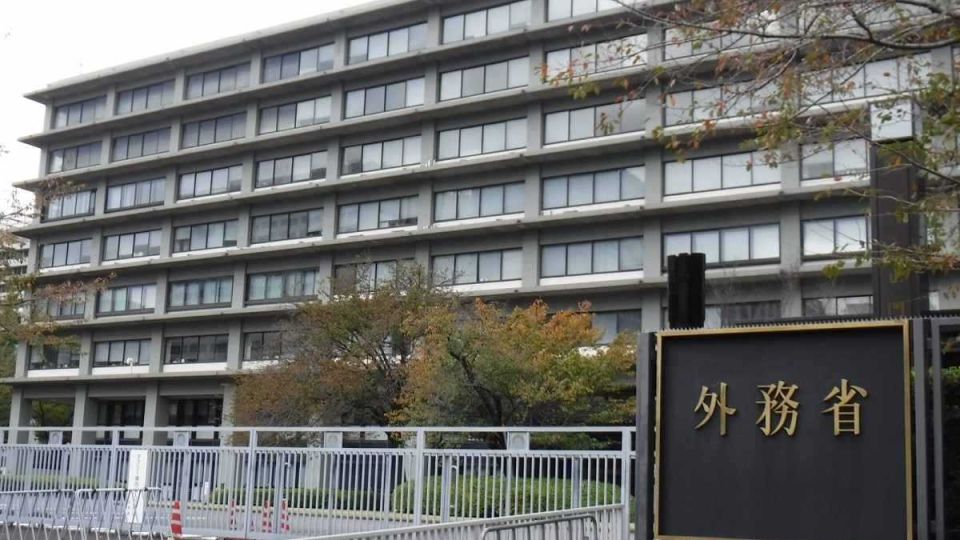
However, the Foreign Ministry’s news release only said “the two sides discussed the FOIP [Free and Open Indo-Pacific], cooperation among like-minded countries such as Japan-U.S.-ROK cooperation, the International Criminal Court.”
Terms such as “criticize” and “concern” were not mentioned.
The Japanese government has remained silent since the U.S. announcement of new sanctions against Akane and Senior Trial Lawyer Abdoulaye Seye of Senegal.
The Trump administration is believed to be seeking to dismantle the ICC by enforcing sanctions against its senior figures because Trump is wary of the international judicial body. The U.S. government is on high alert in regard to the ICC, which may consider attacks on Iran and others as war crimes and prosecute Trump in the future.
Foreign Minister Toshimitsu Motegi said at a press conference on Friday, “The U.S. is taking a harsh stance [against the ICC].”
With China and Russia engaging in provocative acts around Japan’s territory, the Japan-U.S. alliance has become increasingly important. The government is believed to be tacitly avoiding hitting a nerve with Trump, which could damage the countries’ relationship.
Concerning Japan’s three key security-related documents, which the government plans to revise within this year, one of the central issues is Japan’s total defense spending. The government is expected to seek an appropriate sum, working in close communication with the United States.
The current Japan-U.S. agreement over costs such as those related to operating recreational services on U.S. bases in Japan and developing military facilities, which are covered by the Japanese government, is scheduled to come to an end in March next year.
As the United States may demand a significant increase to Japan’s burden, a senior foreign ministry official said, “It’s not smart to directly confront the United States.”
According to a U.S. diplomatic source, the United States has taken a position that the sanctions against the ICC and the Japan-U.S. alliance are entirely separate issues.
Before the U.S. announcement of the new sanctions, U.S. Ambassador to Japan George Glass secretly visited Funakoshi to explain their content.
While Japan and the United States have their own goals, international human rights bodies and others have condemned Japan’s “timidity.” That is because Japan upholds the rule of law as a diplomatic principle but has failed to criticize these acts by the United States.
During a press conference held online on Wednesday, Akane said, “I want the government to do its utmost to protect the rule of law.”
The government aims to prioritize its relationship with the United States and support Akane at the same time.
Motegi said he told Akane during telephone talks on Friday that Japan would continue providing financial and other forms of support to her. A source close to Prime Minister Sanae Takaichi said, “The government has no choice but to support her so she won’t face difficulties in her daily life.”
Read More:
Europe declares support for ICC, fears loss of court would undermine international order