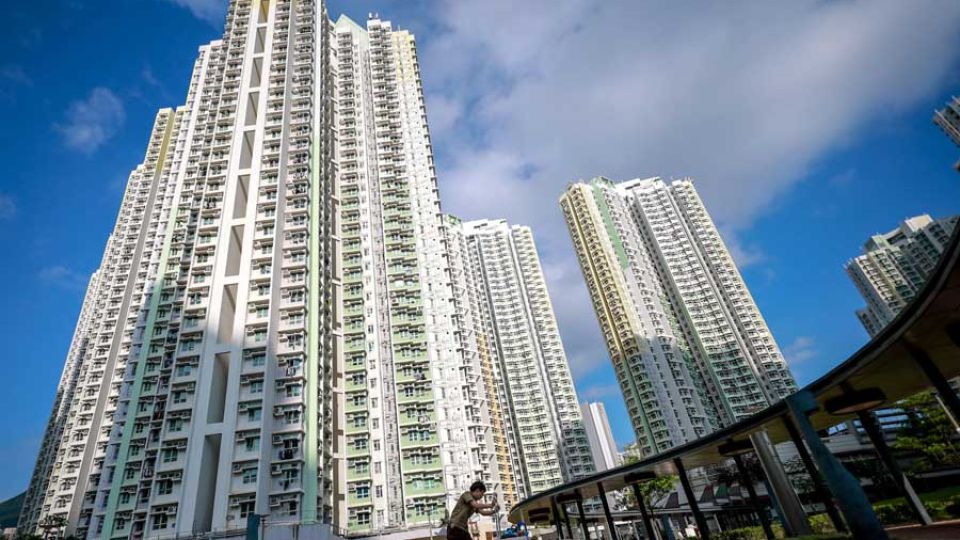
Arya News - In Hong Kong`s latest five-year plan, Chief Executive Lee said the government would strive to resolve the city`s housing issue by eliminating substandard subdivided units, and increasing public housing supply.
HONG KONG – Key indicators and initiatives — including building nearly 200,000 public housing units over the coming five years, phasing out substandard subdivided units and shortening waiting times for public rental housing — were unveiled by the Hong Kong Special Administrative Region government in the city’s inaugural five-year plan and the latest Policy Address.
The authorities also pledged measures to promote childbirth, increase support for grassroots residents and advance healthcare and youth development in the two blueprints.
The two documents were unveiled by Chief Executive John Lee Ka-chiu on Wednesday during a three-hour address.
Enhancing social well-being is one of six key themes outlined in the five-year plan, which was delivered first, while many other measures were detailed in the subsequent Policy Address.
In the five-year plan, Lee said the government would strive to resolve Hong Kong’s housing issue by eliminating substandard subdivided units and increasing public housing supply.
Key performance indicators include resolving the issue of substandard subdivided units by 2030 and building about 196,000 public housing units from 2026-27 to 2030-31.
The plan also sets out a long-term picture of the city’s housing landscape, with public rental housing expected to account for 40 percent of total housing supply over the next 10 years, while subsidized sale flats and private homes are expected to account for 30 percent each.
The authorities also aim to reduce the waiting time for subsidized rental housing to less than four years in 2030-31. The Urban Renewal Authority will spend about HK$40 billion ($5.1 billion) over the next five years to accelerate urban redevelopment, according to the five-year plan.
In the new Policy Address, Lee said the government would ensure that all 30,000 Light Public Housing units — transitional accommodation for people who have been waiting for public housing for three years or more — are completed by the end of March 2027, ahead of the original target.
By 2027, the waiting time for subsidized rental housing will be shortened to 4.5 years, Lee said.
Encouraging childbirth is also high on Lee’s annual agenda. His administration pledged to extend the baby bonus — a one-off HK$20,000 payment to new parents launched in 2023 — for another three years, with the amount rising to HK$30,000 for a second or subsequent child, effective immediately.
The relevant tax deduction allowance for a second or subsequent child will be raised to HK$160,000 per child.
The government-backed School-based After School Care Service Scheme will become a regular program from the 2027-28 school year, with no quota cap, Lee said. New escort services for pre-primary children will also be introduced.
Five additional subsidized daycare facilities, five additional neighborhood elderly centers and three new care homes are planned. The city will add 2,000 community elderly care service vouchers in the 2027-28 financial year, bringing the total to 18,000. Lee also announced 1,000 additional residential care service vouchers, bringing the total to 8,000.
On youth development, Lee outlined a range of measures, including a two-year 30,000 Youth Employment and Internship Programme in partnership with the business, information technology, construction and financial services sectors.
A new youth leader internship program will also be jointly launched by the SAR government and the United Nations. A government source said details of the program were still being discussed with the UN and that it is likely to take off within 12 months.
On healthcare, the cumulative membership of beneficiaries of district-level health centers is expected to reach 1 million within five years.
The road map also calls for increasing investment in primary healthcare programs by approximately 30 percent by 2030-31, as well as increasing the number of public hospital beds to about 35,000 and operating theaters to 360 in 2031.
Speaking to reporters on Wednesday afternoon, Lee said he hoped to forge an economy that would enable the public to share in the dividends of growth.
That explains the five-year plan’s comprehensive scope, taking in education, healthcare, housing, elderly care, youth and women’s development, support for the underprivileged, and labor rights protections, he said.
The Hong Kong Housing Society, one of the city’s major public housing providers, welcomed the two blueprints, saying it would fully support the policy drives for more housing, the use of smart technology to improve construction efficiency and measures to enhance the quality of life for seniors.
The society pledged to complete more than 15,000 units by 2030-31, of which more than 65 percent will be subsidized sale flats tailored to various needs to help residents own their homes.
Legislator Alex Fan Hoi-kit welcomed the package of measures to encourage childbirth, which he said “fully answers public concerns about the rising costs of child-rearing”.