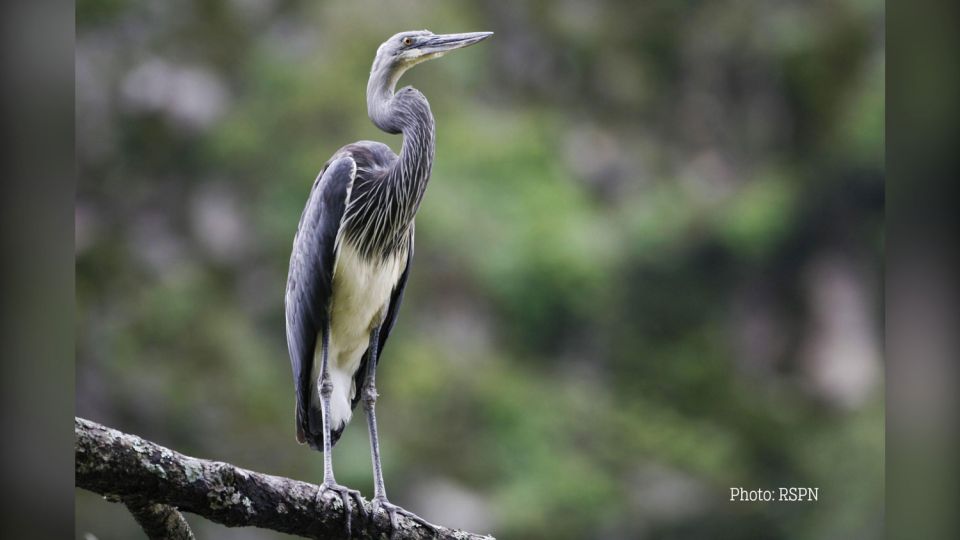
Arya News - Of the 50 hectares targeted for restoration, 11.6 hectares are within the Puna-I and Puna-Il project sites, where restoration has focused on improving riverine habitat.
THIMPHU – More than 30 kilometres of riverine habitat critical to the critically endangered White-bellied Heron (WBH) has been disturbed by the Punatsangchhu-I and Punatsangchhu-II hydropower projects.
However, around 11.6 hectares of habitat within the project sites have since been restored out of the 50 hectares targeted under a broader restoration initiative, according to the Royal Society for Protection of Nature (RSPN).
As part of efforts to restore degraded habitat for the WBH, RSPN has planted trees across 42 hectares in Punakha, Wangdue, Tsirang, Dagana, Trongsa, and Zhemgang. The initiative is part of a five-year project launched in July 2021 to restore 50 hectares of degraded land into healthy and functioning ecosystems.
The tree plantation project at Puna-I was completed in June 2024, and the project at Puna-II was completed in June this year.
RSPN’s Research Officer, Tshering Tobgay, said, “During consultation between RSPN and project officials, we targeted our restoration to benefit the WBH, other wildlife species, and the communities.”
He said the plantation included a mix of tree species, including high-value timber species to benefit communities, fruit trees to benefit wildlife, chirpine and other large trees to benefit herons for roosting and nesting, and other species that help stabilise the area and serve as landscaping.
Prior to the initiation of the Puna-I and II projects, an average of seven WBHs were sighted in the area. After the projects began, sightings became extremely rare.
The partnership model of cost-sharing helped restore more degraded areas within the project sites. RSPN co-financed close to Nu 2 million.
The disturbance has affected the riverine ecosystem on which the species depends for foraging, roosting and breeding. The WBH feeds on fish in freshwater rivers and nests in forests close to riverbanks, making it particularly vulnerable to activities that alter these ecosystems.
According to RSPN, the degradation resulted from infrastructure development and activities that disturbed both the river and surrounding habitats. Vegetation clearance, road construction, dumping and increased human activity can affect the ecological conditions the herons depend on.
This restoration comes as the species continues to face pressure from the loss and degradation of riverine habitats, with hydropower development being one of the activities capable of altering the ecosystems on which the heron depends.
Puna-II restores 600 hectares of forest
According to the Puna-II Detailed Project Report, the project affected about 300 hectares of forest land.
As compensation, Puna-II undertook 600 hectares of compensatory afforestation across Gasa, Punakha, Wangdue, Tsirang and Dagana, in partnership with the erstwhile Gross National Happiness Commission and the Department of Forest and Park Services.
In addition, more than 70 acres of exhausted muck disposal sites have been rehabilitated using diverse native, fruit-bearing and religiously significant trees, along with bamboo and soil-binding grasses. The sites have recorded over 95 percent survival.
Puna-II has also partnered with RSPN to restore about 10 acres of muck disposal sites within the WBH landscape, with survival rates also exceeding 95 percent.
The restoration focuses not only on replacing lost trees but also on soil stabilisation, biodiversity, and long-term habitat recovery.
An Environmental Officer at Puna-II, Tashi Dorji, said, “A few WBH sightings have been recorded near the project and rehabilitation sites, particularly downstream of the dam, where environmental flows are maintained to support aquatic ecosystems. The sightings suggest that the riverine habitat continues to provide potential feeding and foraging grounds for WBH and other aquatic-dependent species.”
He added that tree planting does not immediately create nesting habitat for the heron. Habitat restoration is a long-term process, with restored areas providing early benefits such as vegetation cover, slope stabilisation, shade, food resources and habitat connectivity. However, mature nesting habitat may take several decades to develop.
The main threats to the WBH along the Punatsangchhu are riverine habitat degradation, hydropower-related changes in river flow, human disturbance, habitat loss and fishing pressure. Puna-II is addressing these through environmental flow maintenance, habitat restoration, monitoring and collaboration with RSPN.
Tashi Dorji said Puna-I and Puna-II, in collaboration with RSPN, have supported WBH conservation, including establishing Bhutan’s first dedicated conservation and hatchery centre at Changchey, Tsirang.
According to RSPN’s latest annual survey, 31 WBHs were recorded, 26 in the wild and five at the centre, marking the highest number recorded in Bhutan to date.
Read More:
Bhutanese NGO Pelsung and UNDP launch innovation challenge to help human-tiger co-existence