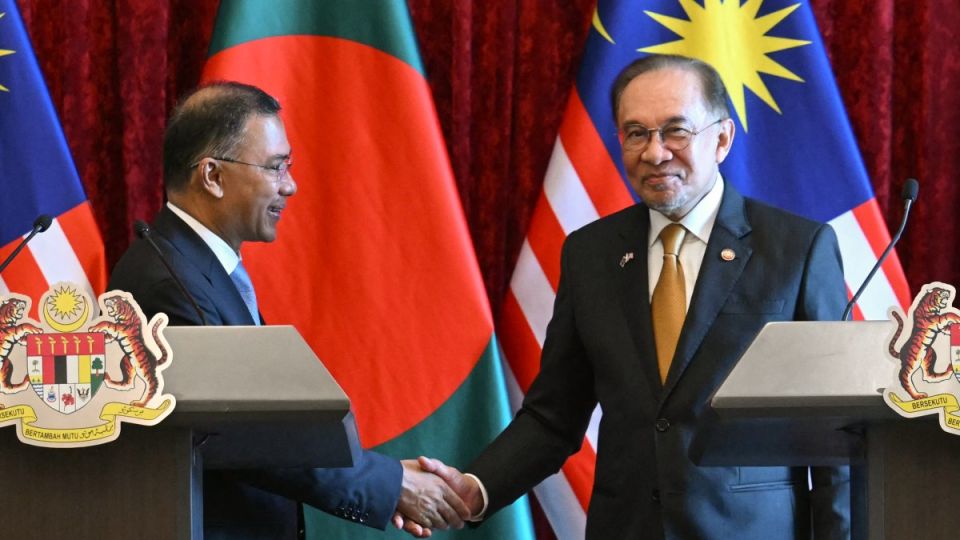
Arya News - Malaysia is set to reopen its labour market to Bangladeshi workers under a new arrangement, but has not yet clarified several crucial elements of the recruitment mechanism.
DHAKA – After more than two years of closure, Malaysia is set to reopen its labour market to Bangladeshi workers under a new arrangement but has not yet clarified several crucial elements of the recruitment mechanism to Dhaka.
Recruiting agencies and migration experts fear the arrangement could replicate the previous controversial system dominated by syndicates and push migration costs for job-seekers beyond Tk 6 lakh.
According to sources at the expatriates’ welfare and overseas employment ministry, 338 entities will be involved in recruitment: 25 principal agencies selected by Malaysia from a list of 423 prepared by Bangladesh, 312 associate agencies, and state-run Bangladesh Overseas Employment and Services Limited (BOESL).
In line with a Malaysian cabinet decision in August, 25 recruiting agencies were also approved for Nepal and 10 each for India, Pakistan and Myanmar, said the sources.
However, it remains unclear how the 312 associate agencies will operate, process job orders and send workers to Malaysia.
The Foreign Workers Centralised Management System (FWCMS), the digital platform used to manage foreign-worker recruitment, remains at the centre of the process.
Md Mokhtar Ahmed, secretary at the ministry, said Dhaka sent a note verbale to Kuala Lumpur on September 14 seeking guidelines on how the system would operate, but had received no response as of yesterday.
“We will evaluate Malaysia’s FWCMS or Bestinet [FWCMS’s operator] when the Malaysian government tells us through what process they will recruit our workers,” he said.
The ministry said in a statement yesterday that administrative work on recruitment was underway and the exact mechanism would be announced once finalised.
FEARS OVER CONTROL
Recruiting agencies fear associate agencies may wield little authority if they have to depend on principal agencies to process job orders.
A group of former leaders and members of the Bangladesh Association of International Recruiting Agencies (BAIRA) yesterday submitted a memorandum to the ministry.
They demanded that all 312 qualified agencies be given direct access to the recruitment mechanism, with separate FWCMS IDs and passwords, and be allowed to send workers against their own job orders.
They also demanded that all qualified medical centres approved by the ministry be allowed to conduct examinations for Malaysia-bound workers.
Mohammed Fakhrul Islam, former joint secretary general of BAIRA, said the other 312 agencies were included in the process “only for eyewash”.
“We are likely to witness the same old syndicate system again,” he told this newspaper.
The government may instead introduce a One Stop Service through BOESL under which agencies could directly secure job orders and process workers by paying a fixed service fee, he added.
HOW WILL THE SYSTEM WORK
Ministry sources said FWCMS currently lists 25 principal agencies, each tied to 10 associate agencies, while another 62 associates are attached to BOESL.
The 312 associate agencies will be able to send workers upon approval of the principal agencies or BOESL.
But Malaysia has not explained precisely how the system will work.
A recruiting agency owner familiar with FWCMS said the job-order mechanism is expected to change.
During the 2022-24 recruitment phase, job orders from Malaysian employers were routed to only 101 Bangladeshi agencies through FWCMS. Even when other licensed agencies secured job orders, those orders had to be processed through the 101 agencies.
The arrangement drew criticism over limited transparency and alleged syndicate control. Malaysia later stopped hiring Bangladeshi workers on May 31, 2024.
This time, Malaysian employers looking for Bangladeshi workers are expected to be allowed to nominate agencies of their choice.
Shariful Hasan, associate director of BRAC’s Migration Programme and Youth Platform, said there had been no fundamental changes in the basic architecture of the recruitment mechanism.
Any resumption of recruitment should be based on a transparent framework, with clear definitions of who controls the process, he added.
CONCERNS OVER COST
The prospect of a rise in migration costs is emerging as a major concern.
Requesting anonymity, a recruiting agency owner said costs could cross Tk 6 lakh, including airfare, visa, platform and processing fees.
Another agency owner, who has close links with those involved in FWCMS, said agencies may have to pay around 7,000 ringgit for each Malaysian visa, adding substantially to the cost.
Between 2022 and 2024, around 4.50 lakh workers went from Bangladesh to Malaysia, with the average migration cost reportedly reaching Tk 5.44 lakh against the officially fixed Tk 78,990.
Industry sources said much of the additional cost came from payments for securing job orders, syndicate charges and layers of intermediaries.
Recruiters reportedly paid around Tk 1.07 lakh per worker to syndicate leaders and about Tk 1.60 lakh to middlemen for demand letters, with the latter rising to as much as Tk 2 lakh in some cases.
At least 16,970 workers with clearance from the Bureau of Manpower Employment and Training , valid visas and air tickets failed to reach Malaysia before the deadline.
Shariful said Bangladesh and Malaysia had repeatedly gone through a similar cycle — resumption of recruitment, allegations of irregularities, rising migration costs and eventual closure of the labour market.
The two governments should address weaknesses in the existing arrangement, and clearly disclose what workers are required to pay and who will be held accountable for irregularities, he added.
CAPACITY UNDER QUESTION
Questions have also been raised over whether some agencies included in the new arrangement have sufficient experience and infrastructure to process large numbers of workers.
A recruiting agency owner alleged that some listed firms have little experience and operate from offices of only about 200 square feet, raising doubts about their capacity to train workers and handle administrative work.
At least four agencies had sent fewer than 1,000 workers after receiving licences, while several had experience of sending only around 360 workers, said the owner.
Under Malaysia’s original selection criteria announced in November 2025, agencies were required to have at least five years of experience, a record of sending at least 3,000 workers to three countries over five years, a permanent office and an in-house training centre.
However, the requirements on experience, office space and training centres were later relaxed at Bangladesh’s request. Agencies accused of human trafficking or criminal activities remain ineligible, said ministry sources.
Meanwhile, the government yesterday warned recruiting agencies against collecting money or passports from workers before it issues official instructions.
Expatriates’ Welfare and Overseas Employment Minister Ariful Haque Chowdhury said protecting migrant workers is a top priority and no dishonest or illegal recruiting agency would be allowed to exploit them.
The government would maintain a “zero tolerance” policy and take strict legal action against agencies violating the rules, he warned.
Read More:
Malaysia’s labour market: Old ghosts haunt new recruitment push