Arya News - Journalist R. Samban’s award-winning reporting takes readers deep into Idamalakudi, Kerala’s only tribal panchayat, where isolation shapes every aspect of life—from access to healthcare and education to the survival of traditional livelihoods.
KOLKATA – The coffin of six-year-old Karthik was carried through a dark forest, with rain falling intermittently and wild elephants and bison posing a constant threat. A group of men walked ahead, checking the path before signalling the mourners to proceed. It took five hours to reach his house in Koodallarkudi. For journalist R Samban, the journey captured the central truth of his reporting from Idamalakudi, Kerala’s only tribal panchayat: here, the extent of isolation determines whether a person reaches a hospital, a child goes to school, or a family can access basic services.
Samban, with more than 33 years of reporting experience, travelled deep into the Western Ghats to report on the Muthuvan tribal settlements scattered across nearly 106 sq km of dense forest. His series, published in Janayugom Daily, was titled “Half-Bloomed Wild Flowers” — a metaphor, he told The Statesman, for lives whose potential remains only partially realised because of isolation, poverty and inadequate infrastructure. Karthik’s death became one of the most powerful examples. He had only mild fever, but there was no hospital nearby and no proper road. His weakened body was carried through the forest to Mankulam Primary Health Centre before he was referred to Adimali Taluk Hospital. He died before reaching it.
Samban found that Karthik’s tragedy was not an isolated incident. Pregnant women still undertake arduous journeys for medical care; some deliver in traditional menstrual and childbirth huts. Women and children bear a particularly heavy burden of the community’s isolation. Only two of Idamalakudi’s 10 anganwadi centres function, while ambulances can reach only some settlements. Yet Samban’s reporting goes beyond deprivation. He documents the dignity, resilience and aspirations of the Muthuvan people, alongside a vanishing way of life built around forest produce, rice, ragi, millets, wild fruits, fish and traditional agriculture.
He also records how wild-animal attacks, declining soil fertility and changing livelihoods have eroded that self-sufficiency, while poor roads and swollen streams continue to cut settlements off during the monsoon. His reporting even challenges Kerala’s celebrated development narrative by highlighting the continuing gap in women’s literacy in Idamalakudi.
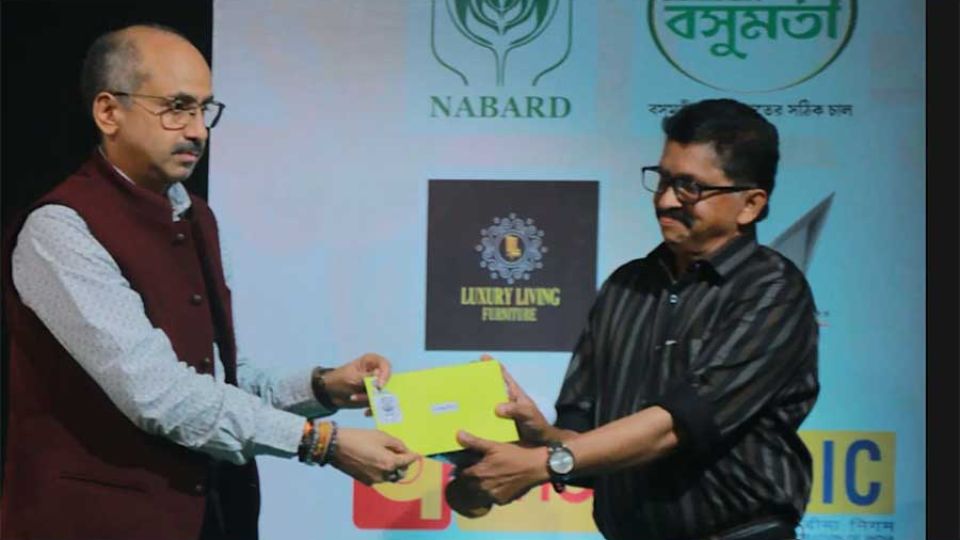
“Half-Bloomed Wild Flowers” ultimately asks a larger question: can development be called inclusive when an entire community remains physically cut off from opportunities taken for granted elsewhere? Through patient field reporting and empathy without sentimentality, Samban gives a human face to statistics and government promises. For his in-depth coverage of Idamalakudi and its marginalised communities, The Statesman is proud to present R Samban the Third Prize in The Statesman Awards for Rural Reporting 2025.