Arya News - Nickel prices fell to a year-to-date low of US$15,510 a tonne on October 2, with further downside risks likely to hinge on Indonesia’s nickel supply policy, according to Fitch’s BMI Research.
JAKARTA – Indonesia is considering a moratorium or restrictions on new nickel smelters that produce semi-processed products, as the government seeks to support prices and prevent a global oversupply of the metal.
“We want to start choosing which industries should continue and which need a moratorium, so that we do not exploit our natural resources recklessly,”, Coordinating Downstream and Energy Transition Minister Bahlil Lahadalia said on Wednesday.
About 50-60 percent of the country’s nickel smelters still produce semi-processed products, but supply has already outpaced demand by about 2.5 million tonnes, putting pressure on global prices, Bahlil said.
To address the oversupply concerns, the government will review its nickel industry strategy, including whether to halt or limit new capacity for plants producing semi-processed nickel, while prioritizing facilities that can make higher-value downstream products directly.
“We want to promote industries that can produce downstream products directly, so we can achieve a genuine shift in the structure of our economy,” Bahlil said.
Nickel prices fell to a year-to-date low of US$15,510 a tonne on Oct. 2, with further downside risks likely to hinge on Indonesia’s nickel supply policy, according to Fitch’s BMI Research.
Greater flexibility in the country’s mining quotas had eased feedstock constraints, adding to pressure from a persistent market surplus and elevated inventories, the report said.
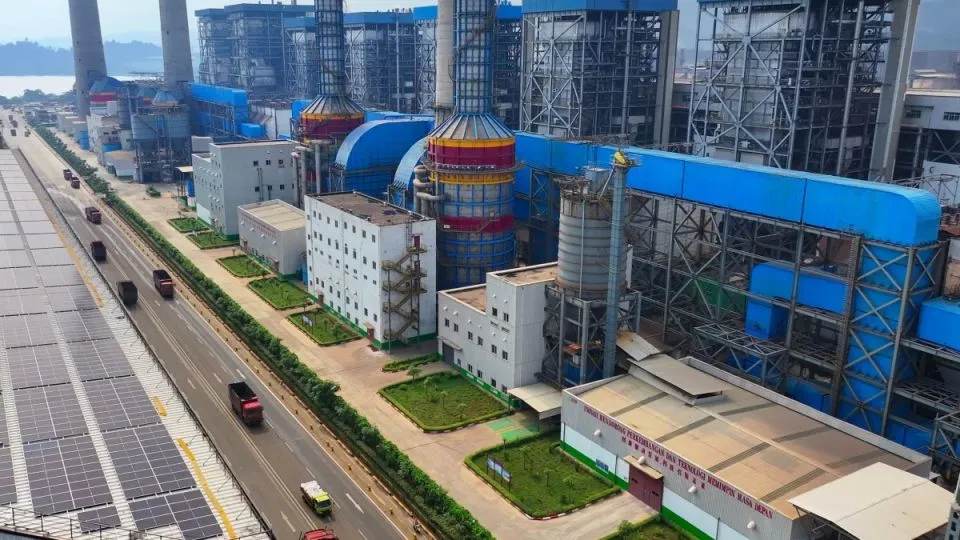
Indonesia, the world’s largest nickel producer, has 422 active nickel mining permits supplying 79 smelters, according to the Indonesian Nickel Miners Association (APNI).
The facilities include 55 rotary kiln-electric furnace (RKEF) pyrometallurgical plants, 10 high-pressure acid leach (HPAL) hydrometallurgical plants, 10 nickel matte producers and six integrated stainless steel smelters.
Those smelters could require as much as 415 million tonnes of nickel ore a year if operating at full capacity, APNI said.
The Energy and Mineral Resources Ministry, which is also led by Bahlil, expects nickel ore output to reach about 290 million tonnes this year, above the 260 million to 270 million tonne quota set under the 2026 mining work plans (RKAB) earlier this year.
It also had verified about 320 million tonnes of annual capacity from nickel smelters under construction, adding to concerns over future supply.
Indonesia would, therefore, also adjust smelter production levels to better align domestic output with global nickel demand, Bahlil said. The needs of processing industries and smelters “cannot be the only basis” for determining national nickel production.
“Even if smelter demand is high, we need to look at how the final products fit into global supply and demand. If we keep following smelter demand, our prices will inevitably fall,” he told reporters in Jakarta on Wednesday.
“We want prices to stay high so production can remain high. If prices are falling, we shouldn’t flood the market as well, because our products will end up selling cheaply. We don’t want to sell our products cheaply,” he said.
Experts warn surging smelter capacity is rapidly depleting Indonesia’s nickel reserves, with saprolite reserves lasting just six years and limonite about 16 years at current production levels.