Arya News - The Japanese government has devised measures, including a system letting farm and medical service operators buy kerosene directly from primary petroleum distributors. But heating demand is about to peak, and keeping supply stable could prove difficult.
TOKYO – As winter approaches, soaring prices for kerosene are casting a shadow over cold regions such as Hokkaido. In addition to rising international prices for petroleum products due to the deteriorating situation in the Middle East, concerns have also begun to emerge over the domestic supply.
The government has hammered out measures, including establishing a system that enables business operators in the agricultural and medical service sectors to purchase kerosene directly from primary distributors of petroleum. But the demand for heating will soon enter its peak season, and it could be difficult to maintain a stable supply.
Hokkaido hit hard
“This fuel is essential to people’s daily lives, and ensuring a stable supply is an important issue,” said Economy, Trade and Industry Minister Ryosei Akazawa in earlier this month, indicating his intention to strengthen measures to eliminate concerns about the supply of kerosene.
Akazawa said a sufficient domestic supply of kerosene had been secured but pledged to accelerate the rebuilding of distribution networks in light of the supply disparities among regions.
Behind this are rising international prices for crude oil and petroleum products due to the situation in the Middle East.
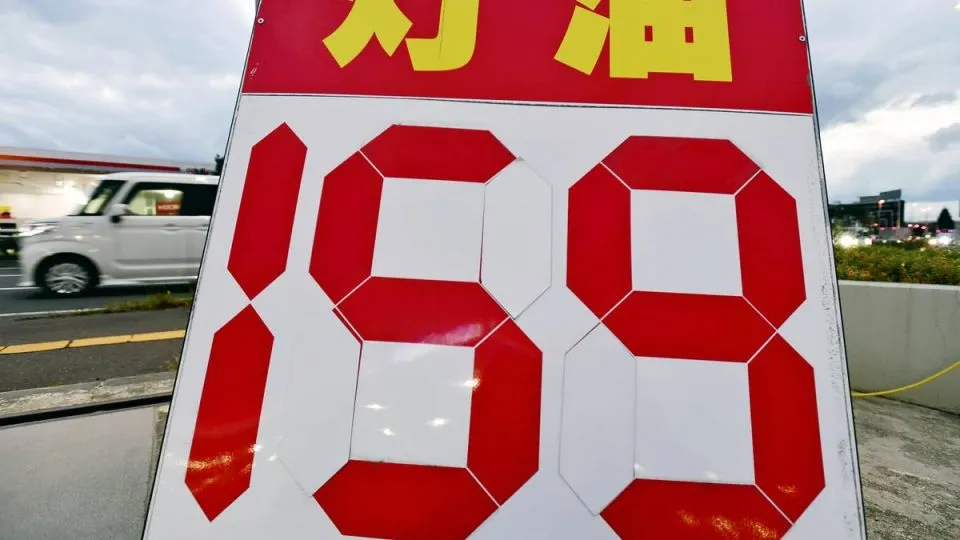
The displayed retail price per liter of kerosene as of Oct.13, as announced by the trade ministry, averaged ¥142.40 nationwide. Despite a ¥43 cut due to a government subsidy, the price is still about ¥20 higher than during the same period last year.
This is a particular blow for Hokkaido, where temperatures have dropped earlier than in other regions. On Oct. 1, Co-op Sapporo, a Sapporo-based consumers’ co-operative association, raised its home delivery price by ¥15 per liter across the entire prefecture, bringing the price in the Sapporo area to ¥159. This is about 20% higher than the same period last year.
The Hokkaido Coop Union, which comprises 18 consumers’ cooperative associations in Hokkaido, including Co-op Sapporo, submitted an urgent request to the ministry’s Hokkaido Bureau of Economy, Trade and Industry on Oct. 13 for effective countermeasures.
The union’s representative director expressed a sense of crisis. “It’s a matter of choosing between turning on the heat or curbing food expenses, so it’s a matter of life and death,” he said.
Prof. Masatoshi Kojima of Momoyama Gakuin University, who is knowledgeable about oil distribution, said, “Hokkaido has a particularly high ratio of imported products, which is why prices have risen so quickly.”
Food prices may rise
In light of these circumstances, the trade ministry has requested primary distributors and wholesalers to maintain sales and orders at the same levels of October last year. The ministry also established a system enabling business operators in the agricultural and medical service sectors to buy kerosene directly from primary distributors in the event of disruptions to distribution.
When importing kerosene at a relatively high price, the government will subsidize the difference between the import price and the domestic wholesale price. This measure goes beyond existing subsidies to actively ensure a certain level of supply.
Kerosene is used not only for home heating but also for warming agricultural greenhouses. If the price surge persists for an extended period, it could drive up production costs for agricultural products, which may lead to higher food prices.
Regarding petroleum products, disruption in the distribution of naphtha — a raw material used in plastics and other products — occurred from February. This stemmed from a surge in orders from business operators who were concerned about the supply of naphtha, as Japan relies on imports for approximately 40% of its needs.
In contrast, more than 90% of domestic kerosene consumption is covered by domestic refining. A government official said, “We have enough kerosene domestically, and concerns are getting ahead of the actual situation. We want to reassure the public through our measures.”