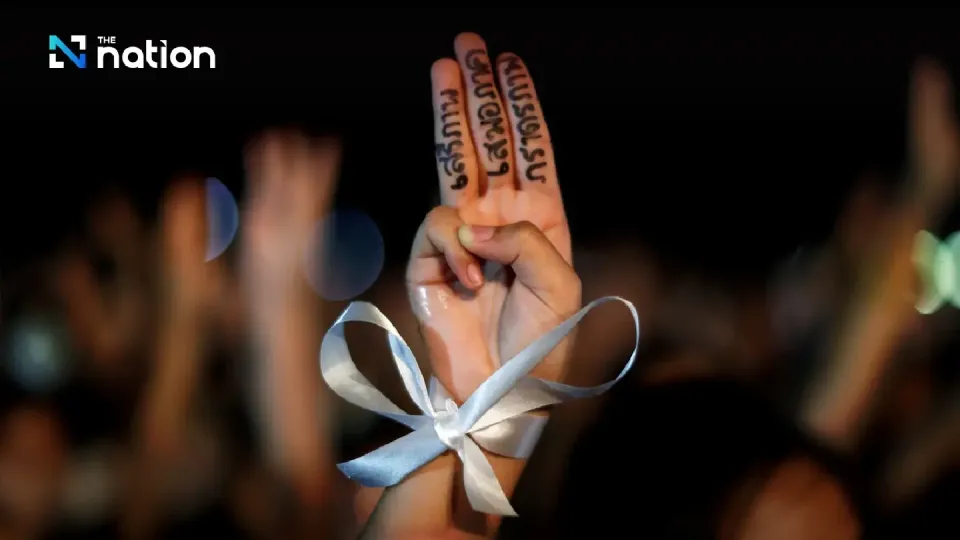
Arya News - The rally, promoted under the slogan “After school, head to Democracy Monument”, marks an attempt by Generation Z activists to mobilise young people against the government while reconnecting with the political demands that defined Thailand’s earlier student-led protests.
BANGKOK – A new generation of pro-democracy activists is preparing to take to Bangkok’s streets, reviving the spirit of Thailand’s three-finger protest movement with a campaign to oust Prime Minister Anutin Charnvirakul and renewed calls for political reform and amnesty for those prosecuted under Section 112.
The demonstration, scheduled for Friday (November 20, 2026) at Democracy Monument, is being organised by emerging youth groups, including Studem Network and Free Thai Youth, with support expressed on social media by veteran activists associated with the 2020 pro-democracy movement.
The rally, promoted under the slogan “After school, head to Democracy Monument”, marks an attempt by Generation Z activists to mobilise young people against the government while reconnecting with the political demands that defined Thailand’s earlier student-led protests.
Gen Z launches ‘cats chase Nu’ campaign
Studem Network, a youth democracy network, and Free Thai Youth have emerged as prominent organisers of the demonstration, inviting students and members of the public to gather at Democracy Monument from 3pm.
Their campaign, “November 20: Time for the Cats to Chase Out Nu”, plays on Prime Minister Anutin’s nickname, Nu, which means mouse or rat in Thai.
Organisers have encouraged participants to wear cat ears as a symbolic gesture of opposition to the prime minister.
In a social media statement, Studem Network declared that the country was not a playground for any political leader and that citizens should not have to tolerate a prime minister who refused to listen to their voices.
The demonstration is also expected to address educational inequality, democratic rights, political freedoms and broader concerns about the government’s policies.
The Democracy Restoration Group and Politika Run Club have also promoted the gathering, with the latter planning a protest run from Rommaninat Park to Democracy Monument.
The campaign has attracted attention from established pro-democracy networks, including the Bad Students group, Thalugaz, Mok Luang Rim Nam and the United Front of Thammasat and Demonstration.
Social media accounts associated with these groups have shared the younger activists’ campaign materials and expressed support from Generation Y protesters.
Their involvement suggests renewed solidarity between different generations of activists, although online endorsements do not necessarily indicate formal organisational links.
Echoes of the 2020 three-finger movement
The emergence of the new protest groups recalls the student-led demonstrations that swept Thailand in 2020 following the dissolution of the Future Forward Party.
Students and young activists organised flash mobs across the country, adopting the three-finger salute as a symbol of resistance to authoritarianism and support for democracy.
The movement became widely known as the three-finger protest movement.
On July 26, 2020, the Free Youth group organised a Hamtaro-themed demonstration at Democracy Monument, using the popular cartoon character and a satirical song about taxpayers’ money to criticise the government and demand the dissolution of Parliament.
The movement subsequently expanded beyond demands for political reform.
On August 10, 2020, the United Front of Thammasat and Demonstration staged the “Thammasat Will Not Tolerate” rally at Thammasat University’s Rangsit campus, where activists presented 10 demands for reform of the monarchy.
The landmark event helped inspire the emergence of activist networks including Ratsadon, Mok Luang Rim Nam, Thaluwang, Thalufah and Thalugaz.
Several groups subsequently advocated changes to the monarchy’s role and the repeal of Section 112 of the Criminal Code, Thailand’s lèse-majesté law.
Large-scale demonstrations became less frequent in 2022 and 2023 as leading activists faced criminal proceedings, imprisonment or left the country.
The planned November 20 rally is therefore drawing attention as a possible revival of the youth-led protest networks, this time with Generation Z activists taking more prominent roles.
Mok Luang Rim Nam and the older generation of activists
One notable feature of the new mobilisation is the appearance of the Mok Luang Rim Nam name in social media campaigns promoting the demonstration.
Founded in August 2020 by student activists, including members from Navamindradhiraj University, Mok Luang Rim Nam became associated with demands for political reform, civil liberties and the release of activists prosecuted under Section 112.
One of its founders, Sopon “Get” Surariddhidhamrong, a radiological technologist, has been imprisoned in connection with lèse-majesté convictions arising from his political activism.
He has faced proceedings in four Section 112 cases and has spent more than three years in detention.
The group has continued campaigning for political prisoners and changes to the lèse-majesté law.
There are also similarities between the current “chase out Nu” campaign and an earlier Mok Luang Rim Nam protest in August 2023, when activists organised a car rally targeting Anutin, then a prominent political figure, using similarly provocative language.
Although such parallels do not establish direct coordination between the two generations, they reflect the continuing influence of the tactics and political messaging developed during the 2020 protest movement.
Section 112 dispute adds to political tensions
The renewed mobilisation comes amid frustration among pro-democracy campaigners over efforts to change legislation inherited from the October 6, 1976 coup.
During the 50th anniversary commemorations of the October 6 massacre, a coalition of civic groups launched a campaign seeking to repeal Revolutionary Council Order No. 41, issued following the 1976 coup.
The order increased penalties for several offences under the Criminal Code, including Section 112, which currently carries a prison sentence of three to 15 years.
The citizen-led campaign, supported by nearly 60,000 signatures, sought to reverse the order and restore earlier sentencing provisions.
Yingcheep Atchanont of the Internet Law Reform Dialogue (iLaw) played a leading role in the legislative initiative.
However, the proposal encountered a procedural obstacle after the House of Representatives declined to accept it as a citizen-initiated bill.
Campaigners criticised the decision associated with House Speaker Sophon Saram of the Bhumjaithai Party.
Parliamentary officials, however, disputed claims that Sophon had personally rejected the proposal, saying responsibility for reviewing the draft had been delegated to a deputy Speaker. They maintained that the proposal did not meet constitutional requirements for citizen-initiated legislation.
The campaigners have challenged that interpretation and pursued an appeal.
Piyabutr Saengkanokkul, a former Future Forward Party leader, also urged campaigners to consider legal avenues to contest the decision and called on the People’s Party to consider using its MPs’ legislative powers to bring the proposal before Parliament.
The dispute has intensified criticism of the Bhumjaithai-led administration among some activists, adding another dimension to the political grievances behind the latest protests.
Amnesty dispute and jailed activists remain key concerns
Alongside demands for political change, the treatment of activists prosecuted under Section 112 remains a major concern for the older pro-democracy movement.
Although the Act on Promoting a Peaceful Society 2026 introduced amnesty provisions for certain politically related offences, Section 112 cases were excluded from its coverage.
The exclusion has disappointed campaigners who argue that political reconciliation should also extend to those imprisoned or prosecuted over alleged royal defamation.
Among those affected is Wanwalee “Tee” Thammasattaya, a pro-democracy activist convicted in connection with a speech during the November 25, 2020 demonstration outside Siam Commercial Bank’s headquarters.
On October 30, 2026, the Criminal Court sentenced her and four other activists to two years and eight months in prison under Section 112.
Wanwalee has remained in detention after the Court of Appeal rejected her bail application. She has also undertaken a hunger strike to protest her detention.
Meanwhile, Tantawan “Tawan” Tuatulanon, a former Thaluwang activist, and Thanalop “Yok” Phalanchai remain prominent figures associated with campaigns for political freedoms and reform of the lèse-majesté law.
Activists are also planning a gathering outside Klong Prem Central Prison on November 22, featuring a communal meal, discussions about the amnesty legislation and activities expressing solidarity with political prisoners.
The event is intended to keep public attention on imprisoned activists and the wider debate over freedom of expression and the right to bail.
Democracy Monument returns as a symbol of protest
The decision to gather at Democracy Monument carries political significance for the emerging generation of protesters.
The landmark was a central gathering point during the 2020 pro-democracy demonstrations and remains closely associated with demands for constitutional reform and democratic rights.
For the new generation, the November 20 rally brings together immediate dissatisfaction with Anutin’s administration and longer-running disputes over political freedoms, legislation and the treatment of activists.
Whether the demonstration develops into a sustained movement remains uncertain.
However, the mobilisation indicates that the political networks established during the three-finger protests have not disappeared, with younger activists now seeking to carry forward elements of their predecessors’ agenda.
For supporters of the movement, the campaign is about more than removing a prime minister. It also reflects continuing demands for political reform and solidarity with activists who remain behind bars.