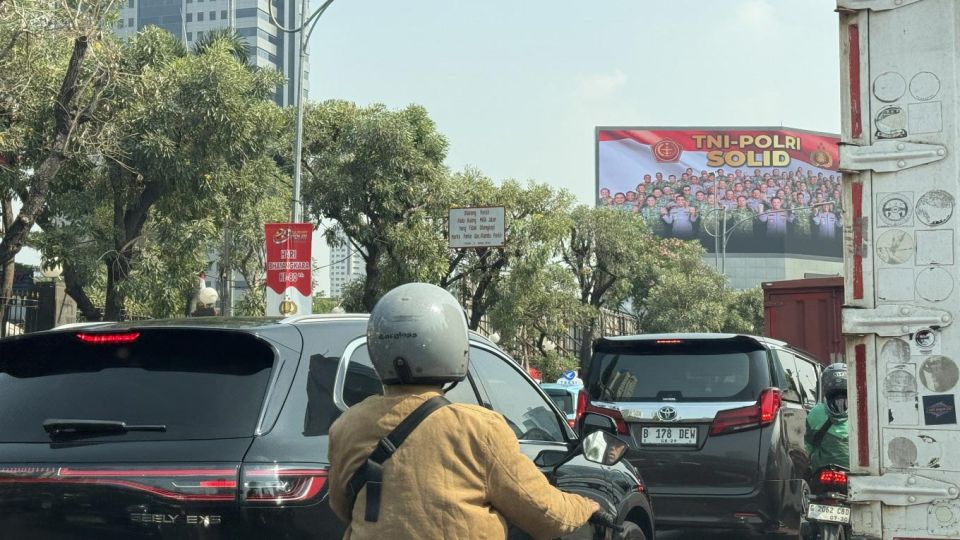
Arya News - A coalition of civil society groups has issued legal notices against the government over a policy that allows military and police personnel to assist tax officials in monitoring taxpayer compliance, warning that it could undermine civilian supremacy.
JAKARTA – A coalition of civil society groups has issued legal notices against the administration of Prabowo Subianto demanding that the government revoke a policy allowing military and police personnel to assist tax officials in monitoring taxpayer compliance over concerns that the policy could undermine civilian supremacy.
The notice was sent on Monday to Prabowo, Finance Minister Purbaya Yudhi Sadewa and House of Representatives Speaker Puan Maharani, giving them three days to respond before it considers taking legal action to challenge the policy.
The coalition, which comprises groups including the Indonesian Legal Aid Foundation (YLBHI), the Center of Economic and Law Studies (Celios), the Commission for Missing Persons and Victims of Violence (Kontras) and Imparsial, insisted that tax administration should remain under civilian institutions.
“We believe the government has shown a lack of awareness and urgency in responding [to our concerns] while the House has failed to demonstrate the courage to exercise its authority to keep [the government] in check,” Muhammad Isnur of YLBHI told a press conference on Monday. “Ultimately, we were forced to issue this legal notice.”
The dispute centers on a circular issued on July 15 by the Directorate General of Taxes, which listed Indonesian Military (TNI) village supervisory officers (Babinsa) alongside the National Police’s neighborhood security officers (Bhabinkamtibmas) as part of the Tax Office’s “information network”.
The circular listed field visits, canvassing, direct observation, remote sensing, web scraping and media monitoring among the methods used to monitor taxpayer compliance.
The policy quickly drew condemnation from critics, including the civil group coalition, who warned that involving the police and military risks expanding the role of security personnel beyond their traditional duties and blurring the line between civilian and security functions.
“The military and police are not trained and do not have the knowledge to determine who pays taxes and who does not,” Isnur of YLBHI said, adding that involving security forces risks creating intimidation among taxpayers, abuse of authority and informal settlements at the local level.
He noted the policy reflected what the coalition described as the military’s expanding role in civilian affairs under President Prabowo’s administration, warning that deploying security forces for taxpayer compliance monitoring could further undermine civilian supremacy.
Celios researcher Bhima Yudhistira stressed that the country’s tax collection problems stem not from a lack of enforcement personnel, but from weaknesses in the tax system and the government’s failure to effectively pursue wealthy individuals and large corporations.
“Instead of strengthening enforcement against large taxpayers, the government is putting more pressure on smaller taxpayers,” Bima said.
He added that deploying military and police personnel alongside tax officers could conflict with the country’s self-assessment tax system, where taxpayers are expected to voluntarily report their income and obligations.
State Secretary Prasetyo Hadi and Presidential Chief of Staff Dudung Abdurachman did not respond to requests for comment on Tuesday.
The government has previously defended the policy, with the Presidential Chief of Staff saying last Friday that the involvement of police and military personnel would be limited to assistance and coordination, while tax collection would remain the sole responsibility of tax officials.
House Speaker Puan, a politician from the quasi-opposition Indonesian Democratic Party of Struggle (PDI-P), warned last week that involving military personnel in tracking taxpayers could erode public trust if not clearly explained. She said the policy should not intimidate taxpayers as voluntary compliance has generally improved.
On Monday, PDI-P senior politician Andi Widjajanto called on the military to remain professional and avoid involvement in politics and civilian affairs, warning against a return of the military’s past role that once dominated public life.
“The military must be professional and focus on protecting our defense. We pay taxes and provide salaries for generals, officers and soldiers so they can serve in defense, not to enter civilian government or take on civilian roles,” Andi said during the party’s event in Jakarta.