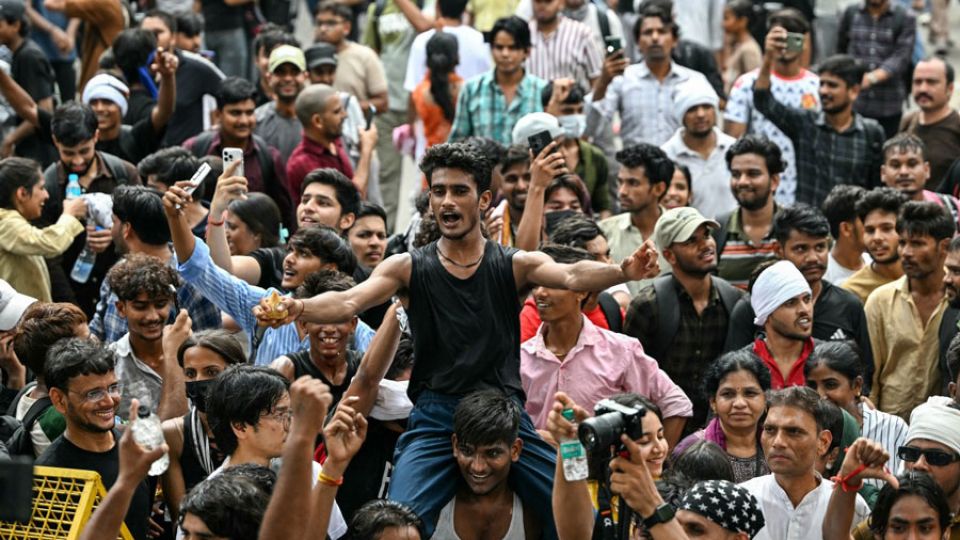
Arya News - Field units have been told to replace broad crowd estimates with verified inputs on state-wise participation, past protest conduct, accommodation, mobilisation channels and logistical support.
NEW DELHI – Delhi Police will build far more detailed profiles of major protests in the capital, including information on participants, organisers, funding, accommodation and local networks, as part of an intelligence overhaul ordered after a review of the July 20 Jantar Mantar protest.
The new system moves significantly beyond advance estimates of crowd size and protest location. Field units have been asked to generate specific and usable intelligence on who is expected to attend, where participants are coming from, how they are being mobilised, and what support structures are in place.
The changes come as the Cockroach Janta Party (CJP) has called for another peaceful protest march in Delhi on September 5 after accusing the Centre of failing to fulfil demands following the withdrawal of protests over the NEET-UG paper leak.
Delhi Police expand intelligence checks before major protests
Delhi Police Commissioner Anurag Kumar has directed the Intelligence Wing and Special Branch to collect and analyse detailed information before major or planned demonstrations, according to sources.
The exercise is expected to cover at least 10 areas of information.
Police units will assess the profile of participants and, where relevant, whether they have taken part in previous demonstrations and how they conducted themselves during those protests.
State-wise participation will also be mapped. Police will seek information on the channels and methods being used to mobilise people for demonstrations.
The names and roles of important leaders and organisers will form another part of the intelligence assessment.
Police will also examine the stated agenda of a protest and its principal demands before the gathering takes place.
Funding, accommodation and Delhi contacts to be mapped
The revised intelligence system will look beyond the protest venue itself.
Police have been asked to gather information about where participants are staying in Delhi, their movements in the city and their local contacts or connections.
Organisational affiliations will also be examined.
Sources of funding for a protest and the logistical arrangements supporting a large gathering are among the other areas that police intend to assess. These can include transport, accommodation, and other support provided to participants.
The focus, according to sources, is on replacing broad or approximate intelligence with information that can be verified and used operationally.
The objective is to give police a fuller picture of a gathering before it begins, including who is organising it, how participants are being mobilised and whether groups outside Delhi or multiple organisations are involved.
July 20 Jantar Mantar protest triggered intelligence review
The overhaul follows a review of police preparedness after the July 20 mobilisation at Jantar Mantar over examination-related demands.
A large number of protesters gathered in the area and attempted to move towards Parliament. Clashes subsequently broke out between protesters and police.
Officials later concluded that advance intelligence on the likely scale of the gathering, mobilisation patterns, and the involvement of different groups needed to be more precise and comprehensive.
The revised system is intended to address those gaps before future large demonstrations.
Wireless network also put under fresh scrutiny
The Police Commissioner has separately ordered checks of the wireless communication system used during major public gatherings.
The network is being reviewed for deficiencies that could slow the flow of information between personnel deployed on the ground and senior officers.
Sources said the wider exercise is intended to improve preparedness and law-and-order management rather than prevent peaceful protests.
Particular attention is expected for demonstrations drawing substantial participation from outside Delhi or involving several organisations.
The changes assume immediate relevance ahead of the CJP’s September 5 protest call in the national capital.
Read More:
Indian police use water cannon at new protest over test paper leaks