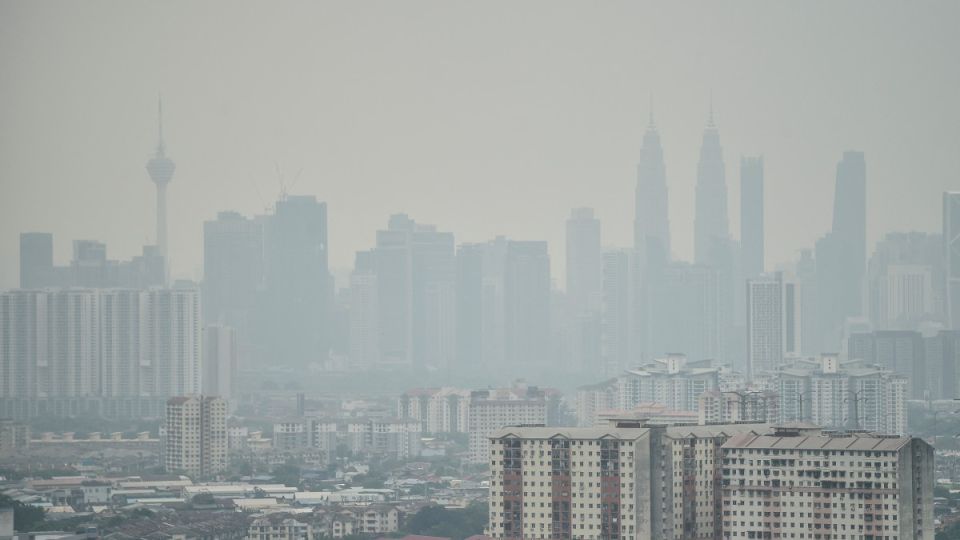
Arya News - Haze spreading to neighbouring countries has added pressure on Indonesia to prevent transboundary pollution. However, Jakarta remains indecisive regarding the assistance offered by Malaysia to help extinguish forest and land fires across the country.
JAKARTA – Jakarta remains indecisive about an offer of assistance from Malaysia to help extinguish forest and land fires across the country, despite haze spreading to neighboring countries adding pressure on Indonesia to contain the blazes and prevent transboundary pollution.
In a statement issued late on Tuesday, the Transportation Ministry’s civil aviation director general, Lukman Laisa, said his office had not received a flight clearance request for Malaysian aircraft to carry out a waterbombing mission in areas hit by wildfires.
The ministry oversees civil aviation permits for aircraft operating in Indonesia, including those registered in foreign countries and operated by Indonesian firms.
Lukman asserted that “each application will be processed in accordance with applicable laws and regulations” should a foreign country submit such a request.
The statement from the Transportation Ministry came after Malaysian Natural Resources and Environmental Sustainability Minister Arthur Joseph Kurup posted on Facebook on Monday that he had a phone call with Environment Minister Jumhur Hidayat.
During the conversation, Arthur conveyed Malaysia’s readiness to assist in controlling forest and land fires through cloud seeding operations in Indonesia’s airspace along the countries’ shared borders.
Jumhur welcomed Malaysia’s request, describing the operations as a mutually beneficial effort to reduce transboundary haze, adding that his office had coordinated with the Indonesian Military (TNI) commander to handle the technical permits.
However, TNI spokesperson Brig. Gen. Muhammad Nas denied on Tuesday that such permits fell under the military’s remit. An official with the Meteorology, Climatology and Geophysics Agency (BMKG), which oversees cloud seeding efforts in Indonesia, also said the agency had not issued any permit or other form of approval for Malaysia to conduct operations in Indonesian territory.
Jumhur did not respond to The Jakarta Post’s request for comment on Wednesday.
The Foreign Ministry stopped short of commenting on Malaysia’s offer, saying it was still “coordinating internally”.
Malaysia’s proposal came after haze from wildfires across the country reached neighboring countries.
The environment department of the Malaysian environment ministry reported deteriorating air quality across states in Peninsular and East Malaysia on Tuesday, with haze moving from West Kalimantan toward Malaysia’s Sarawak.
IQAir realtime readings listed Kuching in Sarawak and Kuala Lumpur among the top 10 cities with the worst air quality globally on Wednesday. Sarawak authorities closed nearly 600 schools in the city due to the haze.
Calls for ASEAN
The transboundary haze was a sign that the wildfire situation in Indonesia should be addressed through diplomacy between this country and other ASEAN members, said Gadjah Mada University’s (UGM) ASEAN Studies Center executive director Dafri Agussalim.
“Indonesia should initiate efforts to invite other countries, particularly neighboring states, to help resolve this problem,” he said on Wednesday, citing the ASEAN agreement on transboundary haze pollution.
Signed in 2002, the agreement provides a framework for the bloc’s member states to cooperate to prevent and control transboundary haze caused by forest and land fires. Indonesia ratified the agreement in 2014.
Dafri further urged Indonesia not to reject other countries’ offers of assistance with the wildfires.
“Rejecting help would be a strange move,” Dafri said. “We can’t simply tell our neighbors this is a domestic matter, because the [regional] impact is already far too significant.”
International law expert Hikmahanto Juwana of the University of Indonesia (UI) concurred, saying rejecting assistance from ASEAN countries could amount to a violation to the 2002 agreement.
Calls have also emerged across the region for ASEAN members to stop treating transboundary haze as a seasonal inconvenience.
“It is a serious regional environmental, public health and economic problem, and the time has come for ASEAN to acknowledge that its collective response has not been effective enough,” Malaysian activist Lee Lam Thye said on Tuesday, as quoted by The Star.
He urged ASEAN leaders to convene an urgent high-level review of the transboundary haze agreement and establish a stronger, time-bound and enforceable action plan before the situation deteriorates further.
Home front efforts
In Indonesia, the National Disaster Mitigation Agency (BNPB) resumed efforts to put out wildfires through weather modification to increase rainfall potential and waterbombing operations in West Kalimantan, the province recording the largest area burned throughout the year.
Authorities have also sought law enforcement as President Prabowo Subianto ordered investigations into companies suspected of starting forest and land fires.
On Tuesday, the Forestry Ministry imposed administrative punishments on six companies after finding fires on concessions they managed in West, Central and East Kalimantan. The companies allegedly opened land for their business activities by burning it.
The National Police’s Criminal Investigation Department (Bareskrim) also named 72 individuals in nine Sumatra and Kalimantan provinces as suspects for allegedly burning forests and land to clear areas for oil palm plantations.
Read More:
Malaysia cloud-seeding assist tests Indonesia’s limits as haze crosses borders