Arya News - Authorities said the surge in the rat population was partly driven by a prolonged dry season, which has allowed dense scrub to grow and provide shelter for the pests.
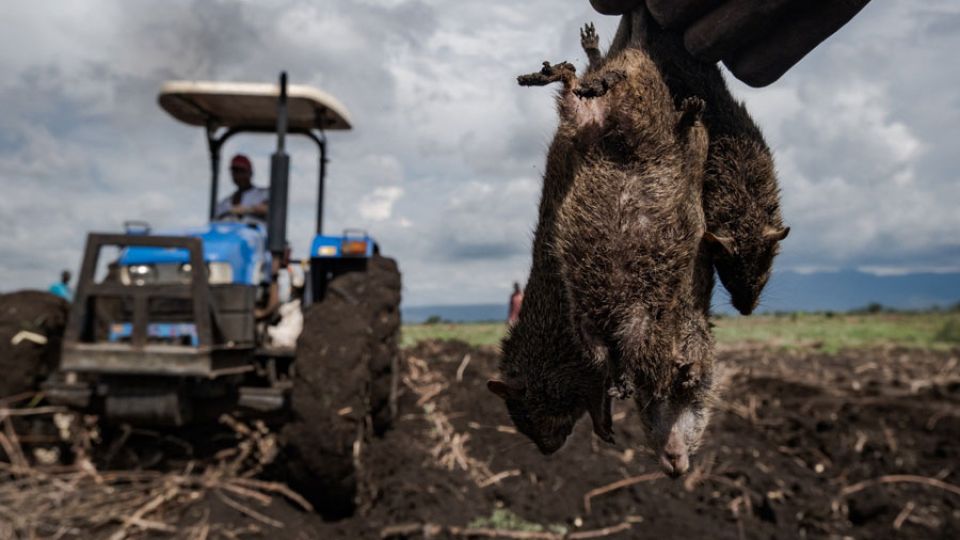
SEMARANG, CENTRAL JAVA – An extreme drought coupled with a surge in rat population is threatening farmers across Central Java with widespread crop losses, as the pests destroy staple crops and increasingly attack vegetables and fruit grown in fields and household gardens.
Rat infestations are damaging rice, corn, chillies, shallots, eggplant, tomatoes and fruit trees, according to local authorities.
In Semarang, rat infestations have affected about 1,050 hectares of rice fields, putting rice yields at risk.
Moh Edy Sukarno, head of the Semarang Agriculture, Fisheries and Food Agency, said authorities have taken several measures to contain the infestation, including clearing weeds around rice-field embankments, organizing mass rat hunts and encouraging farmers to plant simultaneously. The efforts, however, have so far failed to curb the attacks significantly.
“We have also built about 100 owl houses in affected rice fields to encourage owls, natural predators of rats, to return. But the programme has not been effective because wild owl populations have declined sharply,” Edy said on Sunday, as quoted by Kompas.com.
Authorities said the surge in the rat population was partly driven by a prolonged dry season, which has allowed dense scrub to grow and provide shelter for the pests.
The decline of natural predators such as snakes and owls, due to hunting and habitat loss, has further disrupted the ecosystem, allowing rat populations to grow unchecked.
In Blora, a surge in rat infestations has forced farmers to patrol their fields almost every night to protect their crops.
Eri Muhammad Syahri, 30, a farmer in Prigi village, said he regularly patrols his 1,700-square-meter chilli field at night, carrying an air rifle to keep the rats away.
“I have put up nets, but the rats still get through, so I continue to patrol the field every night,” Eri said on Saturday.
In recent months, the rats have expanded their targets beyond staple crops such as rice and corn to chilli and shallots, he said.
“In the past, rats usually attacked corn, but now they are also attacking chillies and shallots. They gnaw at the base of the shallot plants,” Eri said.
The infestation has become so severe that some farmers have stopped planting because rats eat newly sown seeds before they can take root.
In Rembang, a surge in the rat population over the past seven months has cut corn production by as much as 50 percent.
Sadimin, a local farmer, said farmers had been forced to harvest their crops early to prevent further losses from the infestation.
“We have had to harvest earlier than usual because we are afraid the rats will eat more of the crop. Under normal conditions, farmers can harvest 800 kg, 900 kg or even 1 tonne, but production has now fallen by as much as half,” Sadimin said on Friday as quoted by Tribunnews.com.
Aside from the rat infestations, prolonged drought, intensified by El Nino, is also threatening crops across Central Java.
In Grobogan, farmland that many residents depend on for their livelihoods has become too dry to cultivate, with hardening soil and shallow wells used for irrigation beginning to dry up.
Farmers said the drought this year was far more severe than in normal years. Corn yields, which typically reach about 5 tonnes per hectare, have fallen by more than half, while some fields have suffered complete crop failure.
The Central Java administration is responding with measures including weather modification and the distribution of solar-powered water pumps to farmers, aimed at easing the impact of the drought and reducing their dependence on diesel fuel.
Dedi Utomo, a farmer in Pekalongan regency, said the solar-powered pump had helped lower his irrigation costs.
“The solar-powered pump allows us to save money. During the day, we no longer need to buy diesel to run the engine. The diesel pump is now used mainly at night, cutting daily diesel consumption from about 30 liters to between 15 and 20 liters, he said.
Indonesia is facing a particularly strong El Nino this year, with the Meteorology, Climatology and Geophysics Agency (BMKG) warning that the dry season could persist into early next year.
Previous El Niño events have significantly disrupted food production in the country. During the 2023–2024 El Niño, Indonesia’s annual rice output declined by around 1.4 to 1.5 percent, while rice prices surged to record highs.