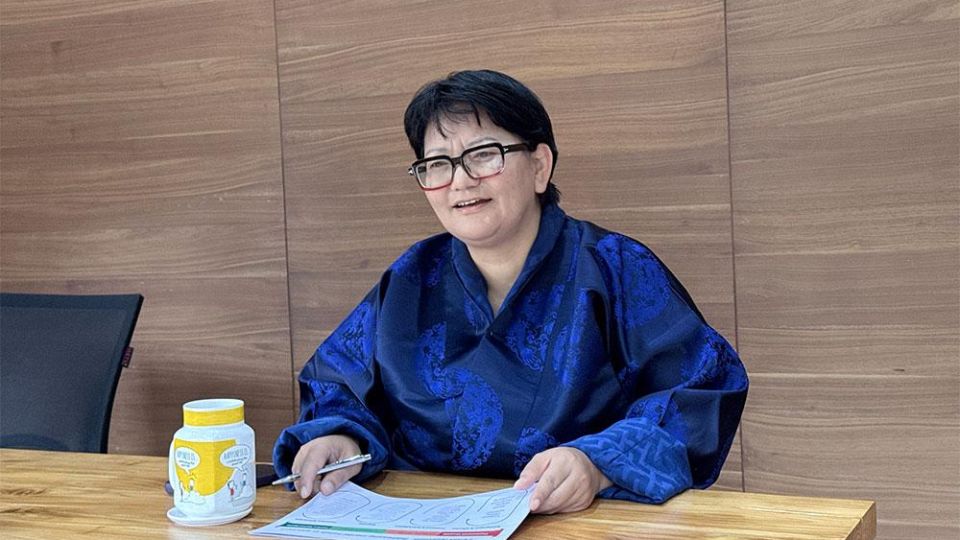
Arya News - In a conversation with Kuensel reporter Dechen Dolkar, PEMA Secretariat Head, Dasho Dechen Wangmo, discusses Bhutan`s growing mental health challenges and the path to a more responsive system.
THIMPHU – What is the current overall mental health situation in Bhutan? How has this changed in recent years?
Mental health is emerging as an increasingly important public health and social concern in Bhutan. The evidence from the National Health Survey 2023, together with the growing number of people seeking mental health services from The PEMA, tells us that there are significant unmet needs. At the same time, we should be careful in interpreting the increase in reported cases. It reflects not only an increase in mental health problems but also greater awareness, improved identification, reduced stigma, and increased availability of services.
The same survey found that among people aged 15–69 years, 12.1 percent reported mild depression and 0.8 percent suffered from moderate-to-severe depression. For anxiety, 1.4 percent reported moderate anxiety and 0.4 percent severe anxiety. Importantly, 0.6 percent had seriously considered attempting suicide in the previous 12 months, while 1.6 percent reported a previous suicide attempt. The survey also highlighted the significant treatment gap: only 16.8 percent of the people experiencing serious emotional distress reported speaking with a professional clinician.
Major mental health concerns and trends that we are seeing include:
Depression and anxiety, which are among the most commonly reported mental health conditions.
Suicide and self-harm, which remain a concern and require stronger prevention and early intervention.
Increased alcohol and substance use, particularly because of their impact on mental health, families, relationships and communities.
Mental health and wellbeing of children and young people, including emotional distress and vulnerabilities related to family relationships, social pressures, education, employment and substance use.
How serious is the gap between the demand for mental health services and the services currently available?
A significant gap remains between the growing demand for mental health services and the capacity currently available in Bhutan. However, the challenge is not simply a shortage of professionals. It is a broader system-capacity gap that includes specialised services, infrastructure, community-based care, early intervention and continuity of care.
Demand has been increasing as awareness grows and stigma gradually decreases, encouraging more people to seek help. This is a positive development, but it also places greater pressure on the existing system.
One of the key challenges is to ensure availability of mental health support beyond Thimphu and closer to where people live. The PEMA’s approach has, therefore, been to expand and decentralise services rather than rely solely on specialist facilities. Mental health services are now available in 14 of Bhutan’s 20 districts through their integration into the primary healthcare system. The aim is to enable people to receive appropriate assessment, that too closer to home, with clear referral pathways for those requiring specialised care.
The PEMA is also strengthening early identification, safe referral and continuity of care through its work with health facilities, schools, law enforcement, social services and communities. The Early Identification and Safe Referral System and the national referral algorithm are intended to make the journey from identification to treatment and follow-up more coordinated and efficient.
Do we have enough counsellors, psychologists, psychiatrists and other trained professionals to meet the need?
Our country has made great strides in developing its mental health workforce, but we do not yet have enough trained professionals to meet the full and growing need all across. We currently have one international psychologist, nine psychiatrists, 31 clinical counsellors, and a limited number of mental health nurses, social workers, occupational therapists and other allied professionals.
There are also challenges in the geographical distribution of these professionals, particularly when specialised services are concentrated in a few locations. However, a sustainable mental health system cannot depend on psychiatrists and specialists alone. We need a multidisciplinary workforce in which psychiatrists and clinical psychologists provide specialised care, while counsellors, nurses, social workers, primary healthcare providers, teachers and community workers contribute to prevention, early identification, psychosocial support, referral and follow-up.
The PEMA is therefore investing in workforce development across different levels of care. In collaboration with KGUMSB, training pathways are being developed for mental health outreach workers, mental health nursing and caregiving, while mental health is also being integrated into the education and training of doctors and nurses, so that all health professionals have basic competencies in recognising and responding to mental health needs.
Our collaboration with NIMHANS is particularly important in building specialist capacity. Bhutanese clinical counsellors have been supported to pursue postgraduate training in Clinical Psychology, helping to develop the specialist expertise that will strengthen services in the years ahead.
How is Bhutan currently responding to the growing mental health challenge?
Bhutan is responding to the growing mental health challenge by recognising that mental health is not simply a health-sector issue. It is about people, families, communities and the overall wellbeing of the nation.
The response is therefore focused on building a more comprehensive and people-centred mental health system. This means moving beyond a model that responds only when someone reaches a crisis, towards one that places greater emphasis on prevention, early identification, timely intervention, treatment, recovery and reintegration.
As mentioned, the key part of this response has been the gradual decentralisation of mental health services through its integration into the primary healthcare system. The objective is to ensure that people can access basic assessment and support closer to home, with referral pathways in place for those who require specialised care.
Bhutan is also working to strengthen the wider network of people and institutions that can respond to mental health concerns. This includes health workers, schools, families, communities, police, social services and other frontline institutions. The idea is that mental health should not be the responsibility of a few specialists alone, but should be supported across the wider system.
At the same time, Bhutan is investing in the development of its mental health workforce, specialised services and referral systems. There are still significant gaps, particularly in human resources, infrastructure and access to specialised care, but the direction is towards building a system that can identify problems earlier, respond more effectively and support people throughout their recovery.
At The PEMA, we believe that behind every statistic is a person, a family and a life that matters. Bhutan’s response must, therefore, ultimately be measured not only by the number of services we establish, but by whether a person who is struggling can find help, support and hope when they need it.