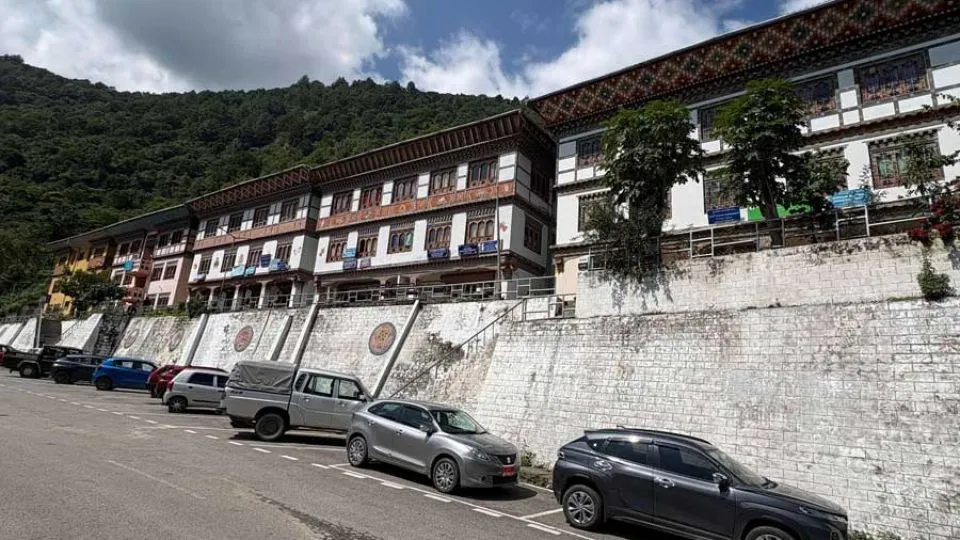
Arya News - Business owners in Phaling, Bhutan, say the town`s limited population, increasing competition, and bringing goods into the area have made it increasingly difficult to sustain themselves.
LHUENTSE – Many business owners in Phaling town, Lhuentse’s main commercial hub, are struggling as declining incomes and a shrinking customer base make it increasingly difficult to keep their businesses afloat.
The town has 35 active shops serving about 210 municipal households. Business owners say the limited population, increasing competition and high costs of bringing goods into the dzongkhag have made it difficult to sustain their businesses.
Lhuentse had a population of 28,581 as of July this year, according to dzongkhag data. However, rural-to-urban migration and outward migration have left 323 households vacant across eight gewogs.
Gangzur recorded the highest number of empty households at 66, while Minjey recorded the lowest at 17.
For businesses in Phaling, the challenge is compounded by Lhuentse’s geographical isolation. The dzongkhag has no adjoining major commercial centre, while sourcing goods from larger markets can take up to two days.
Although four new shops opened in Phaling this year, business owners say the number of potential customers has not increased.
Mon Bdr Gurung, 47, who runs a restaurant in town, said business was more profitable when there were fewer eateries.
“With new shops opening and fewer residents in town, competition has intensified,” he said.
He serves about 20 customers on weekdays, most of whom are visitors in town to work or access services at the dzong, banks and hospital. Business drops sharply during weekends.
Roadside eateries along the highway leading into town and near the hospital also draw customers away from the main commercial area.
For some businesses, transportation costs further erode already limited earnings.
Tshering Yangden, 26, who runs a clothing shop with her mother, pays Nu 14,000 in monthly rent. She said bringing stock into Lhuentse was expensive because of the distance from major commercial centres.
“After accounting for taxes, restocking expenses and bus freight charges, I earn around Nu 10,000 a month,” she said.
She said building trust and maintaining good relationships with regular customers were important to keeping the business running.
Tailor Pema Norbu, 34, grosses about Nu 40,000 a month before operational expenses. His customers include civil servants, bank employees, hospital staff and villagers visiting from nearby gewogs.
Having lived in Lhuentse for 20 years, he said he had witnessed a gradual decline in the town’s population.
“Lhuentse is isolated with no neighbouring active market centres,” he said. “Sourcing materials from outside takes two days and is expensive. On top of that, finding staff is extremely difficult, so I run the shop alone.”
Tourism seen as a way to revive local economy
The Lhuentse Dzongkhag Administration is now looking to tourism to attract more visitors, encourage longer stays and create new opportunities for local businesses.
The dzongkhag will host its inaugural Kishuthara Festival in Khoma from December 26 to 28 this year to showcase the region’s weaving heritage. It is also developing infrastructure at the nearby Khoma Zampa Viewpoint.
In collaboration with the Handicraft Association of Bhutan, the dzongkhag is formulating a Tourism Action Plan to identify priority infrastructure and tourism products.
There are also plans to support community-based enterprises in food services, handicrafts, guiding, homestays and cultural tours.
It also includes upgrading eco-trails for domestic and international trekkers, expanding village homestays and promoting attractions including Gangzur Pottery, Takila, Dungkar Naktshang, Rodungla and the Minjey-Yangtse Trail.
The dzongkhag hopes these initiatives will help integrate Lhuentse into the wider eastern Bhutan tourism circuit and generate more economic activity for local communities.
Lhuentse currently receives between 150 and 200 international tourists and more than 2,500 domestic visitors annually. Most visitors arrive during the autumn festival season between September and November for events such as Tseypamae Wang and the annual Dzongkhag Tshechu.
For local businesses, however, the challenge is to turn seasonal visitor numbers into more consistent demand throughout the year.