Arya News - The alleged surveillance took place between last year and this year, when Listyo served as National Police chief, a position he assumed in 2021 under then-President Jokowi and retained under President Prabowo before being appointed presidential chief of staff in a Cabinet reshuffle last month.
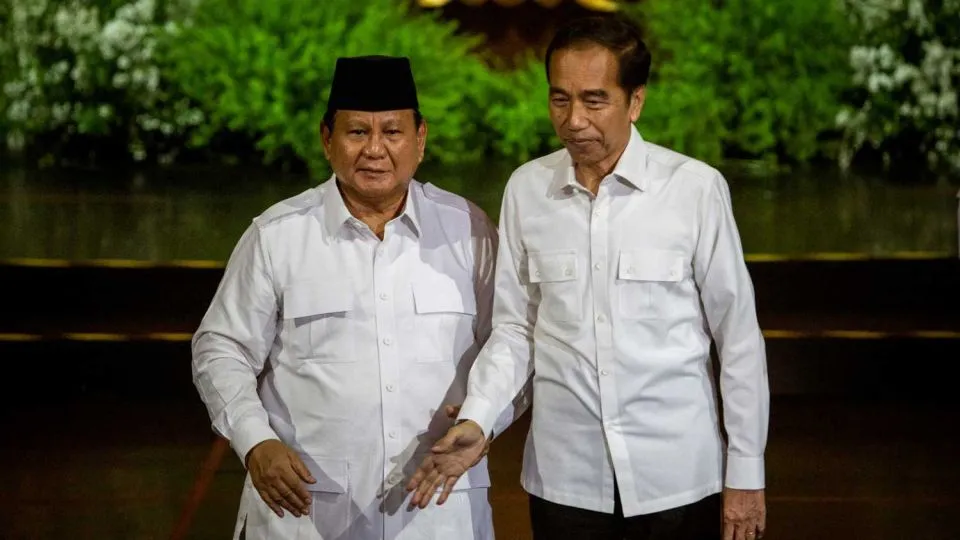
JAKARTA – The arrest of a senior official with close ties to former president Joko “Jokowi” Widodo over alleged wiretapping targeting President Prabowo Subianto has put their political alliance under growing strain, raising the prospect of a wider confrontation between the two figures.
Prabowo dismissed his presidential chief of staff, Listyo Sigit Prabowo, on Wednesday, a day after police announced his arrest over allegations that he and two senior police officers had unlawfully wiretapped the phones of several high-profile figures, including the president and cabinet ministers.
The alleged surveillance took place between last year and this year, when Listyo served as National Police chief, a position he assumed in 2021 under Jokowi and retained under Prabowo before being appointed presidential chief of staff in a Cabinet reshuffle last month.
Government officials have described the alleged surveillance as potentially amounting to “treason”, citing threats to the president’s security and national interests.
State Secretary Prasetyo Hadi said the wiretapping could endanger Prabowo’s safety, while Coordinating Law, Human Rights, Immigration and Corrections Minister Yusril Ihza Mahendra suggested it could have been intended to “incapacitate” the President and prevent him from exercising his powers.
Listyo’s close ties to Jokowi have fueled speculation that the case could become a flashpoint in the increasingly strained relationship between the former president and Prabowo, who has sought to consolidate his authority and assert his independence since their 2024 election alliance, in which he ran alongside Jokowi’s son, Gibran Rakabuming Raka.
Political analyst Arfiki Chaniago said Listyo’s arrest marked the “beginning of an open rupture in the relationship between Jokowi and Prabowo”, arguing that their differences were moving beyond competing political interests toward a deeper breakdown of mutual trust.
“Ultimately, both Prabowo and Jokowi would stand to lose from such a split,” Arifki told The Jakarta Post on Thursday, pointing to Prabowo’s declining approval ratings and the possibility that political rivals could exploit the rift to advance their own ambitions ahead of the 2029 presidential election.
The scandal also comes as Prabowo faces mounting domestic challenges, including slowing economic growth, concerns over a potential market downgrade, declining public approval and sustained demonstrations over his flagship programs and the government’s handling of haze pollution.
Nicky Fahrizal of the Jakarta-based Centre for Strategic and International Studies (CSIS) said the wiretapping controversy could also put Vice President Gibran’s political position under increasing pressure if the relationship between Prabowo and Jokowi deteriorates further.
“This could mark the beginning of a broader dismantling of Jokowi’s political influence within the government. It could involve a cabinet reshuffle, or even impeachment proceedings against Gibran, which would trigger a much bigger political confrontation,” Nicky said.
Gibran himself had already faced mounting calls to step down or be impeached, including from some parties in the ruling coalition, following a Supreme Court decision last week that annulled the validity of the education certificate he used for his vice presidential candidacy.
Jokowi, meanwhile, is facing renewed scrutiny over his own academic credentials. On Thursday, he appeared at the East Jakarta District Court to testify in defamation trials stemming from allegations that he had falsified his university diploma, a controversy that has followed him since his presidency.
In a highly anticipated appearance, the former president publicly displayed his academic diplomas for the first time and said he felt “deeply insulted and humiliated” by the allegations, citing a survey suggesting that around 34 million Indonesians believed his diploma was fake.
Listyo’s arrest may have dealt a significant blow to Jokowi, whose political influence has been closely tied to his network of loyalists within the police force. That network has partly helped him retain political leverage even after leaving office more than two years ago.
However, both Nicky and Arifki cautioned against underestimating Jokowi’s remaining political capital, noting that his influence extends beyond connections among political and security elites to a broad network of volunteers and grassroots supporters.
“Jokowi may still have several trump cards up his sleeve. He is a politician who operates through tactics and calculated moves,” Nicky said, adding that the former president could use every means at his disposal to protect Gibran’s position and preserve his network’s foothold within the government.
“From his perspective, Gibran and Prabowo are part of the same package. If Gibran falls, he will find ways to make things difficult for Prabowo as well,” Nicky added.
Asked about the wiretapping case on the sidelines of Thursday’s court hearings, Jokowi told reporters, “We should all respect the ongoing legal process. Let us wait and see.”