Arya News - Matsuoka Hoyoen was established in 1909 for patients from Hokkaido and the Tohoku region. When a cure for the disease became available, the number of residents at the facility, which peaked at 824 at the end of fiscal year 1942, decreased, having fallen to 33 as of Sept. 1 this year.
AOMORI – Students at Aomori University have been working to create a virtual 3D model of a leprosy sanatorium in Aomori with the aim of digitally preserving the facility for future generations. The six students plan to spend several years on the project and eventually make it publicly available online.
Leprosy, also known as Hansen’s disease, is an infectious bacterial infection that can cause paralysis or numbness. Although the disease became curable after a drug became available in 1947, offering a “silver bullet,” patients were forced into sanitariums until the abolition of the Leprosy Prevention Law in 1996.
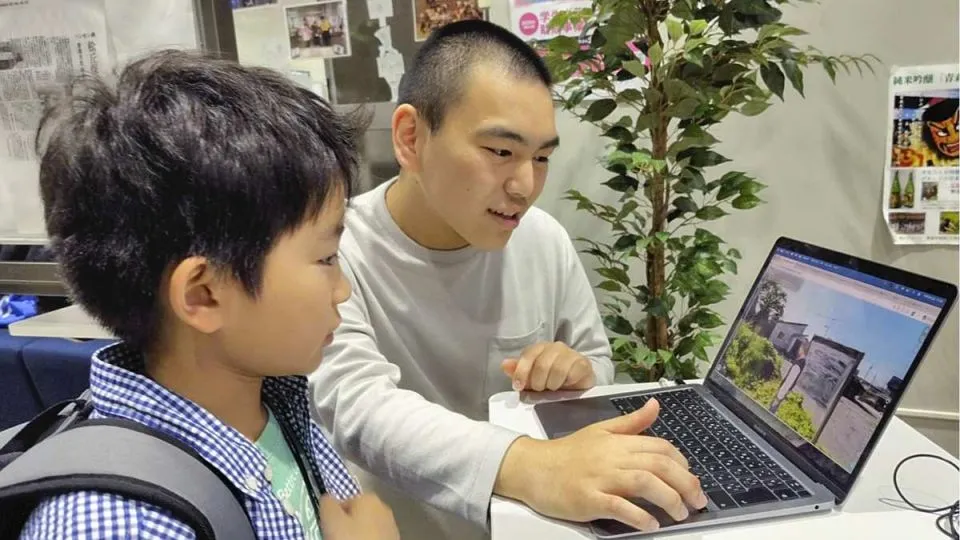
On Oct. 3, the students introduced the project at their university festival. They demonstrated a 360-degree panoramic view of part of the National Sanatorium Matsuoka Hoyoen on a computer screen in the student lounge on the first floor of the school building.
One of the students explained to a visitor that the remains of many former sanatorium residents are housed at the facility. The remains of about two-thirds of the residents who died there are kept by the facility, primarily because no one has claimed them.
Visitors to the festival controlled their avatars in the virtual recreation and explored the facility’s walking paths and other areas.
“I’ve never been inside the facility in person, but I could feel the atmosphere of it better through the 3D images than through photos. I really like it as I can walk there freely,” said Daiki Tokumasu, 46, who runs an IT company in Higashidori in the prefecture.
The project to create the virtual space began last academic year as part of a class on regional issues led by social welfare Prof. Sachiko Tanaka at the university. It was initiated after Tanaka was asked by the sanatorium if she could assist with preserving on video the sanatorium’s dormitory building, which is set to be demolished because of aging.
The students shot the facility around June. They used smartphones to capture the bust of a Matsuoka Hoyoen director and stone monuments. They also used a 360-degree camera, which records a complete field of view in all directions, to capture walking paths and other large areas.
‘Deeply regrettable’
Matsuoka Hoyoen was established in 1909 as a sanatorium for patients primarily from Hokkaido and the Tohoku region. When a cure for the disease became available, making it possible for residents to reintegrate into society, the number of residents at the facility, which peaked at 824 at the end of fiscal 1942, decreased, having fallen to 33 as of Sept. 1 this year.
As part of efforts to preserve the residents’ memories and their daily lives, in July the students interviewed Masaru Sato, 78, who chairs the residents’ association. They asked for his opinion on the government having continued its policy of segregating Hansen’s disease patients after the end of World War II, despite the fact that effective treatments were available.
“Although the government’s segregation policy was eventually ruled unconstitutional, many people were tormented until that time. I can only say that it was deeply regrettable,” Sato said.
In 2001, the Kumamoto District Court ordered the government to pay compensation to plaintiffs, which included former patients at national sanatoriums for people with Hansen’s disease, in response to their claims that their human rights were violated by the government’s isolation policy.
The students plan to transcribe Sato’s words and include them in the video they are currently producing.
Haruto Koeda, 20, a sophomore in the Faculty of Business Administration at the university, said: “I want as many people as possible to see the footage we have shot. I think it is important for people to understand the pain these individuals endured so that discrimination and prejudice will never be repeated.” The facility covers as much as 230,000 square meters, and the students are said to have digitally re-created about 30%, mainly of the buildings’ exteriors. The team plans to begin shooting the buildings’ interiors and the garden in the future.