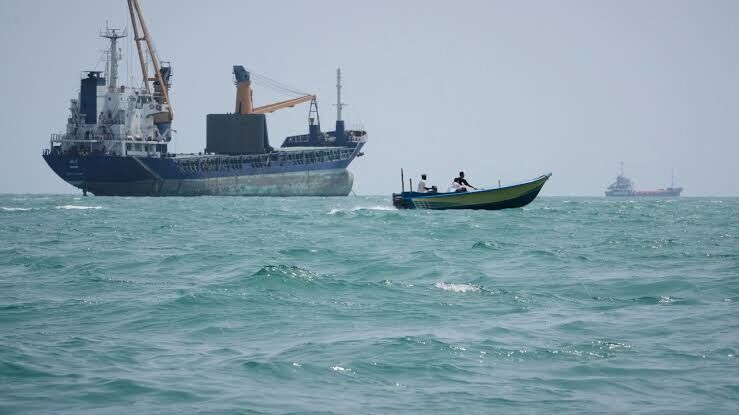
Arya News Agency -SEOUL – South Korea's Defense Ministry said on Tuesday it has dispatched a team to the Middle East to evaluate security conditions around the Strait of Hormuz, while firmly denying reports that Washington has requested Seoul to deploy military equipment in the strategic waterway by a November deadline.
The ministry emphasized that the team's mission is strictly limited to assessing regional dynamics and security conditions, and that the deployment was not carried out under the assumption that South Korean forces would eventually be stationed there. "The claim that the United States has requested the deployment of our equipment in the Strait of Hormuz by a specified deadline is not true," the ministry stated in a release.
The clarification follows recent remarks by a senior South Korean presidential official, who told reporters that Seoul was consulting on practical ways to contribute to freedom of navigation in the Strait of Hormuz. However, the presidential office later walked back those comments, asserting that no decision had been made to dispatch military personnel to the area.
The developments come amid heightened regional tensions, with Iran repeatedly warning against any third-party military involvement in the Persian Gulf and the Strait of Hormuz. On Monday, Iranian Foreign Ministry spokesman Esmail Baghaei issued a direct message in Korean on social media platform X, underscoring that Tehran values its more than six decades of friendly relations with Seoul—but delivering a stark caution.
"At a time when the Iranian nation is defending itself against acts of aggression and responding decisively to U.S. war crimes against women and children, any operational participation or military presence by other parties in the Persian Gulf and the Strait of Hormuz would be regarded as direct support for the aggressor and would carry serious consequences," Baghaei wrote.
He further stressed that "no sovereign and responsible state would succumb to U.S. pressure and extortion to become complicit in committing acts of aggression and heinous crimes against the great nation of Iran."
The exchange highlights the delicate balancing act facing South Korea, a key U.S. ally that also maintains significant economic ties with Iran and relies heavily on the secure flow of energy shipments through the Strait of Hormuz. While Seoul has historically participated in U.S.-led maritime security initiatives in the region, it has so far stopped short of committing combat forces, wary of provoking Tehran amid escalating military friction between Iran and the United States.
Iranian officials have consistently framed any foreign military presence in the Gulf as an endorsement of what they describe as U.S. aggression, and have vowed to respond decisively to any perceived encroachment on what they consider their maritime domain.
Source: South Korean Defense Ministry / Iranian Foreign Ministry / Reuters