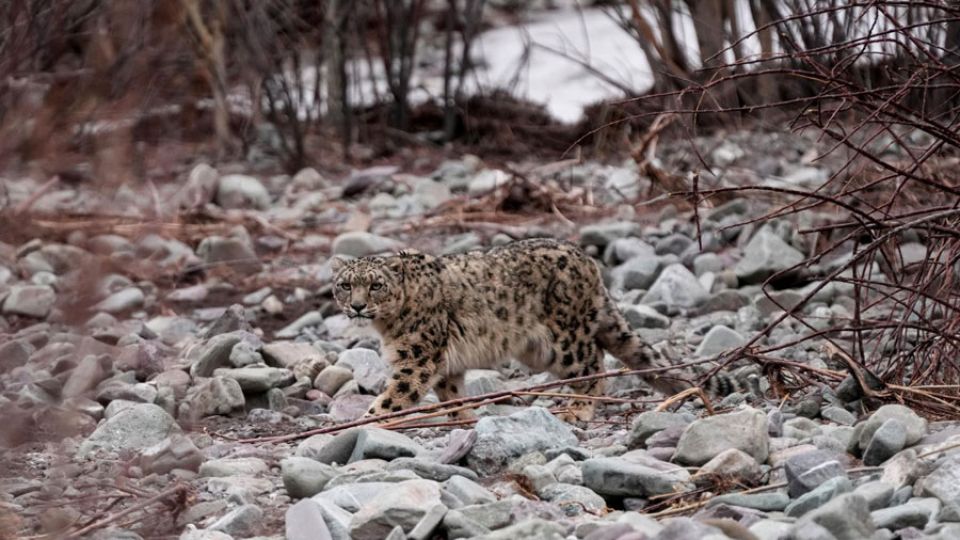
Arya News - Common leopards are thriving in Bhutan despite a growing tiger population, with the country`s first nationwide study of the species finding little evidence that recovering tiger numbers have reduced leopard populations or forced them out of shared habitats.
THIMPHU – Common leopards are thriving in Bhutan despite a growing tiger population, with the country’s first nationwide study of the species finding little evidence that recovering tiger numbers have reduced leopard populations or forced them out of shared habitats.
Published in Scientific Reports, the study, titled The influence of bottom-up and top-down effects on the distribution and density of common leopards (Panthera pardus) in an Eastern Himalayan landscape, provides the first rigorous nationwide estimate of Bhutan’s leopard population.
Researchers estimate that there are about 319 common leopards in the country, with an average density of 1.02 leopards per 100 square kilometres. The findings suggest that habitat characteristics and prey availability play a much greater role in determining where leopards occur than competition with tigers or human pressures.
The study was led by Karma Choki, with Lisanne S. Petracca, Ellen O. Aikens and Amanda E. Cheeseman as co-authors.
The findings revealed that the tiger population has increased from 103 individuals in 2015 to 130 in 2022 in the country, raising questions about whether the recovery of tiger numbers could displace leopards from prime habitats.
To investigate this, researchers analysed data from 1,188 functioning camera-trap stations used during the national tiger survey. The cameras captured 9,132 leopard photographs, allowing researchers to identify 243 individual leopards from their unique spot patterns.
Researchers had expected leopards to avoid areas where tigers were common because tigers are larger predators that compete for some of the same prey and can kill leopards. However, the study found little evidence that increasing tiger numbers had negatively affected leopard density or habitat use.
Leopards continued to use many of the same landscapes as tigers, while the two species also showed a high degree of overlap in their daily activity patterns.
According to the researchers, the findings suggest that leopards are able to coexist with tigers in Bhutan’s prey-rich landscapes, likely because of their behavioural flexibility and the availability of abundant resources.
Instead of tiger numbers, habitat characteristics and prey availability had a stronger influence on leopard distribution and density than top-down pressures from tigers or humans.
Leopard densities were generally higher at lower elevations and in areas with fewer streams. Researchers said lower elevations may offer milder climates, better vegetation and greater prey availability, while streams and rivers could act as natural barriers that restrict leopard movement.
One unexpected finding was a negative association between tree cover and leopard density. However, researchers cautioned that this result was uncertain and could reflect how tree cover was measured or its relationship with elevation, rather than indicating that forests are unsuitable for leopards.
Prey availability was also an important factor. Areas with more prey were less likely to experience declines in leopard populations over time, reinforcing the importance of maintaining healthy populations of deer, wild pigs and other prey species across Bhutan’s forests.
The study found only weak evidence that human settlements influenced leopard distribution. Researchers suggested that leopards may sometimes use areas closer to people where tiger activity is lower, but emphasised that support for this “human shield” hypothesis was limited and statistically uncertain.
Overall, leopards were found to use a greater proportion of the landscape than tigers, highlighting their adaptability across Bhutan’s varied terrain.
The highest leopard densities were recorded in PhibsooWildlife Sanctuary, where densities reached nearly nine leopards per 100 square kilometres.
The researchers said conserving healthy prey populations, maintaining connected habitats and ensuring well-managed landscapes would be key to sustaining leopard populations.
The findings also support the view that tiger conservation can deliver wider benefits for other large carnivores, provided habitats remain intact and prey populations are maintained.