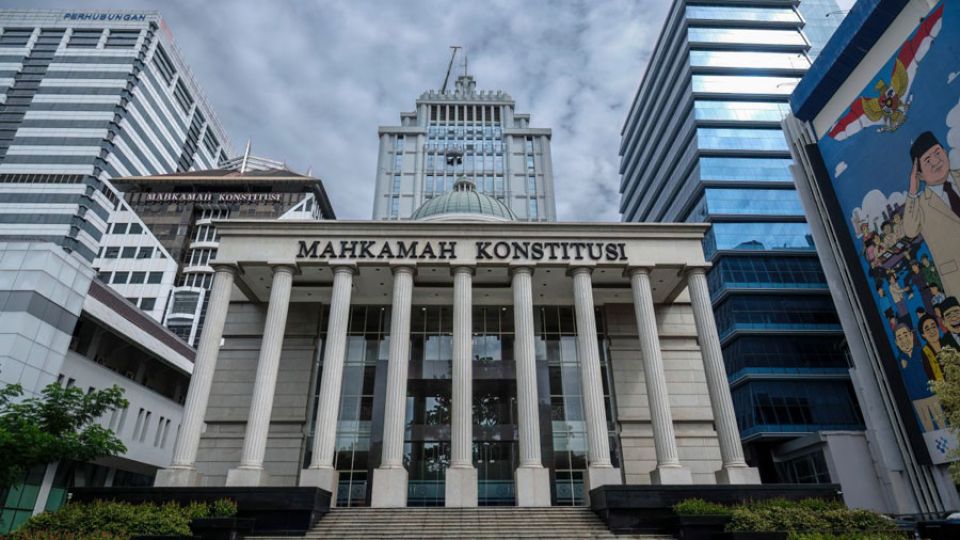
Arya News - The Constitutional Court’s decision to scrap criminal penalties for insulting the government and state institutions has been applauded by activists, though they caution that the ruling alone remains insufficient to deter rising intimidation and criminalisation against critics.
JAKARTA – The Constitutional Court’s decision to scrap criminal penalties for insulting the government and state institutions has been applauded by activists as upholding freedom of speech, though they caution that the ruling alone remains insufficient to deter rising intimidation and criminalization against critics.
In a ruling issued on Friday, the nine-justice panel granted a petition filed by a dozen of law school students challenging Articles 240 and 241 of the new Criminal Code, which penalized defaming the government and state institutions.
The law defines the government as the president, vice president and cabinet ministers, and state institutions as People’s Consultative Assembly (MPR), House of Representatives, Regional Representative Council (DPD), the Supreme Court and the Constitutional Court.
The petition was filed in December last year by the students, who argued that the provisions could erode public criticism and that legal protection against alleged insults should apply to individuals rather than institutions.
Agreeing with the plaintiffs, Justice Adies Kadir said the government and state institutions must welcome any public oversight, criticism and opinion, instead of seeing them as an attempt to defame the government.
The court also warned that such provisions risked “reducing or even diminishing the constitutional rights of citizens”.
“Therefore, the provisions pose a threat of criminalizing legitimate criticism, evaluations and opinions, which could create a ‘chilling effect’ on the rights of the citizens to express their thoughts and stances openly,” Justice Adies said reading out the ruling, which overturned the two articles altogether.
The articles stipulated that those convicted of publicly defaming the government or state institutions could be sentenced to up to one year in prison or fined up to Rp 10 million (US$563). If the insults were publicly distributed and provoked public disorder, the penalties could increase to four years behind bars or a fine of up to Rp 200 million.
Threats remain
While experts and activists praised the ruling for protecting free speech, they warned that the decision alone is not enough to protect civil liberties amid a shrinking democratic space under the administration of President Prabowo Subianto.
Executive director of Institute for Criminal Justice Reform (ICJR) Erasmus Napitupulu pointed to numerous criminalization cases using another set of provisions he described as draconian, such as online defamation in the Electronic Information and Transaction (ITE) Law.
Meanwhile, he noted that the current state of civic freedom in the country had been repressed through other means beyond criminal defamation, citing numerous allegations of physical attacks against protesters in the past year.
“That kind of [repression] is way more dangerous compared to these existing provisions,” he said on Sunday.
Amnesty International Indonesia recorded that nearly 300 government critics faced intimidation or violence in 2025, while 58 people were reported to police over their social media posts.
The heightened crackdown targeting critical voices was widely recorded during the nationwide protests between August and September last year, when tens of thousands people took to the streets to protest against rising living costs and discontent over policy priorities of the Prabowo administration.
Amnesty Indonesia executive director Usman Hamid said that the recent ruling would not instantly reverse the trend. “In practice, most of the [government critics] tried at courts in the past year were prosecuted with draconian provisions under the ITE law instead,” he said.
The Friday’s ruling came just two weeks after the court decided to bar family members, supporters and other third parties from filing defamation complaints on behalf of the president or vice president, narrowing the provisions stipulated in the new Criminal Code.
The law came into effect on Jan. 2, replacing a nearly-century-old penal code in use since the Dutch colonial era.