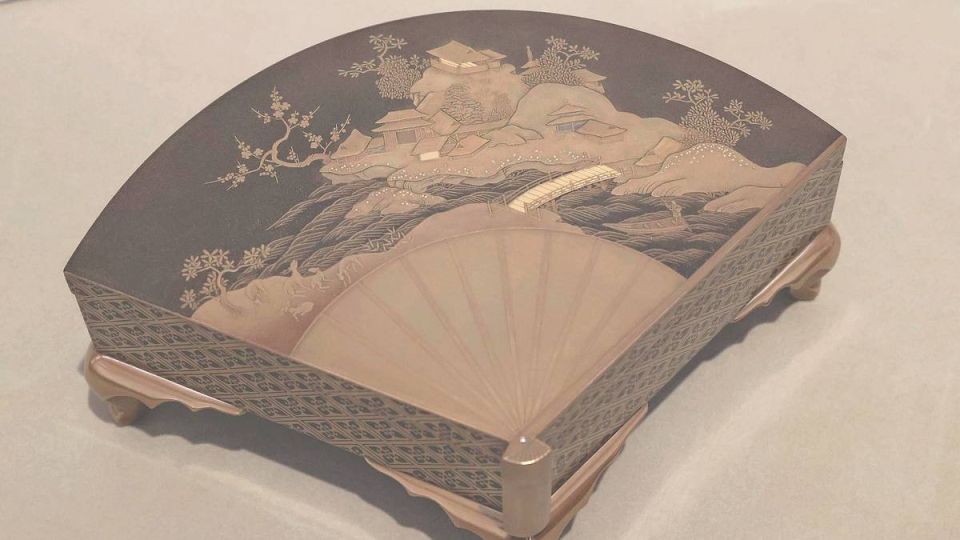
Arya News - Marie Antoinette collected Japanese lacquerware items and displayed them at her residence in the Palace of Versailles. The original lacquerware box is believed to have been created in Kyoto, Japan, during the Edo period (1603-1867) and eventually transported to Europe.
YOKOHAMA – An established Wajima-nuri lacquerware company in Wajima, Ishikawa Prefecture, has created a replica of a lacquerware box cherished by French Queen Marie Antoinette (1755-93).
The box depicts landscapes and houses drawn with gold dust, using a decorative technique called maki-e.
“I hope people will get to learn about one of Japan’s lacquerware techniques, which was loved by one of the most famous queens in history,” said Koji Nakamuro, 53, president of Wajimaya Zenni, Inc.
Marie Antoinette collected Japanese lacquerware items and displayed them at her residence in the Palace of Versailles.
“Marie Antoinette seemed to enjoy small items she could keep by her side and appreciate,” said Tamao Hasegawa, the chief curator of the Yokohama Museum of Art. “I presume that maki-e, which decorates lacquerware with dainty pictures of flowers or other things, matched her taste and sensitivities.”
Before her execution during the French Revolution, Marie Antoinette transferred her jewelry, such as diamonds and pearls, to a safe place, along with her favorite lacquerware. Some of those items are now in France and the United Kingdom.
The original of the replica box called Rokaku Sansui Makie Senmengata Ashitsuki Kazaribako is part of the art collection possessed by the Palace of Versailles. The box is believed to have been created in Kyoto during the Edo period (1603-1867) and eventually transported to Europe.
Wajimaya Zenni, founded in 1813, manufactures and sells Wajima-muri lacquerware cups and plates while also making replicas of old lacquerware masterpieces, with the aim of improving its artisans’ skills. The company used to make replicas of national treasures and other famed lacquerware held by Japanese museums. Nakamuro said he focused on Marie Antoinette’s favorite lacquer box as a way to learn from masterpieces cherished overseas. Ultimately, he wanted to transmit Japan’s lacquer culture to the world.
The store and the workshop sustained extensive damage due to the Noto Peninsula Earthquake on Jan. 1, 2024. However, the company has continued with its business through various means, such as by using the display room in the store as a working space. It took the company about 18 months to create the replica. The landscape picture on the lid, depicting a pavilion erected among steep mountains and a river, was worked on by two maki-e artists throughout the process. One of the artisans is a young woman in her 20s who was employed by the company after the earthquake.
“This [process of making replicas] leads to the passing down of lacquerware skills, which Japan can take pride in,” Nakamuro said.
An exhibition about Marie Antoinette’s favorite works of art and craft, “Marie Antoinette Style,” is currently held at the Yokohama Art Museum. The lacquerware box is not part of the art show’s exhibits, but among them are other precious lacquerware items, such as an incense cabinet believed to have been owned by the queen. The replica box produced by the company is on display at the museum shop.