Arya News - To stimulate consumer spending, department stores are offering products that cater to the trend toward serving sizes that are suitable for individuals, and they are expanding their lineup of budget-friendly options, as customers look for savings amid inflation.
TOKYO – Department stores have kicked off the annual battle to sell osechi dishes for New Year’s. To stimulate consumer spending, they are offering products that cater to the trend toward serving sizes that are suitable for individuals, and they are expanding their lineup of budget-friendly options, as customers look for savings amid inflation.
Meeting shifting demand
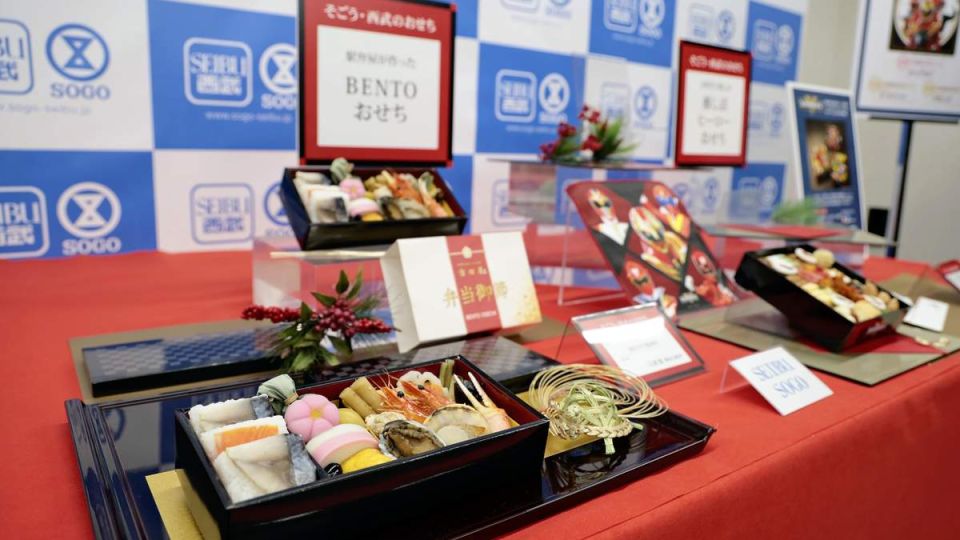
Sogo & Seibu Co. unveiled its Bento Osechi, a single-serving osechi set, at a press conference in Tokyo on Aug. 24. It contains 21 different items, including classics such as shrimp and crab as well as pressed sushi. At ¥5,980 including tax, it is more affordable than a typical osechi set, while still providing an authentic osechi experience.
While the Bento Osechi is aimed at the elderly and young people living alone, the company anticipates some demand from families as well, such as couples who might enjoy each having their own set.
“As a new style of osechi, we designed this for people to have a full New Year’s meal without needing anything else,” said an employee, who oversees osechi products at the company.
Single-person households are on the rise, due in part to later marriages. According to statistics by the Internal Affairs and Communications Ministry, they accounted for about 40% of all households in 2020.
Products tailored to single-person households are gaining ground. Matsuya Co. is also selling single-serving osechi sets that were developed with the help of a ryokan inn on the Noto Peninsula. Takashimaya Co. is now offering two types of osechi sets tailored to single-person households — one that combines Japanese and Western styles and one called Solo Katsu Osechi, a Japanese-style set it launched last year.
Keeping costs down
The domestic osechi market remains robust. According to research firm Fuji Keizai Co., osechi sales for the 2026 New Year season totaled ¥85.8 billion, up 1.3% from the previous year. However, the inflation of recent years could keep some consumers from buying osechi. To prevent that, companies are working to make their products feel affordable.
Daimaru Matsuzakaya Department Stores Co. has kept the price of its Tenroku set, a two-tier box containing 46 dishes, at ¥11,880 with tax. It was one of the bestsellers last year. Although prices have risen for some ingredients, the company has cut costs by placing bulk orders for ice packs and food boxes, while also streamlining the manufacturing process.
While prices have shot up for a wide range of ingredients, a survey by Matsuya among osechi manufacturers, including its business partners, showed that only about 40% of them planned to raise prices. The manufacturers are reportedly experimenting with adjustments, such as using soy sauce instead of salt to marinate salmon roe and replacing foie gras mousse with grilled scallops.
“We recognize a growing polarization between those who choose affordable osechi and those who seek an osechi that feels special. We want to meet these diverse needs,” said a Matsuya spokesperson.