Arya News - Relocation to start with justice and gender ministries in the first half of 2027.
SEOUL – South Korea on Thursday announced plans to relocate state bodies such as the National Assembly, government ministries and state-run institutions, in line with the Lee Jae Myung administration’s promise of balanced national growth.
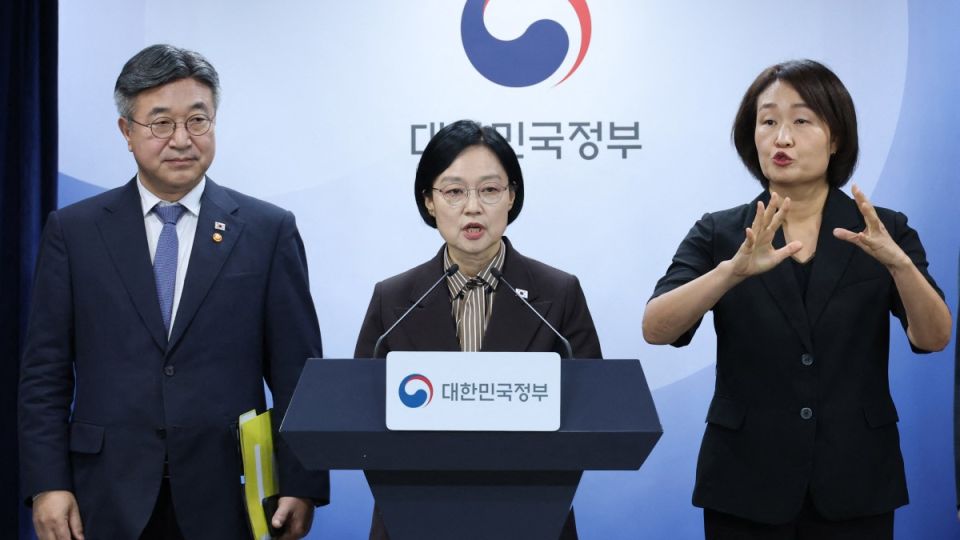
Prime Minister Han Seong-sook said that most of South Korea’s 350 state-run bodies in Greater Seoul, which includes Incheon and Gyeonggi Province, will be moving out of the region starting next year. The Lee administration also plans to complete construction of a presidential office by 2029 and a parliament building by 2033 in the de facto administrative capital of Sejong.
At present, Korea has over 50 government bodies, including ministries, agencies and commissions. The government has also designated 342 organizations as state-backed institutions, while over 180 public-sector institutions have yet to meet the requirements for the designation.
The new locations for the bodies will be determined in a way that would “maximize the power of regional hubs,” while avoiding the approach of “sharing the spoils,” Han said in a pangovernmental briefing held at the Government Complex Seoul.
Though the prime minister did not elaborate further on the relocation plans, she said that more details would be announced in the fourth quarter of this year.
Land Minister Kim Yun-duk, who accompanied Han in the briefing, said the general goal was to “concentrate institutions linked to strategic industry players located in the Innovation Cities,” adding the relocation would help these cities attract more businesses.
Interior Minister Yun Ho-jung said in the same briefing that the Ministry of Justice and the Ministry of Gender Equality and Family would start the process for their relocation to Sejong in the first half of 2027, through a law revision.
Of 19 ministries, 13 are currently located in Sejong.
The special act on follow-up measures for Sejong exempted the Foreign Affairs, Unification, Justice, National Defense and Gender Equality ministries from relocation to Sejong.
The Ministry of Justice is the last remaining ministry in the government complex in Gwacheon, Gyeonggi Province, while the Gender Equality Ministry is the only ministry unrelated to foreign relations to be headquartered in Seoul.
The Ministry of Oceans and Fisheries is now headquartered in Busan following its relocation from Sejong earlier this year, as part of the administration’s maritime hub initiative in Busan.
According to Yun, the relocation of other ministries such as the Ministry of National Defense and the Ministry of Foreign Affairs will be reviewed later, depending on the timing of the presidential office relocation and construction of the Sejong branch of the National Assembly.
The headquarters of the national police and prosecution will also relocate once building construction is complete, Yun added.
This would follow an earlier round of South Korea’s relocation of some 150 administrative bodies out of Greater Seoul to noncapital regions, along with some 50,000 employees, from 2005 to 2019. According to the government, some 70 percent of employees moved together with their families and 43 central government ministries moved to Sejong between 2012 and 2021.
During the briefing, Land Minister Kim declined to confirm whether relocating employees would be given priority access to newly built apartments near their new workplace. Kim added the issue was still under review due to criticism that the policy — used for previous relocations — unfairly benefited the relocating employees.
Thursday’s announcement also indicated a merger of state-backed institutions will be conducted alongside the relocation process, which would lead to a reduction of them by 109.
Under the plan, five state-backed electricity generating companies, two state-run energy firms and four state-owned port authorities will undergo mergers. The Korea Coal Corp., South Korea’s oldest state-run firm, will be dissolved.
Also, the Korea-Africa Foundation will be merged into the Korea Foundation, a nonprofit public diplomacy organization under the Ministry of Foreign Affairs. The Overseas Koreans Cooperation Center will become part of the Overseas Koreans Agency.
An institution dedicated to launching a unified Korean dictionary for the two Koreas will be integrated into the South-North Korea Exchanges and Cooperation Support Association under the Unification Ministry.