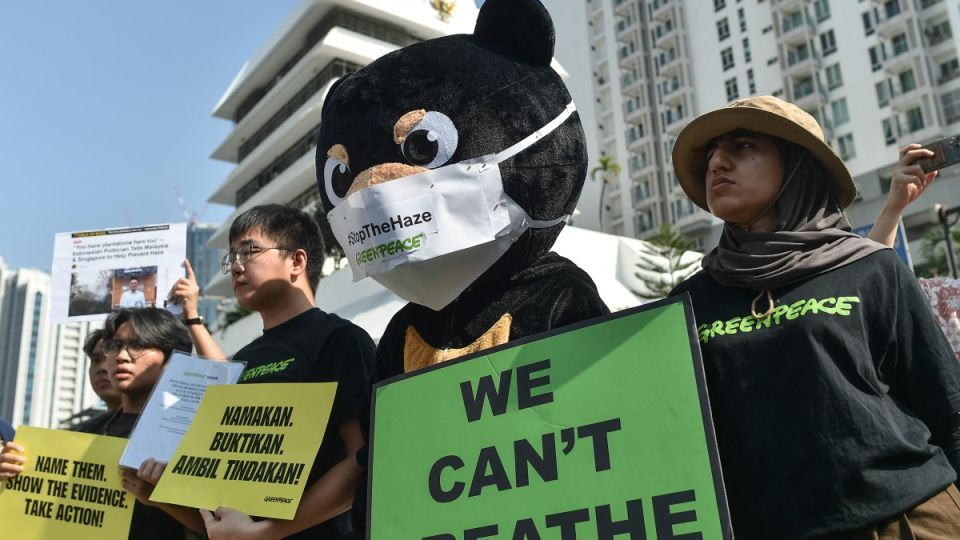
Arya News - The Indonesian government faces pressure from within and outside the country, including protests in front of the Indonesian Embassy in Kuala Lumpur, as haze blankets major cities in neighbouring countries.
JAKARTA – The government has pledged to work with neighboring countries throughout ASEAN to address widespread fires, as pressure grows for Jakarta to ramp up efforts to contain the blazes and transboundary haze.
Jakarta has maintained regular communication and coordination on fire management with ASEAN countries through a cooperation framework under the bloc’s Agreement on Transboundary Haze Pollution (AATHP), said Foreign Ministry spokesperson Vahd Nabyl Achmad Mulachela.
The ASEAN Secretariat declared a level-3 haze alert in the region on Aug. 26, the highest level indicating extreme fires, unhealthy air and risks to human health and environment. The alert requires all member states to report daily situations to the Secretariat.
Vahd said Indonesia has duly provided such reports, which include hotspot data, environmental conditions and indications of haze movement.
“Indonesia consistently fulfills daily reporting requirements and mandatory measures under the level 3 monitoring, assessment and joint emergency response standard operating procedures,” the spokesperson said in a statement on Saturday.
The statement came as the region saw protests against Indonesia and emergency status declaration as haze thickens in several locations.
On Friday, activists led by Greenpeace Malaysia and Himpunan Advocacy Rakyat Malaysia (HARAM) staged a rally in front of the Indonesian Embassy in Kuala Lumpur in solidarity with communities affected by the transboundary haze.
In a memorandum addressed to Indonesian Ambassador to Malaysia Mohammad Iman Hascarya Kusumo, the protesters called on the embassy to push Jakarta to make full public disclosure of companies holding concessions linked to wildfires.
Data from independent forest monitoring platform Nusantara Atlas showed that nearly 70,000 hectares of burned forest and peatland between January and July were located within industrial concessions, with experts pointing out the fire may be caused by large-scale land opening through deliberate burning.
They also demanded the Indonesian government identify Malaysian companies involved in land burning, so Malaysian regulators can pursue accountability within their jurisdictions.
“The haze doesn’t stop at Indonesia’s borders, and neither should accountability,” Greenpeace Malaysia campaigning Heng Kiah Chun said in a statement.
Kuching, the capital of Malaysia’s Sarawak State in Borneo Island,was named the world’s most polluted major city by air quality monitoring platform IQAir with air quality in the city reaching a “very unhealthy” level. The state previously declared a state of emergency in the Serian district on Friday after thick haze pushed air pollution up to hazardous levels.
Malaysia has launched cloud seeding operations to ease the toxic haze choking Sarawak.
Other countries, including Singapore and the Philippines, were also affected by the haze, prompting them to issue health advisory warnings for their citizens due to unhealthy air quality.
Malaysia and Brunei Darussalam previously agreed to use ASEAN mechanisms to address the recurring transboundary haze pollution from Indonesia’s wildfire.
But the AATHP has been criticized of being ineffective to prevent and mitigate the wildfires within ASEAN member states territory, said international relations expert Dafri Agussalam at Gadjah Mada University (UGM)
“Coordination alone isn’t enough,” Dafri said on Saturday. “Indonesia must actively encourage ASEAN member states to participate in tackling the fires, whether through technical or financial assistance.”
He added Indonesia should learn from past wildfire disasters and focus on preventive measures before the dry season arrives, rather than scrambling to respond once fires spread.
More than 200,000 ha of land in Indonesia had been burned since the beginning of the year, fueled by land clearing and prolonged and dryer El Niño-influenced dry season.
The government largely relied on cloud seeding, waterbombing and ground firefighting to put out the fires, as well as law enforcement against people or companies found deliberately burning lands for business purposes.
Forestry Minister Raja Juli Antoni announced on Thursday suspension of business permits for five companies operating in West Kalimantan found burning lands. The ministry previously suspended business permits of another 20 individuals and companies suspected of deliberately starting forest fires.
Separately, the Environment Ministry had sealed 30 companies across Kalimantan and Sumatra as of Friday over allegedly causing fires in their concessions area. The police have also named 113 suspects of alleged land clearing by burning in several provinces, including Riau, Jambi and Central Kalimantan.
At least two volunteer firefighters died amid an operation to put out wildfires in Central Kalimantan.
Millions of people across Kalimantan and Sumatra have also been affected by haze, with reports of respiratory illness reaching more than 50,000, according to data from the Health Ministry as of Sept. 1.
Read More:
Malaysia’s Sarawak bears brunt of worsening haze
Schools in Malaysia’s Johor reopen today with haze protocols