Arya News - Pakistan must move from policy ambition to measurable, financed implementation.
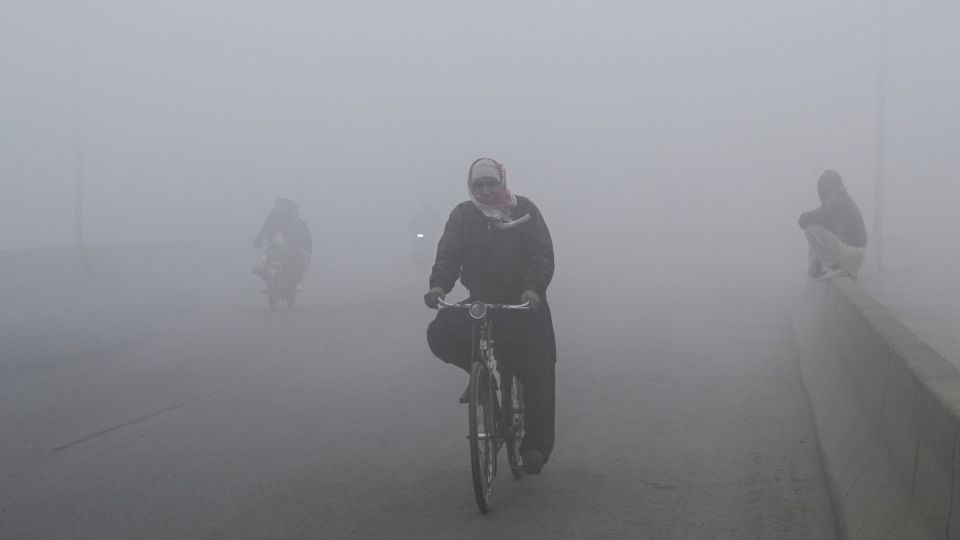
ISLAMABAD – The seventh International Day of Clean Air for blue skies, observed on September 7, 2026, places the economic case for integrated clean-air and climate action at the centre of the global conversation. For Pakistan, that message could not be more timely. Air pollution is no longer a seasonal inconvenience confined to winter smog. It is a year-round public-health emergency, a constraint on human capital and productivity, and a material risk to public finance, business continuity and financial-sector resilience.
Pakistan’s policy architecture has advanced. The federal government adopted the National Clean Air Policy (NCAP) in 2023, and Punjab approved its Clean Air Policy and phased action plan the same year. Yet the decisive question is no longer whether Pakistan has policies. It is whether those policies can be converted into legally anchored responsibilities, credible data, investable sectoral measures and measurable reductions in exposure.
Pakistan’s domestic financial institutions must now become part of the implementation architecture. When banks provide loans, refinancing or dedicated financing windows to industry, their risk assessments should consider material exposure to air pollution, regulatory non-compliance, inefficient technologies and transition risk. Lending structures can then reward verified emissions reductions, cleaner production and credible transition plans. This would improve environmental and financial outcomes while helping industrial sectors move progressively towards net-zero pathways without denying viable firms the capital needed to modernise.
The evidence is already strong enough to act
The scale of the damage is difficult to overstate. The World Bank’s Pakistan Country Climate and Development Report estimates that air pollution could impose economic losses equivalent to 6.5 per cent of GDP each year. A later World Bank appraisal for Punjab reports average annual PM2.5 exposure of about 52 micrograms per cubic metre across the province—more than ten times the WHO annual guideline of 5 micrograms—with measured annual averages of 110–130 micrograms in central Lahore.
The same appraisal estimates that exposure to ambient and household PM2.5 in Pakistan was associated with a vast burden of premature mortality and illness in 2019, with health costs equivalent to about 9 percent of GDP. These estimates use different economic concepts and should not be added together; they nevertheless point in the same direction: polluted air is imposing economy-wide losses that conventional budgeting and credit decisions largely fail to recognise.
Pakistan ranked as the world’s third most polluted country in IQAir’s 2024 assessment, underscoring the severity of population exposure. The burden is also deeply gendered. World Bank modelling attributes about 23pc of Punjab’s PM2.5 concentrations—and 28pc in Greater Lahore—to residential sources, predominantly the burning of solid fuels for cooking. Women and girls often experience greater direct exposure because of cooking roles and time spent near household combustion, while infants and young children breathe the same polluted indoor and neighbourhood air. Older people, persons with disabilities, outdoor workers, low-income households and communities living close to roads, kilns, industrial sites and power infrastructure also face elevated exposure and have fewer resources to protect themselves. Cleaner household energy must therefore be treated as a clean-air, public-health, gender-equality and affordability priority.
What the policy review finds
Fair Finance Pakistan’s policy brief, “Air Pollution: A Solvable Problem,” developed with the University of California, Davis Air Quality Research Center, assesses the NCAP and Punjab’s 2023 policy against the 2021 WHO Air Quality Guidelines and relevant international governance practice. It identifies nine structural gaps in the national framework and five in Punjab’s framework. Four findings demand particular attention:
Establish the national evidence baseline first. Pakistan has produced a national air-pollutant emissions inventory, but it still needs a nationally consistent, quality-assured ambient PM2.5 baseline that captures population exposure across provinces, cities and priority airsheds. Comparable source-apportionment studies are also required to determine how much pollution comes from transport, industry, households, agriculture, waste, dust and sources outside each jurisdiction. This baseline should be the first implementation priority because targets, sector selection, financing decisions and progress measurement cannot be credible without it. Targets need delivery architecture. The NCAP projects PM2.5-emission reductions of 38pc by 2030 and 81pc by 2040 against its baseline scenario. These ambitions need regularly updated inventories, sector-specific milestones, responsible institutions, funded action plans, compliance triggers and public reporting. Airsheds must shape governance. Pollution crosses city, provincial and national borders. World Bank modelling for Punjab indicates that 53pc of its PM2.5 pollution in 2021 originated within the province, 9pc came from other Pakistani provinces and 13pc from other countries. Local action and regional cooperation are therefore complementary, not competing, responsibilities. Short-lived climate pollutants require clearer accountability. The NCAP was informed by Pakistan’s 2022 inventory of short-lived climate pollutants and recognises important measures across households, waste, agriculture, industry and transport. The implementation gap is the absence of sufficiently clear, enforceable and routinely reported pollutant- and sector-level pathways, including for black carbon, methane and ozone precursors. Finance remains weakly connected to air-quality outcomes. Banks, investors and development-finance institutions influence the technology choices that determine future emissions. Clean-air eligibility criteria, verified performance indicators and pollution-risk due diligence should therefore inform credit, guarantees, concessional facilities and transition finance. From critique to a Pakistani implementation platform.
The policy brief is part of a wider body of work, not a stand-alone publication. Through the ASIC Pakistan Mitigation Series 2025, Fair Finance Pakistan and UC Davis AQRC brought regulators, scientists, parliamentarians, development partners, financial institutions, industry and civil society into a shared implementation conversation. The Series launched the policy brief and issued a 2025–2030 National Clean Air Transition Statement calling for stronger sector-specific standards, financial due diligence and industrial transition pathways.
Fair Finance Pakistan is now advancing the Pakistan Clean Air Finance Framework (PCAFF) to translate pollution evidence into financial governance. The goal is to connect credible emissions and exposure data with bankable interventions across priority sectors—including cleaner transport, industrial retrofits, crop-residue value chains, municipal waste, brick kilns and other high-emitting activities—while protecting workers, small enterprises and vulnerable communities during transition.
A practical sequence: measure, govern, finance
The brief proposes a Sensor–Governance–Finance Triad. It is not a slogan; it is a sequencing discipline to
Measure: expand quality-assured ambient monitoring, source apportionment and regularly updated emissions inventories so that authorities and communities can see where pollution comes from and whether interventions work.
Govern: convert evidence into enforceable standards, named responsibilities, compliance chains, airshed coordination and transparent progress reviews.
Finance: use verified baselines and performance results to direct concessional credit, guarantees, transition finance and pollution-linked pricing toward interventions that deliver measurable exposure reductions.
International experience—from California’s monitoring and regulatory system to European emissions regulation and urban low-emission zones—shows that durable progress comes when measurement, law, institutions and finance reinforce one another. Pakistan should adapt those principles to its federal structure, industrial base and distributional realities rather than copy any single model.
Five priorities for the next phase
Adopt a time-bound NCAP implementation plan with annual milestones, named federal and provincial responsibilities, budget lines and public progress reporting. Establish a lean, technically credible national coordination mechanism—such as the proposed Clean Air Secretariat—that supports rather than displaces provincial authority after the 18th Amendment. Establish a nationally consistent, quality-assured ambient PM2.5 baseline covering population exposure across provinces, cities and priority airsheds; support it with comparable source-apportionment studies and a nationally interoperable monitoring and emissions-inventory system that is updated regularly and reported transparently. Embed air-pollution risk and measurable clean-air outcomes in the Pakistan Green Taxonomy, bank due diligence, transition plans and blended-finance facilities. Align climate reporting with IFRS S1 and IFRS S2—including relevant Scope 1, Scope 2 and Scope 3 GHG emissions—while requiring separate pollutant-specific metrics so that carbon disclosure is not treated as a substitute for air-quality reporting. Build an investable pipeline for high-impact measures, prioritising exposure reduction, health benefits, financing additionality and a just transition for SMEs, workers, farmers and low-income households. Clean air is achievable—and finance must help deliver it
Pakistan does not need to choose between economic development and breathable air. Poor air quality already weakens growth by raising health costs, reducing labour productivity, disrupting education, damaging crops and increasing operational risk. The more relevant choice is whether the country will continue paying for pollution after the damage occurs, or finance prevention and transition before those losses deepen.
On this International Day of Clean Air for blue skies, Pakistan has an opportunity to turn a policy review into an implementation compact: science defines the problem, governance assigns responsibility, finance enables transition, and communities help judge whether cleaner air is actually being delivered. Air pollution is solvable—but only when clean air becomes a measurable public duty and an investable national priority.