Arya News - Overlapping disasters have since drawn attention to the government’s preparedness, as disaster mitigation agencies were among those affected by austerity measures introduced in 2025 by President Prabowo Subianto ’s administration to help fund his flagship programs.
JAKARTA – Simultaneous volcano eruptions and a string of other disasters have put the government’s mitigation efforts under renewed scrutiny, as questions mount over whether Indonesia has invested enough in prevention despite its long history of natural disasters.
This week, disaster agencies are grappling with activity at several volcanoes, most prominently Mount Anak Krakatau in the Sunda Strait, which erupted once again on Tuesday morning after a continuous eruption over the weekend.
Anak Krakatau’s eruption spewed ash 15 kilometers into the sky and forced Indonesia’s main airports to close until Monday night, disrupting nearly 3,000 flights and affecting 341,000 passengers.
As of Tuesday evening, all the airports have now been reopened except for Wunopito Airport in East Nusa Tenggara (NTT), which was closed due to the volcanic ash from Mount Ili Lewotolok.
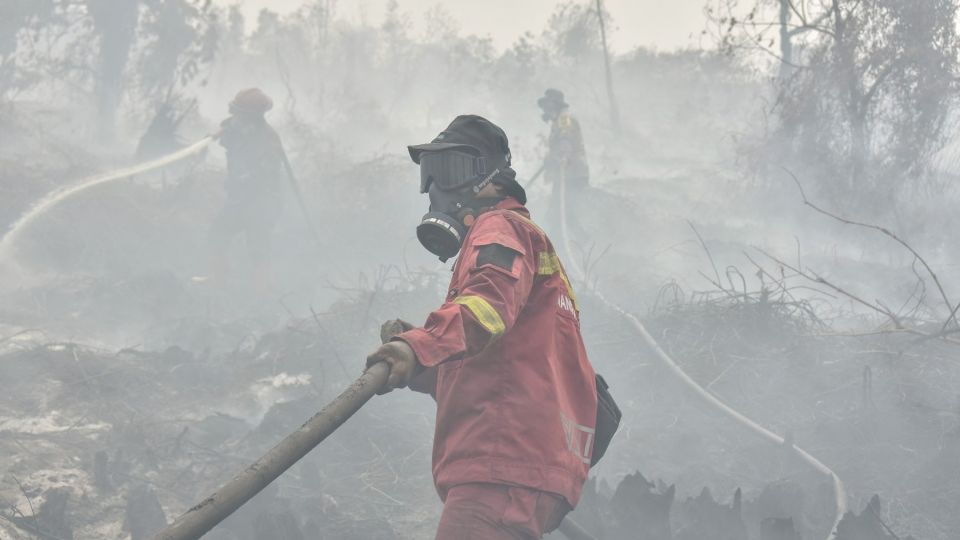
The volcanic activities come as disaster workers are stretched across multiple emergencies, including forest and land fires in Sumatra and Kalimantan and recovery from a powerful earthquake in NTT in August.
The overlapping disasters have since drawn attention to the government’s preparedness, as disaster mitigation agencies were among those affected by austerity measures introduced in 2025 by President Prabowo Subianto’s administration to help fund his flagship programs.
The concerns had already surfaced in February, when the National Disaster Mitigation Agency (BNPB) head Lt. Gen. Suharyanto lamented to lawmakers that the agency would receive only Rp 491 billion (US$27.8 million) for 2026, a nearly 75 percent drop from the previous year. Suharyanto warned at the time that the limited funding could hamper the country’s disaster mitigation efforts.
Amid renewed public scrutiny on disaster funding, BNPB principal secretary Rustian told a press briefing on Tuesday that the agency has its regular funding increased to Rp 1.08 trillion this year. It also has Rp 4.62 trillion in ready-to-use emergency funds.
While that puts funding available to BNPB this year at around Rp 5.7 trillion, the agency is now seeking more emergency funding in light of recent disasters.
“We are currently processing a proposal to the Finance Ministry for an additional around Rp 5.67 trillion in emergency funds,” Rustian said.
Previously, from 2022 to 2025, the agency had received total annual budget ceilings of around Rp 4 to Rp 5 trillion, the majority of which consisted of emergency funds.
Priority problems
Experts however questioned whether the government’s spending priorities give sufficient weight to preparedness, particularly compared with the free nutritious meals program that has over Rp 230 trillion earmarked even after gradual cuts.
“BNPB’s budget alone is far smaller than the free meals,” public policy expert Trubus Hardiansyah of Trisakti University told The Jakarta Post on Tuesday. “We can’t sacrifice urgent disaster needs for such spendings.”
While BNPB’s eventual regular funding is larger than that of at the start of the year, the data shows its heavy reliance on emergency funds. This means the government remained too reliant on responding to disasters after they occurred, said climate expert Iqbal Damanik of Greenpeace Indonesia.
“The government’s approach is once again like that of a firefighter, acting only when disaster strikes,” Iqbal said. “What we are seeing is a government scrambling and not knowing what steps to take to mitigate disasters.”
BNPB deputy for prevention Abdul Muhari previously told the Post on Sunday that the simultaneous emergencies had put most of the agency’s manpower in the field, although he assured that they were “hopefully not” overwhelmed.
The pressure is reflected in BNPB’s tally of 1,730 disasters so far this year, dominated by over 600 incidents of forest and land fires and some 540 floods. The agency also recorded hundreds of landslides and over a dozen earthquakes.
This year’s disasters killed 397 people, injured 2,109, damaged over 111,000 houses and left millions displaced. No deaths have been reported from the latest volcanic eruptions.
Prabowo acknowledged the need for greater mitigation spending on Monday while chairing a virtual meeting on the latest disasters, noting Indonesia’s unavoidable exposure to earthquakes and eruptions.
“This is our destiny, living in the Ring of Fire, which puts us in situations like this at any time,” Prabowo said. “The lesson for the government I lead is that we must significantly increase the budget allocation for disaster mitigation.”