Arya News - However, the feelings of prefectural residents, who have long suffered from the burden of hosting U.S. military bases, remain complex. The primary focus of this year’s campaign shifted from the military base issue, which had dominated previous elections, to economic policies.
OKINAWA – The central government expects that the result of Okinawa Prefecture’s gubernatorial election on Sunday will facilitate its own security policies, including the project to relocate the U.S. Marine Corps Futenma Air Station in Ginowan to the Henoko district in Nago, both in the prefecture, as well as the overall strengthening of defense capabilities.
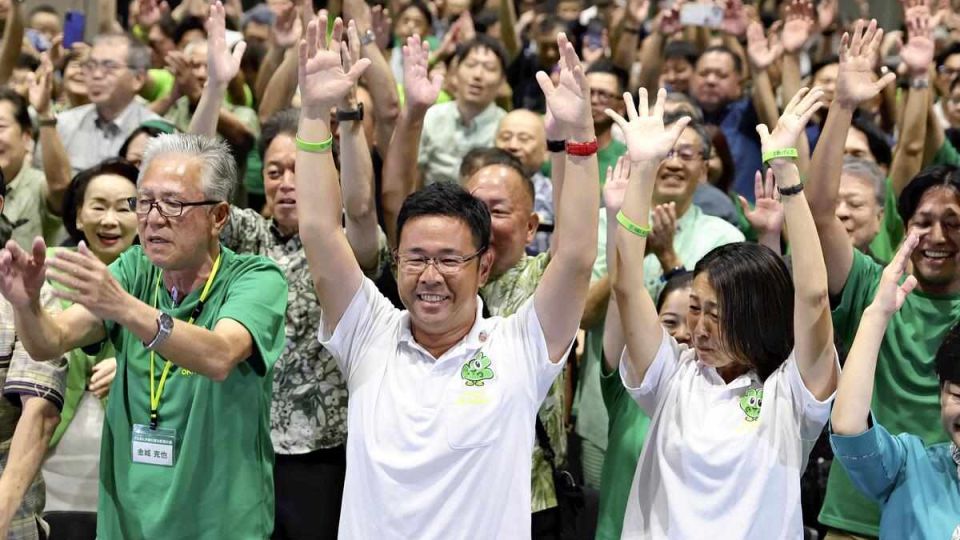
In the election, newcomer Genta Koja, whose backers included the ruling Liberal Democratic Party, won a landslide victory over incumbent Denny Tamaki, giving control of the prefectural government to the LDP-aligned camp for the first time in 12 years.
Koja told reporters in Naha on Monday, the day after the election: “The people of the prefecture sought a breath of fresh air. I want to make real progress on people’s livelihoods and the economy.”
The primary focus of this year’s campaign shifted from the military base issue, which had dominated previous elections, to economic policies.
According to an exit survey by The Yomiuri Shimbun on election day, “measures to address the economy and rising prices” ranked as the top concern for voters, while the base issue came in fourth. In the previous election, held in 2022, the base issue was the most frequently cited concern.
According to the prefectural government, per capita income in Okinawa fell from 73.1% of the national level in fiscal 2018 to 65.7% in fiscal 2023, indicating a widening gap between Okinawa and the mainland.
The waning interest in the base issue likely stems in part from the fact that the prefecture’s defeat in its lawsuit against the central government over the Henoko relocation was finalized in 2023, leaving the local government with no further means to halt the project.
Koja’s campaign team called for a reformation of prefectural governance to focus more on economic vitalization measures. Its well-organized campaign tactics — backed by six political parties, including Komeito’s prefectural headquarters, some labor unions and more than 70% of the prefecture’s mayors — proved successful. They also attracted independent voters who see the economy as a major concern.
Koja has indicated his intention to pursue a cooperative approach with the central government and was scheduled to meet with Prime Minister Sanae Takaichi, who also is the LDP president, and others in Tokyo as early as Tuesday.
For Takaichi, who has positioned this election as a “test of her administration’s foundation,” this is a positive outcome and will help to stabilize her administration.
LDP Secretary General Shunichi Suzuki emphasized to reporters on Sunday, “We will maintain this momentum heading into the coming unified local elections.”
Construction schedule
With Koja becoming the head of the prefectural government, the conditions are now in place for progress on security policies.
Koja, who supports the relocation of the Ginowan base to Henoko, indicated on Monday that he is considering abolishing the division of the Okinawa prefectural government that exists to handle issues connected to the lawsuit against the central government.
Land reclamation work is now underway to improve the soft ground along the Henoko coast. However, as of the end of July this year, the work was only about 18% done. Ground improvement alone is expected to take about four years, and the relocation project as a whole is not expected to be completed until the mid-2030s.
At the relocation site, delay tactics by opponents have continued despite the prefecture losing the lawsuit. To avoid these obstructions, the prefectural government spent nearly two years — far exceeding the standard period of several months — obtaining a road occupancy permit to install a conveyor belt underground. If such obstruction activities subside, the construction period is expected to be shortened.
Acceleration of defense buildup
The election result this time also provides a tailwind for the central government’s “Nansei Shift” policy of strengthening defense capabilities on the Nansei Islands.
In hopes of boosting Japan’s deterrent power against China, which is intensifying its military intimidation, the government is proceeding with the deployment of a mobile warning and control radar system on Kita-Daito Island. Starting next fiscal year, it plans to begin developing a supply base for the Nansei Islands within the Ground Self-Defense Force training grounds in Okinawa City.
The central government is also considering having more airports and ports within Okinawa Prefecture designated as being “for specified use,” allowing the Self-Defense Forces and the Japan Coast Guard to use them during peacetime. Until now, Tamaki, who opposed the buildup of the SDF, had been reluctant to grant such designations.
With the shift in prefectural leadership, the central government intends to expand these designations to include airports and ports managed by the prefecture, such as Ishigaki Airport on Ishigaki Island.
A government source familiar with the matter emphasized, “The prefecture’s opposition can no longer be used as an excuse.”
However, the feelings of prefectural residents, who have long suffered from the burden of hosting U.S. military bases, remain complex. For the time being, the central government intends to focus on economic vitalization measures and make every possible effort to maintain public support.
In addition to resuming the Okinawa Policy Council between the central and prefectural governments — which has been suspended since December 2013 — the central government intends to consider increasing the Okinawa development budget, for which the prefectural government has requested a raise, with a target in the ¥300 billion range.
Read More:
Election exit poll in Japan’s Okinawa shows priority shift from ‘base issues’ to economic ones