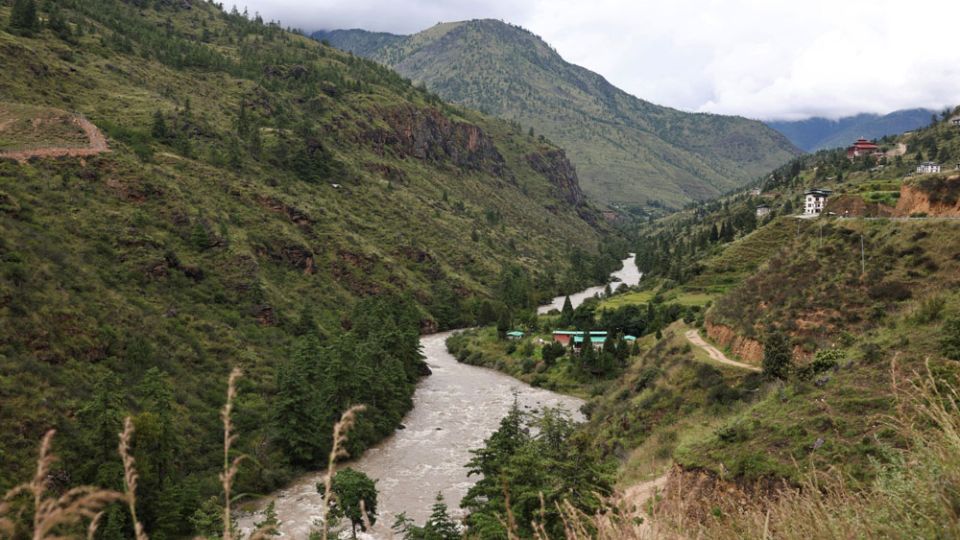
Arya News - Energy and Natural Resources Minister Sonam Tashi said these risks are increasingly being incorporated into hydropower planning, hydrological assessments, project design, dam safety, monitoring, and emergency preparedness.
THIMPHU – Bhutan is strengthening measures to protect hydropower projects from floods, Glacial Lake Outburst Floods (GLOFs), and other climate-related hazards as extreme weather events become more frequent and intense.
Hydropower infrastructure, particularly projects located along major river basins, is exposed to natural hazards, including flash floods, cloudbursts, extreme rainfall, landslides, debris flows, and GLOFs.
Energy and Natural Resources Minister Sonam Tashi said these risks are increasingly being incorporated into hydropower planning, hydrological assessments, project design, dam safety, monitoring, and emergency preparedness.
Flood safety has been considered in hydropower development since the early projects, including Chukha, Kurichhu, and Tala, which were designed based on historical hydrometeorological events in the region.
For newer mega hydropower projects, however, the design approach has become more rigorous, with major hydraulic structures designed to withstand extreme floods, including the Probable Maximum Flood (PMF), in line with applicable hydropower and dam safety guidelines.
Lyonpo said one of the challenges in assessing extreme floods is Bhutan’s relatively short hydrological record, as most of the country’s monitoring network was established only from the early 1990s.
As a result, flood estimates for mega hydropower projects do not rely solely on Bhutan’s historical records. Regional historical extreme rainfall events and other appropriate hydrological methods are also considered when establishing design flood values.
For smaller diversion structures such as barrages and weirs, the design considers a minimum 100-year return-period flood.
GLOF risks assessed during project planning
GLOF risks are assessed where potential threats exist in river headwaters as part of the Detailed Project Report (DPR) process.
Potentially hazardous glacial lakes and possible outburst scenarios are identified, while GLOF propagation is modelled from the potential source through the river system to the project site.
The modelling helps determine potential flood levels, arrival times, and impacts on hydropower infrastructure. This information is then used to determine appropriate hydraulic and safety measures, including spillway capacity.
Other hazards, including landslides and debris flows, are also assessed.
Landslide Dam Outburst Floods, however, are more difficult to quantify because their occurrence, timing, and magnitude are highly uncertain. Project sites are assessed through site-specific investigations, previous events, and geological and terrain conditions.
The assessment also extends beyond the dam site.
Lyonpo said that dam-break assessments and downstream floodplain mapping are undertaken as part of the DPR process to determine the potential extent and consequences of flooding downstream. The findings support risk mitigation and emergency response planning.
Puna-II designed for extreme flood and GLOF scenarios
The Punatsangchhu-II is one example of how extreme flood and GLOF risks have been incorporated into hydropower design.
Bhutan’s revised Dam Safety Guidelines, issued in 2024, require safety considerations, including extreme flood and GLOF scenarios, to be addressed from the design stage.
At Puna-II, the spillway has been designed to accommodate a PMF of 11,723 cubic metres per second, with an additional 4,300 cubic metres per second provision for a GLOF scenario.
This gives the spillway a combined discharge capacity of 16,023 cubic metres per second.
The reservoir has about 4.64 million cubic metres of live storage, providing some flood-cushioning capacity during the monsoon when the reservoir is maintained near the minimum drawdown level.
However, Lyonpo said engineering design alone could not eliminate the risks associated with extreme natural events.
Early warning provides additional protection
Early warning and real-time monitoring form another layer of protection.
In the Punatsangchhu basin, hydropower projects have collaborated with the National Center for Hydrology and Meteorology (NCHM) to establish an upstream GLOF and flood early warning system.
The system consists of 10 upstream hydrometeorological and water-level monitoring stations and 18 warning siren stations.
For Puna-II, the nearest upstream monitoring station is at Dangsa, approximately 55 to 60km upstream. Monitoring stations in the Lunana glacial-lake region, including Luggye Tsho, Thorthormi Tsho, Rapstreng Tsho, and Bay Tsho, are located approximately 130 to 140 km upstream.
This multi-stage monitoring system provides information at different points along the river and can give the project operator and downstream communities valuable time to respond to an approaching flood or GLOF.
Warning sirens have also been installed around the project area to alert nearby communities.
Around 30 real-time water-level monitoring stations have been installed along major rivers across the country, with alert levels incorporated into the system.
Lyonpo said real-time early warning systems are already operational in river basins where GLOF threats have been identified, including Mangdechhu, Chamkharchhu, and Punatsangchhu.
The monitoring system is also intended to detect hazards beyond conventional GLOFs.
Sudden river blockages caused by landslides, ice, or rock avalanches can create temporary lakes that may later breach and generate flash floods. Such risks have highlighted the need for monitoring systems that can provide information on a wider range of upstream hazards.
The distance and terrain between glacial sources and hydropower projects can also provide additional response time.
Lyonpo said that in the Punatsangchhu system, the river travels more than 130km from the glacier region before reaching the Puna-II dam, passing through relatively flatter sections upstream. Together with real-time monitoring, this can provide operators with additional time to take appropriate measures, including opening radial gates when necessary.
Backup power and communication systems
The government is also strengthening the reliability of critical systems required to operate hydropower facilities during emergencies.
Puna-II has two dedicated grid feeders from different sources, as well as emergency diesel generators to operate its radial gates.
Higher-capacity backup generators and pumps are being procured, while the possibility of using battery energy storage systems as an additional backup for critical dam operations is also being examined.
Communication redundancy is another component of emergency preparedness.
Puna-II has landline, GSM, and Wi-Fi communication systems. In the event of an external power failure, these systems can continue operating through diesel generators, uninterruptible power supply systems, and battery backup.
The project also has Motorola radio handsets. Additional satellite phones and portable two-way radio systems are being considered to further strengthen communication during emergencies.
Dam safety continues after commissioning
Disaster preparedness does not end once a hydropower project becomes operational.
The Dam Safety Guidelines provide a framework for dam surveillance, inspection, and safety management. Designated dam safety teams conduct formal inspections twice a year to assess the condition and performance of dams and associated infrastructure.
Lyonpo said continuous surveillance was particularly important as climate risks evolve.
“A dam’s safety cannot depend only on the assumptions made when it was originally designed,” he said.
Operating procedures, hazard assessments, monitoring systems, and emergency response arrangements must be reviewed as hydrological records improve and new information on climate and natural hazards becomes available.
Coordinated emergency response
If a major flood, GLOF, or other hazard is detected or forecast, information from monitoring and early warning systems can be communicated to hydropower operators, relevant government agencies, and downstream communities.
Emergency preparedness and response arrangements involve agencies including NCHM, disaster management authorities, local administrations, and hydropower operators.
The Emergency Response and Preparedness Plan is also an integral part of the DPR process.
At the project level, operators have procedures for monitoring changing river conditions, receiving early warnings, coordinating with relevant authorities, and taking appropriate operational and emergency measures.
Lyonpo said the government’s approach was based on multiple layers of protection rather than relying on a single contingency measure.
“While it is not possible to eliminate the risks associated with extreme natural events, Bhutan’s approach is based on multiple layers of protection,” he said.
These include robust engineering design, conservative flood estimation, GLOF and other hazard assessments, regular dam safety inspections, continuous hydrometeorological monitoring, early warning systems, downstream consequence assessments, and coordinated emergency preparedness.
As Bhutan expands its hydropower sector, Lyonpo said climate and disaster risks would continue to be integrated into project planning, design, construction, and operation.
The objective is not only to make individual hydropower projects resilient but also to strengthen resilience across entire river basins, with government agencies, hydropower operators, and downstream communities working together to anticipate, prepare for, and respond to extreme events.
“Natural hazards cannot be eliminated, but the risks can be reduced through stronger infrastructure, continuous monitoring, timely warnings, reliable backup systems, and clear emergency response plans,” Lyonpo said.
He said safety should not be treated as an afterthought but as an integral part of Bhutan’s hydropower development, from planning and design to construction, operation, and long-term dam management.