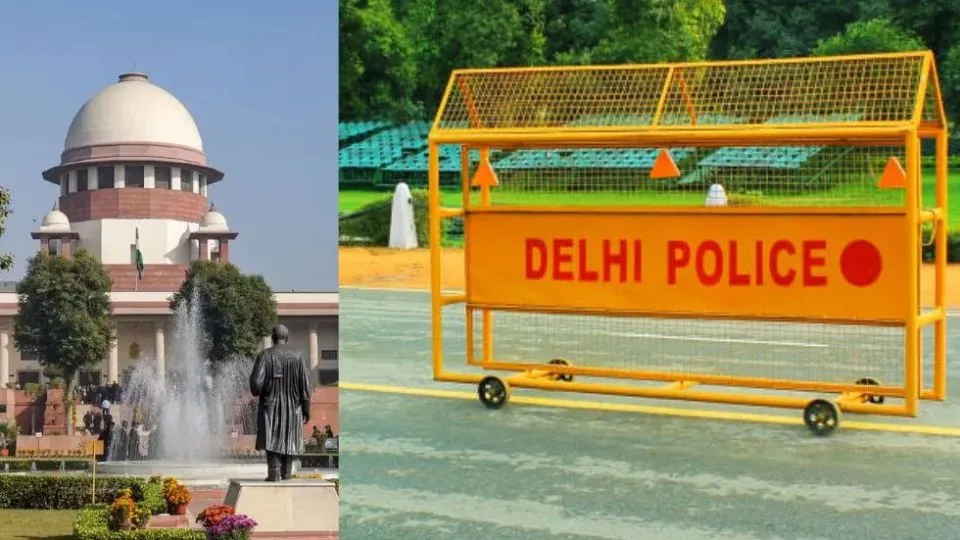
Arya News - The court also directed real-time monitoring of vehicle tracking and SOS systems and sought compliance reports on measures to prevent sexual offences.
NEW DELHI – The Supreme Court on Thursday directed Delhi Police to step up patrolling around schools, colleges, universities and coaching centres and ordered strict verification of drivers and assistants working in public transport and app-based cab services, according to the Bar and Bench report. It also asked authorities to ensure real-time monitoring of vehicle tracking and SOS systems to strengthen preventive policing and curb sexual offences in the national capital.
A bench of Justices JB Pardiwala and K Vinod Chandran said the focus should be on making safety measures visible and effective on the ground rather than limiting them to official orders and paperwork.
The court directed the Delhi government’s chief secretary and the commissioner of police to submit periodic compliance reports. It said both officers would be “personally answerable” if the directions were not implemented seriously.
More Patrolling Around Educational Institutions
The court directed Delhi Police to immediately increase beat patrolling across the city, especially around educational institutions and other areas identified as vulnerable.
Senior police officers have been asked to regularly meet beat personnel and review local security concerns, crime patterns and the effectiveness of patrolling. The police will also have to review existing protocols for the deployment and halting of police control room vans.
The bench stressed that preventing crime should remain a key priority. Referring to the “Broken Windows” theory of policing, it said neglected streetlights, non-functional CCTV cameras, dark stretches and unresolved complaints could create a sense of poor policing and reduced vigilance.
The court also directed authorities to identify trucks, heavy vehicles and other vehicles that are regularly parked in ways that block visibility or create blind spots and remove them. Unauthorised liquor shops and establishments will also have to be identified and action taken against them. Beat officers have been asked to keep a close watch on illegal liquor supply and crowding or loitering around such places.
Strict Verification Of Cab, Bus Drivers
The court ordered strict verification of drivers and assistants working in government and private buses, taxis, autorickshaws and app-based cab services, including Ola, Uber and Rapido.
Only registered and verified drivers and assistants will be allowed to operate such vehicles. Their names and photographs must be displayed prominently so passengers can identify them and report unauthorised persons.
The court also prohibited unauthorised sub-letting of vehicles to unverified drivers. Authorities have been directed to conduct regular and surprise checks at vehicle checkpoints.
Violations should lead to prompt regulatory action, including suspension or dismissal of drivers or assistants and seizure of vehicles wherever necessary.
The authorities have also been asked to review the implementation of vehicle tracking systems and connect their monitoring with the police emergency response system. Tracking devices and SOS systems must undergo regular and surprise checks to ensure they are working.
Passengers should also be informed about how SOS systems work, what happens after an alert is triggered and how quickly help can be expected. Authorities must disclose the response protocol and identify the personnel or unit responsible for responding to such alerts.
Court Seeks Reports On Existing Safety Measures
The Supreme Court also sought details about the functioning of Delhi Police’s “Shishtachar Squads”, which were formed under a March 2025 police circular to deal with eve-teasing and sexual harassment in public places.
The commissioner of police has been asked to submit the squads’ weekly reports for the previous three months. The report must include details of the locations and frequency of drives, action taken and follow-up measures.
The police chief has also been directed to provide a detailed status report on Operation “Nirbheek” and the “Nazuk” scheme, which aim to encourage school and college-going girls to report sexual offences and harassment. The report must explain how complainants’ safety and confidentiality are protected and what safeguards are in place against retaliation or intimidation.
The directions follow the court’s September 28 order, passed after it took suo motu cognisance of a series of recent rape incidents in Delhi-NCR. The court said it was seeking to identify weaknesses in crime prevention and emergency response systems and ensure that gaps in their implementation were addressed.
The bench clarified that it was not looking to create more paperwork or standing orders. Instead, it wanted to know whether existing safeguards were functioning as “living instruments of preventive policing”.
At the same time, the court cautioned police against using preventive policing as a reason for arbitrary or excessive action. It said police intervention must remain within the limits of “legality, proportionality and accountability”.
The authorities have been given until November 6 to submit comprehensive district-wise status reports on compliance with the court’s earlier and latest directions. The reports must mention measures already implemented, those pending and reasons for any delay.
The matter has been listed for further hearing on November 16. The Ministry of Home Affairs and the Delhi government’s transport department have also been directed to participate in the proceedings.