Arya News - Explore the enchanting legends of Athang Tsho, a sacred six-acre lake in Wangdue. Discover the folklore of a tshomen (mermaid) and a magical white horse that shape this pristine, spiritual haven, alongside efforts to improve its accessibility for travellers.
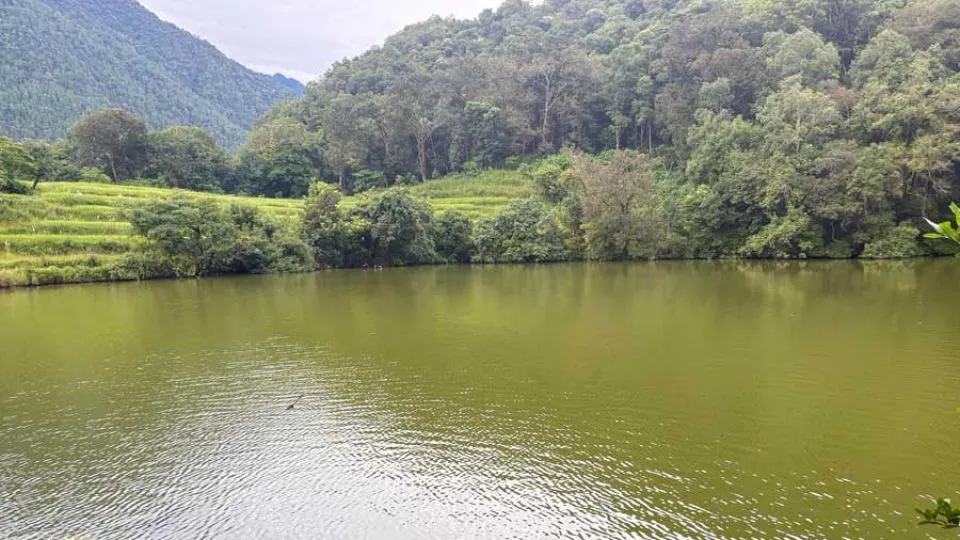
WANGDUE – The road to Athang Tsho climbs, dips and jolts its way through the remote reaches of Athang Gewog in Wangdue. From Wangdue town, the 55.4-km drive takes two hours. Then the road ends at the bottom of a slope, and visitors must walk 10 -15 minutes, with no proper trail, to reach a six-acre lake set amid paddy fields.
For the devotees who make the journey, the effort is part of the pilgrimage.
Adha Tsho, also known as Athang Tsho, is a sacred natural lake that local communities regard as an important spiritual site. People come to pray, make offerings and seek blessings, especially on weekends and auspicious days.
Locals say the lake’s religious and cultural significance, along with legends of a tshomen (mermaid) and a magical white horse, is what draws them. Despite that pull, the difficult journey keeps visitor numbers modest.
The road from the gewog is narrow and bumpy, climbing uphill before descending towards the lake. Its rough, uneven surface makes the drive slow and uncomfortable, particularly for light vehicles.
Athang Gup Dawa Gyeltshen said devotees hire coaster buses, Boleros and Hilux vehicles on weekends and auspicious days, as light vehicles struggle to reach the site.
“Improving and blacktopping the road would make access easier and could attract more visitors to the lake,” he said.
The gewog plans to blacktop about two to three kilometres of road from the gewog centre towards the lake. It has written to the Prime Minister’s Office and the Cabinet seeking support, but the money in hand falls short.
“The Nu 7.2 million budget currently available is enough to blacktop only about two kilometres,” the Gup said.
Beyond the road, the gewog hopes to improve the lake’s surroundings. It has proposed to the park authorities that steps be built near the lake to ease access, and has requested the Department of Tourism’s ecotourism division to set up an eco-camp at the site of a closed school.
Folklore of Athang Tsho
Locals tell of a tshomen who left an area near Trongsa to escape disturbances caused by travellers.
She turned a local man’s rice field in Phagtakha valley into a lake. To compensate him for the lost land, the story goes, she gave him a magical white horse that produced gold and silver coins, and the family grew wealthy over time.
News of the family’s unusual rise reached one of the most powerful governors of Wangdue at the time. Curious, he sent a team of trusted chamberlains to investigate. They were told that the wealth came from a mystical white horse, so the governor ordered them to bring the horse to him.
The chamberlains took the horse by force, but it refused to leave. They reportedly flogged and mistreated it until it collapsed and died.
With no other way to prove what had happened, they decided to carry back the horse’s saddle and bridle rope. According to the legend, the accessories turned into rocks on the way, and the rocks are said to remain there to this day.
Locals say a patch of red grass marks the spot where the horse’s blood fell. Two rocks resembling a saddle and a bridle can still be seen along the way to Athang.
Travellers passing through the area, they say, should keep an eye out for both.