Arya News - The German-Bhutan Himalaya Society (DBHG) plans to promote Gelephu Mindfulness City (GMC) among the German public and business community through a dedicated conference in 2027, as the society marks four decades of friendship and engagement with Bhutan.
THIMPHU – The society, which marks 40 years of association with Bhutan, plans to dedicate its annual conference in Germany in 2027 to the ambitious development project
The society, which marks 40 years of association with Bhutan, plans to dedicate its annual conference in Germany in 2027 to the ambitious development project
The German-Bhutan Himalaya Society (DBHG) plans to promote Gelephu Mindfulness City (GMC) among the German public and business community through a dedicated conference in 2027, as the society marks four decades of friendship and engagement with Bhutan.
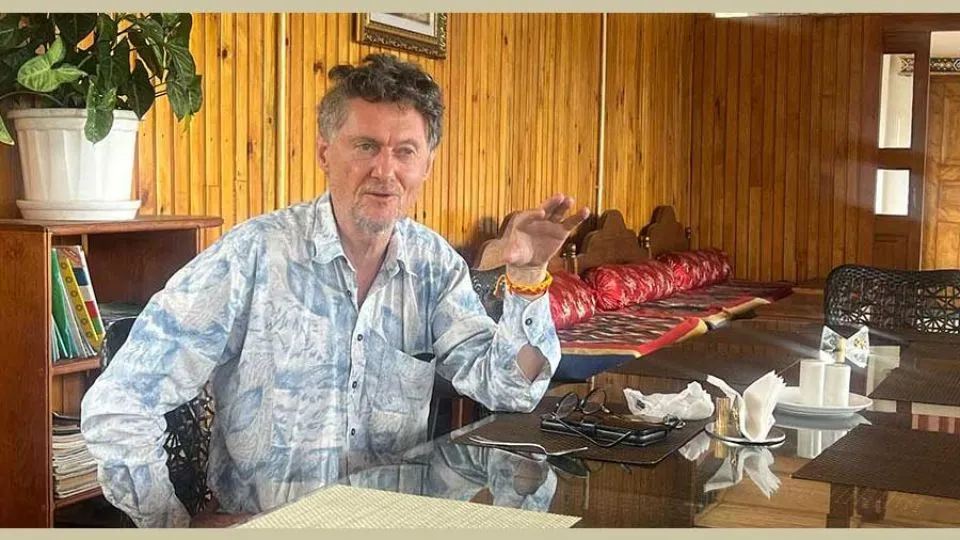
The President of DBHG, Reinhard Wolf, who led a delegation from the society to Bhutan for two weeks last month, said the society admired Bhutan’s ambition in pursuing the initiative, describing GMC as a farsighted project with the potential to become a model for the world.
“We at DBHG admire the courage Bhutan is demonstrating in this endeavour,” Reinhard Wolf said.
Envisioned by His Majesty The King as a Special Administrative Region, GMC is intended to become a centre for economic development, innovation and mindfulness, attracting international investment and talent while reflecting Bhutan’s values.
A significant milestone in the development of GMC will be the raising of 108 Jangchub Choetens in a single day on November 1, coinciding with the descending day of Lord Buddha and the Coronation Anniversary of His Majesty The King. As of October 20, more than 120,228 people had registered to attend the historic event.
The society believes GMC’s long-term vision, outlined through a 40-year diamond strategy, reflects a commitment to sustainable economic and social development rather than short-term gains.
“We believe that it is a wise approach to have a long-term vision in the form of the diamond strategy, spanning over 40 years,” Reinhard Wolf said. “This could be a model for the whole world.”
The society has already organised a webinar on GMC, which it said was well attended. It plans to dedicate its annual conference in Germany in 2027 to the initiative, with the aim of raising awareness among the German public, including the business community.
The president said German expertise and partnerships could contribute to GMC across several sectors, including education, sustainability, culture, health, technology, tourism and skills development.
The society also pointed to existing cooperation between Germany and Bhutan in skills development, saying Germany had much to offer in the field.
Four decades of friendship
Founded in 1986 by a small group of Germans drawn to Bhutan’s culture, natural environment and people, DBHG now has around 160 members.
What began as a shared fascination with the country has developed into lasting personal relationships and a broader partnership involving Bhutanese, Germans and other Europeans.
“There are places that touch us and change our view of the world. Bhutan is such a place,” Reinhard Wolf said.
He described Bhutan as a country where spirituality, nature and the common good exist in harmony, following what the society calls “the middle path between progress and mindfulness”.
In its early years, the society focused largely on preserving Bhutan’s cultural heritage. Under the long-standing leadership of former president Professor Manfred Gerner, it organised regular delegation visits, with participants contributing ideas and financial support to projects, including the renovation of cultural and sacred monuments.
Over the years, members have also provided direct support to students, families and development initiatives in Bhutan.
According to Reinhard Wolf, the society’s priorities have gradually expanded to include education, support for vulnerable groups, academic studies and scientific collaboration.
Supporting local initiatives
The society’s financial contributions to Bhutan come mainly from membership fees, supplemented occasionally by special fundraising campaigns.
Although it describes its financial support as modest, the society has contributed to several initiatives in the country. These include support for the Choki Traditional Art School, the provision of water filters for schools through the Rotary Club Thimphu, and contributions towards the construction of the Ura Temple Gallery, initiated by Dr Karma Phuntsho (PhD).
The society has also supported various civil society organisations, sometimes in collaboration with the Swiss and Austrian Bhutan friendship societies.
Reinhard Wolf said many of the society’s earlier contributions were directed towards the restoration of sacred monuments across Bhutan, with several projects implemented under Professor Gerner’s leadership.
However, the society considers its work in Germany equally important, particularly in introducing Bhutan to German audiences.
Through annual conferences and its yearly magazine, Thuenlam, the society seeks to deepen public understanding of Bhutan and strengthen ties between the two countries.
“We see ourselves as mediators and networkers between Bhutan and Germany,” Reinhard Wolf said.
Building partnerships
Over the past four decades, DBHG has developed a network of contacts across Bhutanese society, including government institutions, civil society organisations, businesses and individuals.
Its engagement with the government includes links with the Royal Bhutanese Embassy in Brussels. The society said these relationships were maintained on a partnership basis and often helped it support initiatives in Bhutan.
Beyond its work in Bhutan, DBHG also supports a small community of Bhutanese students in Germany, some of whom face considerable challenges in meeting their living expenses.
One member of the society said its diverse membership, comprising Bhutanese, Germans and other Europeans, continued to contribute different perspectives to its work.
Looking ahead, the society hopes to sustain its engagement with Bhutan and strengthen cooperation in areas that support the country’s development.
“Through our modest efforts, we hope to continue supporting Bhutan over the next 40 years and thus carry on our shared journey of success together,” Reinhard Wolf said.