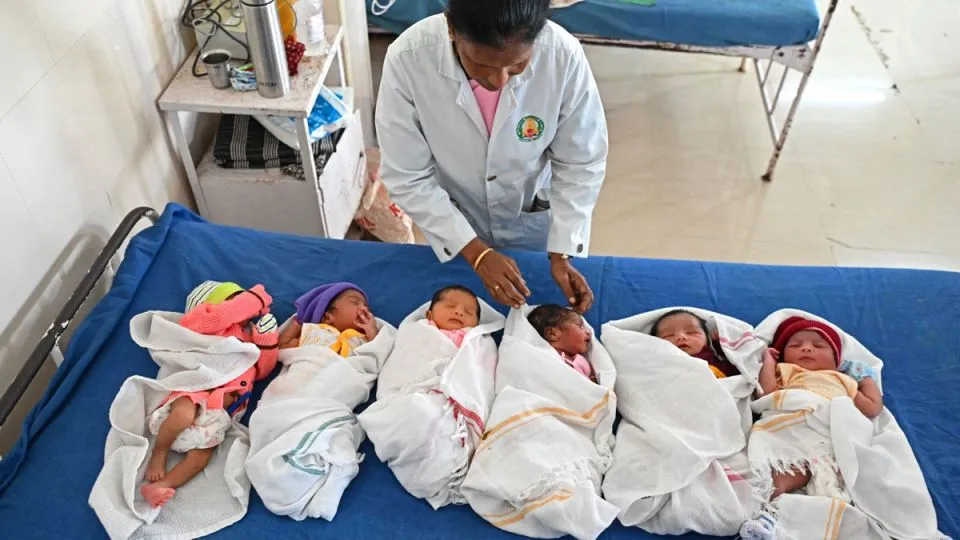
Arya News - The analysis estimates that climate change caused 10,600 additional preterm births across India, Bangladesh and the Philippines during the extreme heatwave in April 2024—an event made at least 45 times more likely by human-caused global warming.
NEW DELHI – Human-driven climate change is causing an increase in preterm births across South and Southeast Asia, putting newborns at risk of mortality and lifelong health impacts, according to a new analysis by Zero Carbon Analytics (ZCA)—an international research group providing insights and analysis about climate change and the energy transition.
This is the first analysis to estimate preterm births linked to the April 2024 heatwave in these countries, including their distribution within each nation, assessing how continued global warming could affect the burden in India and Bangladesh by mid-century, says the ZCA statement
The analysis estimates that climate change caused 10,600 additional preterm births across India, Bangladesh and the Philippines during the extreme heatwave in April 2024—an event made at least 45 times more likely by human-caused global warming.
In India, Bihar, Uttar Pradesh, West Bengal and Jharkhand accounted for around two-thirds of this excess burden, the analysis said, projecting that the country could experience more than 15,000 additional preterm births during a typical April by mid-century.
Uttar Pradesh is expected to have the largest absolute burden, followed by Bihar and Rajasthan, researchers say.
The 10,600 preterm births—8,830 in India, 1,479 in Bangladesh and 263 in the Philippines—would not have occurred in a world without human-caused warming, they add
The April 2024 heatwave was associated with approximately 16,150 additional preterm births compared with a typical April—an increase of 3.6% in India, 11.9% in Bangladesh and 10% in the Philippines—as per the researchers.
The findings also highlight the disproportionate impact on countries that have contributed little to historical greenhouse gas emissions but face greater climate risks and have fewer resources to adapt.
Preterm birth is the leading cause of neonatal mortality globally and is associated with long-term physical, neuro-developmental and socioeconomic consequences. As it is, the three countries have high preterm birth rates and are now disproportionately exposed to climate-driven extreme heat.
Ahead of COP31, with health among its priorities, this comes as another grim reminder
The UN Climate Chief has called for action on climate-driven heat affecting pregnancy and childbirth, describing it as a potentially fatal new faultline in the climate crisis.
Dr Joanne Bentley-McKune, lead author and senior research analyst at ZCA, said extreme heat was increasing the risk of preterm births and associated lifelong health impacts. The study estimated that more than 16,000 additional births occurred during April 2024 compared with a typical April, over 10,000 of which were attributable to human-caused warming.
Professor Rashmi Agarwalla, Nodal Officer, Climate Change, Department of Community and Family Medicine, AIIMS Guwahati, said maternal heat protection must become integral to health-system preparedness, antenatal care and community-based maternal services. Anaemia, poor nutrition and prolonged outdoor work compound heat-related risks for pregnant women and newborns, particularly in vulnerable communities, she added.
Despite these risks, heat remains an overlooked threat to maternal and neonatal health as per Prof Agarwalla.