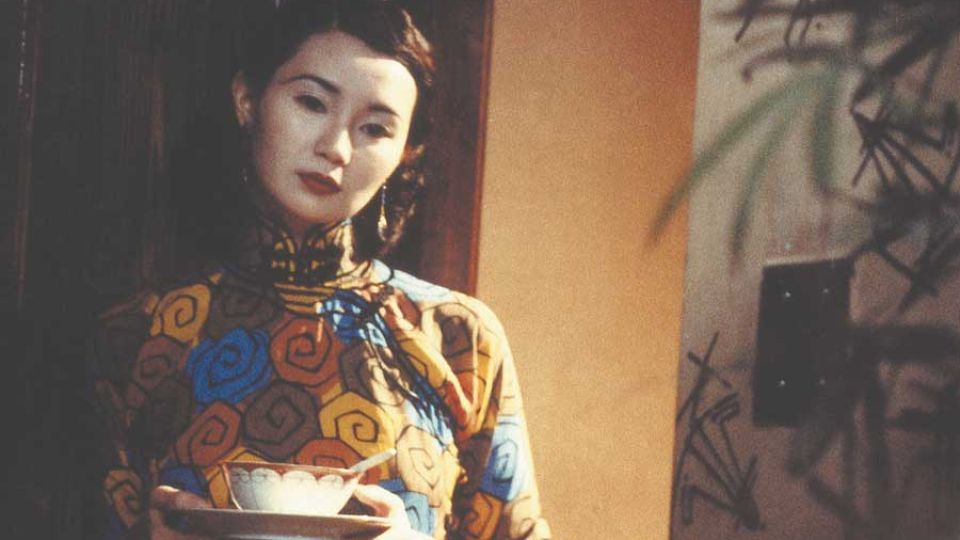
Arya News - Made during a celebrated period in Hong Kong cinema history, the biopic `Center Stage` uncovers parallels in the lives of movie stars across cultures and generations.
NEW YORK – At the Film Forum in New York’s Lower Manhattan, signs reading “Center Stage — Sold Out” were posted outside two weekend screenings of Stanley Kwan’s 1991 film Center Stage. In some local film discussion groups, people were offering up to $80 for a resale ticket.
Thirty-five years after its original release, Center Stage is back on the big screen and drawing a new generation of viewers.
“I was only in my 30s when I made Center Stage. Looking at it now, after going through more in life and observing people differently, I naturally see things in a different way than I did in 1991,” Kwan told China Daily in an exclusive recent interview.
Starring Maggie Cheung as Ruan Lingyu, one of the most famous actresses of early Chinese cinema, the film looks back at Ruan’s life and career in 1930s Shanghai. But Kwan did not want to make a conventional biopic. The film moves between dramatized scenes, archival footage of Ruan Lingyu, interviews, and conversations among Kwan, Cheung and other cast members about how they understood the character.
When the film came out 35 years ago, Kwan said some audiences did not know what to make of its structure. At a Hong Kong premiere held after Maggie Cheung won Best Actress at the Berlin International Film Festival, audience members began leaving before the film was over.
Kwan said the theater seats would snap back with a “pop” whenever someone got up. About a third of the way into the film, he started hearing the sound. By the halfway point, “the pops were coming one after another. When the film ended, only about half the audience remained,” he said.
Today, the response appears to be vastly different.
“I didn’t know much about the history of early Chinese cinema. It was interesting to see that they also went through the silent-film period and then the transition to talkies. It made me think about how film history developed across different parts of the world,” Amelia Mickelson, a New York moviegoer, told China Daily after the screening.
“Watching it now, I was thinking about how Maggie Cheung has stepped away from acting. When the film came out, she was still at the height of her career. Thirty-five years later, that gives the film another kind of parallel with Ruan Lingyu that audiences at the time didn’t have,” she said.
Kwan said that from the beginning, he wanted the film to be about both Ruan Lingyu and Maggie Cheung.
In the film, Cheung is sometimes Ruan on screen, and sometimes herself as an actress talking about how she understands and approaches Ruan. For Kwan, that gave the character another layer.
Ruan died by suicide in 1935 after intense media scrutiny over her private life. Decades later, Cheung had a very different response when the media published a private letter she had written to a foreign boyfriend.
“She thought it was just a love letter. There was nothing shameful in it. So what?” Kwan said. “Cheung, as an actress of her generation, had a very different attitude toward the media than Ruan,” Kwan said. “She sympathized with Ruan, but she also had her own perspective.”
Kwan said that was one reason he no longer wanted to make a conventional biopic. “I became a little greedy,” he said. “I wanted to find a form that could include documentary interviews, old film clips and dramatized scenes.
“What Maggie brought to the role gave me more confidence to present Ruan this way,” he said. “I wanted Maggie to bring her own feelings and views,” Kwan said. “The audience sees Maggie, sees Ruan, and also sees how Maggie interprets Ruan. That adds another layer to the character.”
At the sold-out night screening on Aug 7, most of the audience at the Film Forum were local moviegoers. Many said they attended because of Maggie Cheung.
“I went in completely blind. I really just wanted to see it because I love Maggie Cheung,” said Mickelson.
Erin Healy, another New York moviegoer, said the story did not feel distant despite its setting in 1930s China. “You can see similarities in the way famous people and actresses were treated by the press, whether in China or in Hollywood’s golden age,” Healy said. “That feels very universal.”
The film often moves in and out of the story instead of keeping the audience fully inside the drama. Kwan said he was not worried that this would distance viewers.
“As a filmmaker, there are stories you feel you have to tell and people you feel you have to write about,” Kwan said. “But during the creative process, you also have to keep some distance. You cannot become too self-indulgent in your own script or your own film.”
Kwan said he often reminds himself of an idea: “When you are too close, step back. When you are too far, move closer.
“A filmmaker needs to be sensitive enough to look back at his own work and question it,” Kwan said. “That distance is very important.”
Time has also given the film another layer of meaning. Thirty-five years ago, Center Stage was a Hong Kong filmmaker looking back at one of the defining figures of 1930s Chinese cinema.
Today, the film itself has become part of Hong Kong’s film history. Made during one of Hong Kong cinema’s most celebrated periods, it brought together actors including Maggie Cheung, Carina Lau and Tony Leung Ka-fai, a cast that now also represents a particular era of the special administrative region’s filmmaking.
For Kwan, looking back at the film today also means looking back at a very different period of filmmaking, and at the way both Ruan Lingyu and Maggie Cheung have continued to live on through the film.
The director said the part that stays with him most is the sequence before Ruan Lingyu’s suicide. In the scene, Ruan goes dancing with her lover before returning home and taking sleeping pills. As they dance the Rumba, parts of her suicide note are heard in a voiceover.
Kwan said Cheung played the scene “without showing the sadness one might expect from someone about to take her own life. Instead, she appeared completely absorbed in the dance”.
“She is simply living in that moment,” Kwan said. “I think life is like that. Whether you are happy or unhappy, you should fully experience what that moment brings you,” he said, after watching the film 35 years later.