• Arya News AgencyEnglish
    • خبرگزاری آریافارسی
    • وکالة آریا للأنباءالعربیه
Monday, August 17, 2026
  • Home
  • Iran
    • World
      • Economy
        • Sports
          • Technology
            • Archive
            World

            How Nepal manages unidentified and unclaimed bodies

            Monday, August 17, 2026 - 08:13:02
            How Nepal manages unidentified and unclaimed bodies
            Arya News - Police follow a set procedure to identify and trace relatives, but limited mortuary space means hospitals cannot preserve remains for long.

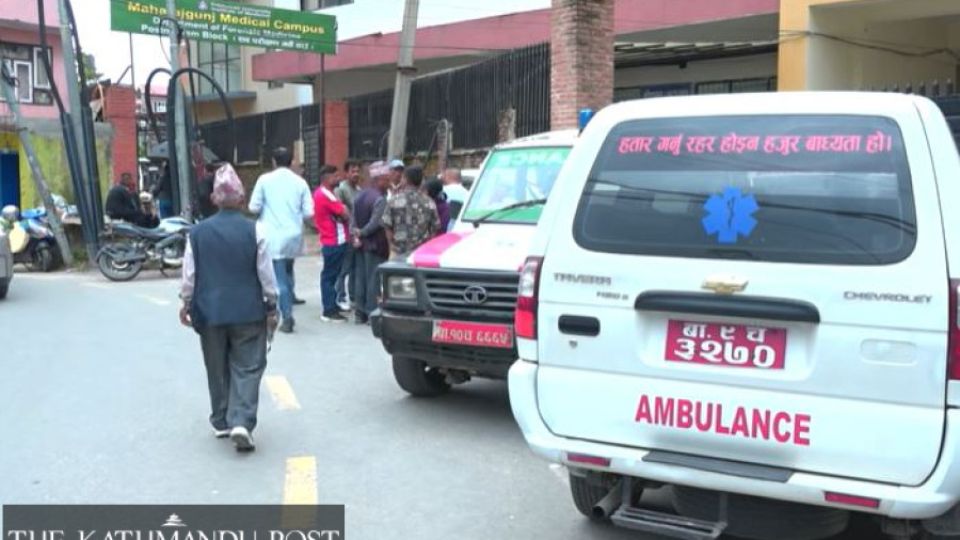
            KATHMANDU – When an unidentified body is found in Nepal, police begin an investigation to establish the person’s identity and trace relatives before the remains are transferred to a hospital mortuary.
            But with 788 unidentified and unclaimed bodies currently being kept in hospital facilities nationwide, limited storage capacity is forcing hospitals to begin disposal procedures within months.
            The process starts at the local level. Police notify the relevant local government and ward representatives after an unidentified body is found. Under the Unidentified and Unclaimed Body Management Guidelines, 2021, police prepare an official inquest report in the presence of local representatives and residents.
            If relatives are identified during the initial investigation, the body is handed over to them. If no relatives are found, the remains are transferred to a hospital mortuary for preservation while police continue efforts to establish the person’s identity.
            According to Nepal Police data, 1,634 unidentified bodies have been recovered nationwide since fiscal year 2013-14. Of these, 133 were identified and handed over to their families, 84 were transferred to teaching hospitals for medical research, and 629 were cremated or buried after the required legal procedures. Another 788 remain in hospital mortuaries, awaiting identification or final disposal.
            Deputy Inspector General of police Abi Narayan Kafle, central spokesperson of the police, said detailed records are maintained for every unidentified body.
            “The police are always the first to arrive at the scene and complete all preliminary legal procedures,” Kafle said. “We maintain complete records of the deceased. If families looking for missing relatives examine these records carefully, identification becomes significantly easier.”
            Police also publish photographs and details of unidentified bodies on their public online portal to help families looking for missing relatives.
            But the system faces a major constraint: hospitals do not have enough space to preserve unidentified remains for extended periods.
            International standards call for unidentified bodies to be preserved for up to 12 years to give families adequate time to trace missing relatives. Hospitals in Nepal, however, lack the infrastructure and storage capacity required for such long-term preservation.
            Tribhuvan University Teaching Hospital in Kathmandu currently has 80 unidentified bodies in its mortuary and receives around 50 such bodies each year. Its mortuary has a maximum capacity of 150 bodies.
            Gopal Kumar Chaudhary, head of the Forensic Department at TU Teaching Hospital, said the hospital contacts police three months after a body arrives to check whether relatives have been traced.
            “We inquire with the police after three months to check whether any relatives have been traced,” Chaudhary said. “By the six-month mark, management procedures must begin to free up space for incoming bodies. Remains can realistically be preserved for six months at most.”
            Patan Hospital in Lalitpur currently holds 16 unidentified bodies and has a mortuary capacity of 24. It keeps remains for up to a year before final disposal.
            Some unidentified bodies are also allocated to medical education institutions for teaching purposes. Around 30 such bodies are provided to teaching institutions nationwide each year.
            Srijana Kunwar, head of the Forensic Department at Patan Academy of Health Sciences, said PAHS receives only one body a year for academic instruction after approval from a specialised committee. The remains are given final rites after their academic use is completed.
            For bodies transferred to medical institutions, the respective teaching hospitals are responsible for arranging final rites once academic use is completed and for maintaining records of the process.
            The system therefore relies on police records and public disclosure to identify the deceased, while hospitals provide temporary storage. But the shortage of mortuary space means the period available to identify an unknown person and reunite the remains with their family is often far shorter than international preservation standards envisage.

            Short Link:
            News Code:
            Member Code:

            More News
            Seoul mayor faces 18-month prison request over campaign polls
            Seoul mayor faces 18-month prison request over campaign polls
            Pressure mounts to halt, review Indonesia President Prabowo’s free meals programme
            Pressure mounts to halt, review Indonesia President Prabowo’s free meals programme
            Young dancers seek freedom in Korea’s growing street dance scene
            Young dancers seek freedom in Korea’s growing street dance scene
            Over 1,000 Malaysians in 2km queue for jobs with starting pay of $1.1k
            Over 1,000 Malaysians in 2km queue for jobs with starting pay of $1.1k
            After detention reform, migrants in South Korea still face locked doors and long waits
            After detention reform, migrants in South Korea still face locked doors and long waits
            Steeped in culture: Chinese tea wins over Moscow
            Steeped in culture: Chinese tea wins over Moscow
            New faces coming for polls in Malaysia’s Johor
            New faces coming for polls in Malaysia’s Johor
            15 bodies recovered in Bangladesh in 21 days, sparking public concern
            15 bodies recovered in Bangladesh in 21 days, sparking public concern
            Tropical storms, heat and drought putting millions of Vietnamese children at risk: UNICEF
            Tropical storms, heat and drought putting millions of Vietnamese children at risk: UNICEF
            • More News
            • Cameroon dominates Malawi to win first Women’s Africa Cup of Nations title
            • At least six dead in ‘stampede-like’ incident at India temple
            • South Korea President Lee promotes ‘K-Culture’, weapons, to accelerate ‘pragmatic diplomacy’
            • US transshipment crackdown puts eight Thai sectors on alert
            • US transshipment crackdown puts eight Thai sectors on alert
            • Bou Meng, one of seven known survivors from Cambodia’s notorious Tuol Sleng Prison, passes away at 85
            • Nepal’s faith is finding a new interface
            • How Nepal manages unidentified and unclaimed bodies
            • Pakistan’s goods transporters postpone strike for 40 days in ‘broader national interest’
            • Foreign nationals legally entering or residing in Vietnam eligible for electronic ID accounts
            • US President Trump’s H-1B visa crackdown is starting to drive tech talent back to India, China
            • Pakistan’s goods transporters postpone strike for 40 days in ‘broader national interest’
            • Thieves steal Renaissance artworks in museum heist during Italian holiday
            • Trump Orders Reduction of US-South Korea Military Drills
            • Celebrated Hong Kong director Stanley Kwan reflects on iconic film 35 years later
            • Foreign buyers turn to Thai property for high rental yields
            • Non-resident Nepalis keen on domestic ventures, but cite bureaucratic hurdles and safety fears
            • Mongolian CSOs urge stronger rangeland protection, responsible land management ahead of COP17
            • Fresh floods hit India’s Odisha as rainfall remains 27% above normal, 515,000 people affected
            • Foreign buyers turn to Thai property for high rental yields
            • Non-resident Nepalis keen on domestic ventures, but cite bureaucratic hurdles and safety fears
            • Bangladesh could change cricket forever, again
            • Malaysian government makes long-awaited decision to abolish the Universities and University Colleges Act 1971
            • Nepal’s labour market caught between jobless workers and worker shortages
            • Food items continue to become costlier in India even as wholesale price inflation eases marginally in July


              خبرگزاری آریا

              "Arya News Agency" is an official and independent Iranian news agency with the slogan "Transparent, honest and professional movement in information dissemination."

              Join with Us:

              Monday, August 17, 2026
              News Groups:
              • Iran
              • World
              • Economy
              • Sports
              • Technology
              Arya Group:
              • مرکز مطالعات استراتژیک آریا
              • شرکت سرزمین هوشمند آریا
              • انتشارات پیشگامان اندیشه آریا
              © - Arya News Agency
              About us| Contact us| RSS| Links| Advanced search