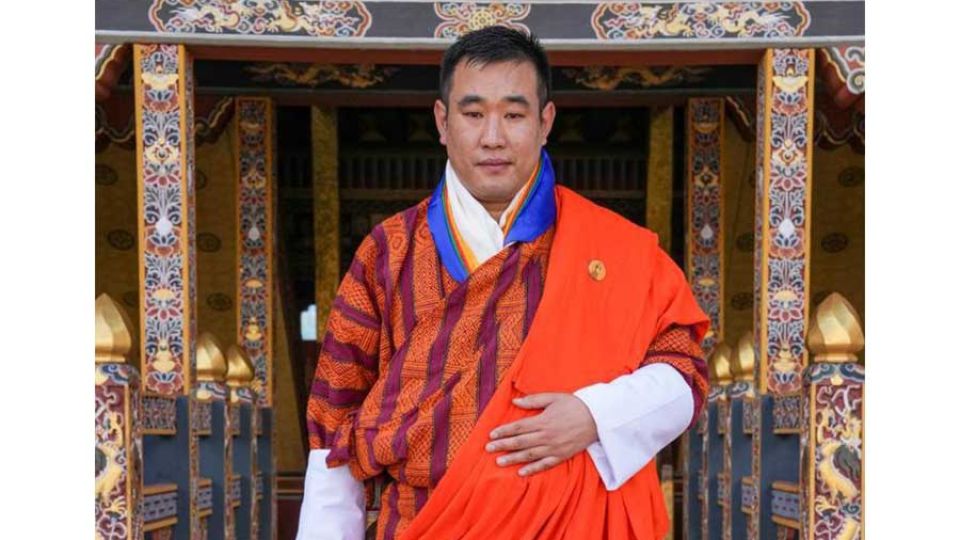
Arya News - Kuensel reporter Dechen Dolkar talks to Bhutan`s newest Minister of Energy and Natural Resources, Sonam Tashi, on priorities and targets for his tenure.
THIMPHU – In two and a half years, I am not going to promise the world, but I can commit to a few concrete outcomes the public can hold me to. On hydropower, I want PHPA-I to be completed on the current 48-month schedule from the resumption of dam works in April 2026, while the other under-construction projects, involving roughly 3,500MW of hydropower and solar, are commissioned as targeted.
Kuensel reporter Dechen Dolkar talks to MoENR Minister Sonam Tashi on his priorities and targets during his tenure
As the new minister, what specific projects or reforms can you realistically deliver during the remaining term?
In two and a half years, I am not going to promise the world, but I can commit to a few concrete outcomes the public can hold me to.
On hydropower, I want PHPA-I to be completed on the current 48-month schedule from the resumption of dam works in April 2026, while the other under-construction projects, involving roughly 3,500MW of hydropower and solar, are commissioned as targeted.
On energy security, my measurable target is to see a winter without significant power curtailment. On minerals, I want to establish a clear and workable roadmap for our high-value mineral discoveries, with transparent processes for exploration and extraction.
As the youngest minister, you will be working with senior bureaucrats and more experienced Cabinet colleagues. How do you plan to work effectively with them and establish your leadership within the ministry?
I see my age as an asset rather than a handicap. I intend to lead by listening first, particularly to senior officials and technical experts who have carried the Ministry’s work for years. Their experience is something I need, not something I compete with.
My approach will be based on clear expectations, regular follow-up and genuine respect for expertise, rather than leadership by directive or asserting authority for its own sake. With Cabinet colleagues, I will rely on straightforward communication and a willingness to bring issues to the table early rather than allow them to fester.
Leadership, to me, is established through consistency and through delivering on what I say I will do, not through age or seniority.
Hydropower development has been quite slow. What is the main reason for the delays, and which projects will you actually take up within the next two and a half years?
Except for PHPA-I and PHPA-II, other hydropower projects have not seen unreasonable delays, and most have either been completed on time or are progressing according to schedule. PHPA-II has also been fully commissioned and has started producing electricity.
However, the earlier delays in these two projects stemmed from a mix of factors, including geological surprises during construction that were not fully anticipated at the design stage, contracting arrangements that did not adequately share risks, and, at times, slow decision-making between project authorities and the government.
These are lessons from PHPA-I and PHPA-II that are too costly to leave unlearned. I intend to review our project-preparation processes, particularly geological investigation standards, before construction begins on future projects.
Approximately 3,500MW of hydropower projects are under construction and, except for PHPA-I, all other projects are on schedule without major geological surprises or technical challenges. Within the next two and a half years, my priority is to see the large-scale projects already allotted to private investors for development in partnership with DGPC move from allotment into active construction, while ensuring that projects already under construction stay on their committed timelines rather than add to the list of delayed projects.
It is also important to note that large-scale hydropower projects take a minimum of five to six years to develop and fully commission. Therefore, it would not be fair to expect projects to be completed and start producing electricity within this government’s term.
Bhutan faces power shortages during winter despite being a hydropower-rich country. What immediate measures will you take to address the seasonal energy deficit, and when can Bhutan realistically become energy-secure throughout the year?
Bhutan has the potential for approximately 33GW of hydropower projects from our water resources. The current generation capacity is around 3,600MW, while around 3,500MW of hydropower and solar projects are under construction.
However, existing hydropower projects are built on run-of-river schemes, because of which generation capacity drops significantly during the lean season. Current firm power is only about 500MW, and as a result, Bhutan imports power during the lean season to support industries and the private sector.
At the same time, 92 percent of energy consumers are industries, which indicates the progress and pace of development. Given the number of upcoming large-scale industries and digital companies, demand for energy is expected to increase significantly.
To mitigate winter power shortages, the Ministry has developed the Renewable Energy Development Roadmap 2024 and the National Energy Policy 2025 to augment the development of hydropower and solar projects, with a target of achieving 25GW of installed capacity by 2040.
The Ministry is also exploring diversification of the energy mix under the National Energy Policy 2025, which will meaningfully reduce our reliance on imports during the lean season.
I would rather give a realistic timeline than an optimistic one. Meaningful improvement should be visible within this government’s term, with fuller year-round energy security following as the 25GW target is built out in stages.
Bhutan has increasingly talked about diversifying beyond hydropower into solar, wind and other renewable energy sources. What concrete renewable-energy capacity do you aim to add before the end of this government’s term, and where will the investment come from?
Diversification is a firm priority, and solar in particular complements hydropower because it generates more during the dry winter months when river flows are low.
Under the Renewable Energy Development Roadmap 2024, non-hydro renewables are expected to contribute meaningfully towards the overall 25GW target by 2040. Within this government’s term, I want to see the continued rollout of solar projects already in the pipeline, alongside the expedited development of small hydropower projects.
Through DGPC, the Ministry has already identified and allotted more than 12,000MW of hydropower projects to be developed in partnership with private investors, mostly from India. The Ministry has also identified and allotted around 2,700MW of solar projects for feasibility studies by DGPC, and more than 2,800MW to the private sector for feasibility studies and development.
Bhutan has a total potential of around 12,000MW for solar and 700MW for wind energy. Geothermal is relatively new, but the Ministry is also exploring opportunities in that sector.
Natural resources such as minerals have significant economic potential, but there are concerns about environmental damage, illegal extraction and whether Bhutan is getting enough value from these resources. How will you balance resource extraction with environmental protection?
Bhutan’s constitutional commitment to maintain a minimum of 60 percent forest cover for all time is not negotiable, and it will guide every decision this Ministry makes on mining and land use.
Our new mineral discoveries represent a real opportunity, but I intend to pursue them deliberately rather than rush them to market. On enforcement, I will push for stronger monitoring against illegal extraction and encroachment, with real consequences when violations occur.
On value capture, the reforms I want to introduce include transparent and competitive processes for exploration and extraction rights, rigorous environmental impact assessments and reclamation requirements built into every licence, and a closer examination of whether our current royalty and revenue-sharing arrangements are capturing fair value for the country.
Extraction and protection are not opposites. The safeguards are what make extraction sustainable enough to continue delivering value over the long term.
Bhutan has ambitious plans to increase its energy-generation capacity and eventually develop thousands of megawatts of new projects. Given financing constraints, environmental concerns, transmission capacity and the limited implementation period, are these targets actually realistic? If not, what targets are you prepared to revise, and what should the public expect from your Ministry by 2028?
The 25GW target by 2040 was never meant to be delivered within one government’s term. It is important to be honest about that rather than allow people to assume otherwise.
What I can be held accountable for by 2028 is the portion of that pipeline that is within reach during this period: ensuring that the roughly 3,500MW of hydropower and solar projects already under construction are commissioned on schedule; moving the large private-sector hydropower projects under the Renewable Energy Development Roadmap 2024 from allotment into active construction; and making visible progress on diversification into solar and wind.
Financing, transmission capacity and environmental safeguards are real constraints. Where a specific project timeline needs to be revised because ground conditions or financing do not support it, I would rather say so early than allow a project to drift the way some have in the past.
What the public should expect by 2028 is not the full 25GW, but a Ministry that is transparent about what is achievable, has kept its committed projects on track and has made tangible progress towards a more energy-secure and diversified Bhutan.