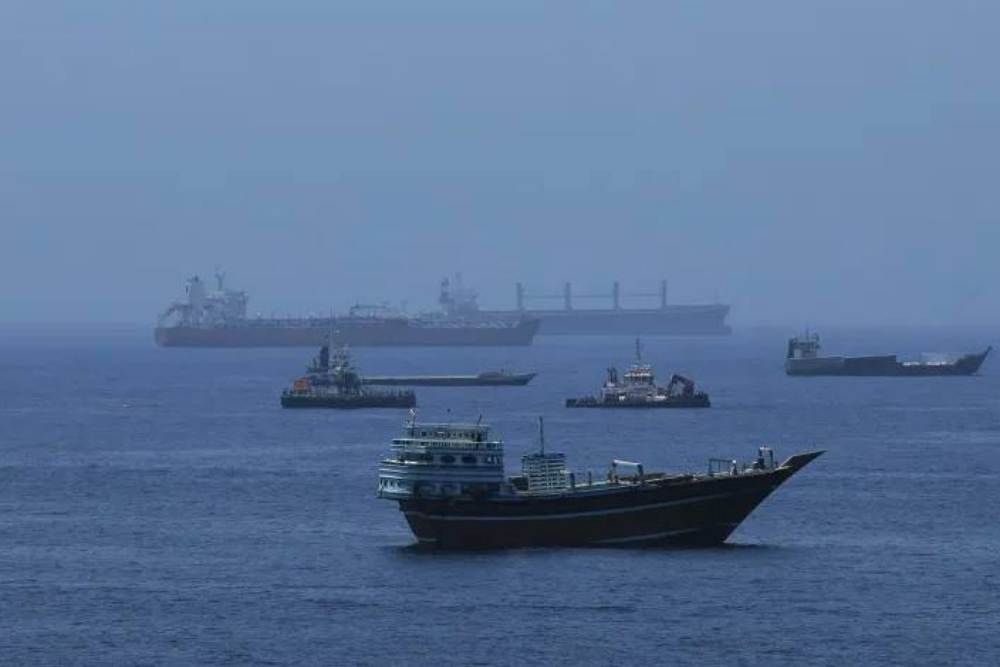
Arya News Agency -LONDON/DUBAI – The average number of cargo ships transiting the Strait of Hormuz has fallen to its lowest level since May over the past 10 days, according to shipping data tracked by Kepler, in a fresh sign that escalating military friction between Iran and the United States is beginning to disrupt one of the world's most critical maritime chokepoints.
Data compiled by the analytics firm shows that the daily average of commercial vessel crossings through the strategic waterway has dropped to just 10 per day during the 10-day period ending this week. The decline appeared to intensify over the weekend, with only two ships recorded passing through the strait on Saturday, September 6, followed by a modest recovery to six vessels on Sunday, September 7—most of which were routed through Iranian territorial waters.
The sharp drop in traffic volume reflects growing caution among shippers and insurers, who are reassessing risk exposure in the wake of recent U.S. airstrikes on Iranian oil tankers and Tehran's subsequent threats to retaliate against any perceived military or commercial incursions. The Strait of Hormuz, through which roughly one-fifth of global oil supplies and a significant share of liquefied natural gas transit, has long been a flashpoint for regional tensions, with Iran previously threatening to close the waterway in response to hostile actions.
Maritime security analysts have noted that while the current reduction in traffic remains below levels seen during previous crisis peaks, the trend is being closely monitored by global energy markets, which remain on edge over potential supply disruptions. The routing of most recent crossings through Iranian-controlled lanes also suggests that Tehran continues to exercise de facto navigational oversight in the area, even as international naval patrols operate nearby.
No official comment was immediately available from Iranian authorities or from U.S. Central Command regarding the traffic data. However, industry sources indicate that a growing number of shipping companies are temporarily rerouting or delaying voyages as they await clearer signals on the security environment in the Gulf.
Source: Reuters / Kepler Shipping Data