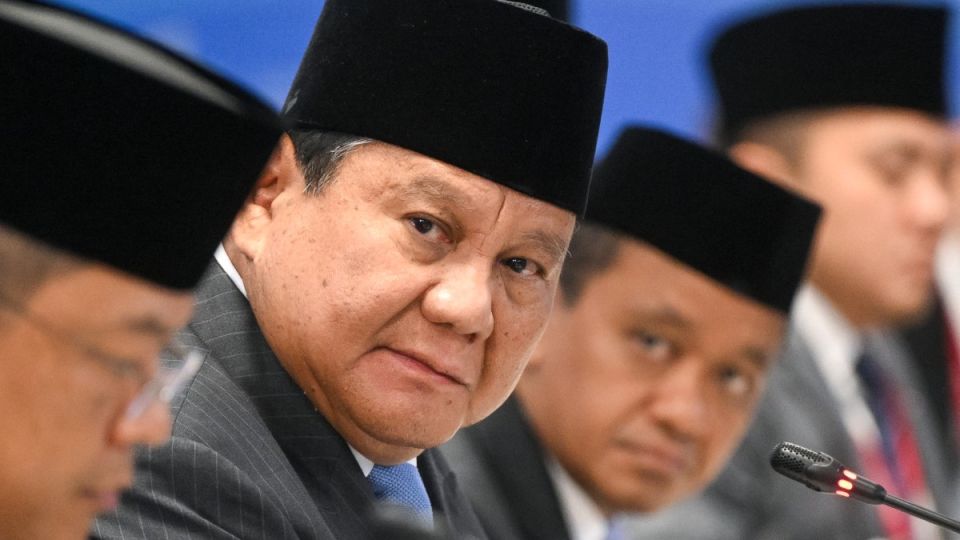
Arya News - The early maneuvering comes as President Prabowo faces growing public dissatisfaction, with his approval ratings falling from 81.2 percent in November last year to 51.1 percent in July amid worsening perceptions of the economy, politics and law enforcement.
JAKARTA – The next presidential election may still be three years away, but several potential contenders have already begun making early moves as President Prabowo Subianto ’s approval ratings slide and criticism of his government mounts.
The early maneuvering comes as Prabowo faces growing public dissatisfaction, with his approval ratings falling from 81.2 percent in November last year to 51.1 percent in July amid worsening perceptions of the economy, politics and law enforcement.
Among those who may have begun positioning themselves early is senior infrastructure minister Minister Agus Harimurti Yudhoyono, popularly known as AHY, who recently made remarks that experts and politicians saw as an indirect criticism of the government’s handling of economic and democratic challenges.
While backing the Prabowo administration, the Democratic Party leader used his speech during the party’s 25th anniversary celebration last Saturday to urge party members to be “honest about the realities experienced by the people”, noting that many Indonesians continue to face economic hardship.
He also called for continued efforts to protect the hard-won democratic gains of the reform era and promote a “healthy democracy”, which he said requires an accountable government, a trusted legal system, a free press and civil society, effective checks and balances and fair elections.
Former president Joko “Jokowi” Widodo, who is constitutionally barred from running for a third term and tacitly backed Prabowo’s bid in 2024, has also launched a tour to some regions that analysts said is intended to shore up support for his eldest son, incumbent Vice President Gibran Rakabuming Raka.
The road show came as doubts grew over whether Prabowo would run again with Gibran in the next presidential race, amid signs of growing distance between Jokowi and Prabowo, with the Vice President largely sidelined from key decision-making in the administration.
Jokowi has also stepped up meetings with leaders of his volunteer groups, including Budi Arie Setiadi, who at one meeting called on Jokowi’s supporters to prepare for the possibility of an “early election”, citing widespread public discontent with the economic performance of the current administration.
These developments have prompted pro-government Golkar Party politician Ahmad Doli Kurnia to question the emergence of the two political blocs some three years ahead of the 2029 elections, given that both the so-called Cikeas and Solo camps, associated respectively with the Democrats and Jokowi, remain part of the ruling coalition.
“Such [shifts] further show that the 2029 presidential election is becoming increasingly difficult to ignore nowadays […] and it seems that some political forces are already beginning to prepare for the race,” Doli said earlier this week.
Maneuvering has also come from outside the ruling coalition, with unsuccessful presidential candidate Anies Baswedan frequently voicing his views on a range of issues, including criticism of Prabowo’s flagship free nutritious meal program, which has been marred by a series of mass food poisoning cases.
Several popular regional leaders have also begun appearing in opinion polls for the next presidential race. Those include Jakarta Governor Pramono Anung, who hails from the Indonesian Democratic Party of Struggle (PDI-P), the only major party outside the ruling coalition, and West Java Governor Dedi Mulyadi, who is a member of Prabowo’s Gerindra Party.
Analyst Agung Baskoro attributed the early maneuvering in part to Prabowo’s declining approval ratings, saying this has opened room for potential rivals to test their electoral appeal and gauge support for a potential presidential bid.
“This is essentially a warm-up, a way to see whether [potential presidential contenders] have the political strength and support, both among the public and the political elites, to compete in 2029,” Agung said on Thursday.
If Prabowo’s ratings fail to recover, Agung said the 2029 race could become more fragmented, with potential challengers from the PDI-P, Jokowi’s Solo and Agus’ Cikeas camps, alongside alternative and emerging figures.