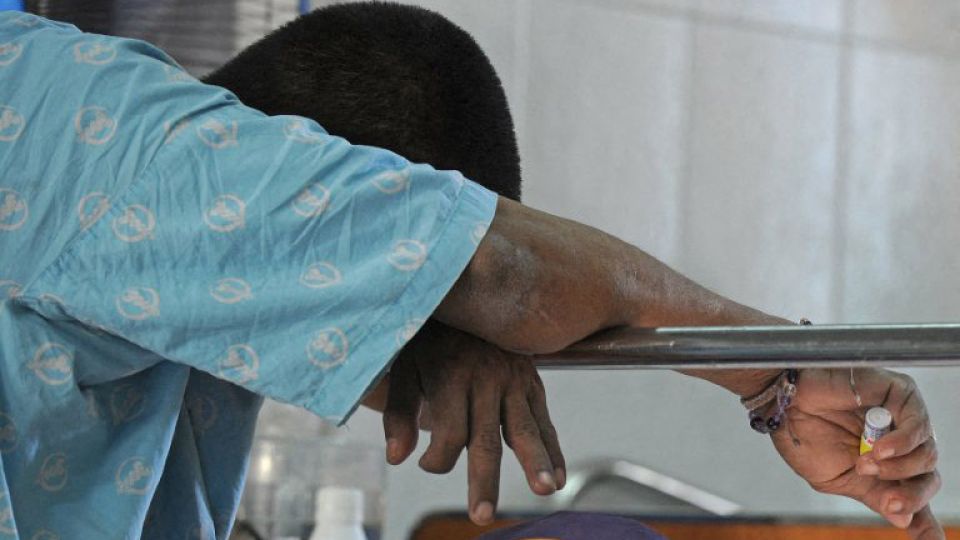
Arya News - Young people aged 15-24 account for one-third of new HIV infections in Thailand, posing a major challenge to the country`s goal of ending AIDS by 2030.
BANGKOK – Young people aged 15-24 account for as many as one in three new human immunodeficiency virus (HIV) infections in Thailand each year, highlighting a major challenge as the country works towards its goal of ending acquired immunodeficiency syndrome (AIDS) as a public health problem by 2030.
While Thailand has made substantial progress in HIV prevention and treatment, social stigma, limited awareness of individual HIV status and gaps between knowledge of sexual-health risks and actual behaviour remain significant obstacles.
Thailand expands HIV prevention and treatment options
HIV attacks the immune system, while AIDS is the most advanced stage of HIV infection. Thailand’s response has increasingly expanded beyond treatment towards prevention, while HIV-related health services and innovation are also becoming linked with the wellness economy, ranging from pharmaceuticals and diagnostics to specialist clinics, digital health services and prevention-related businesses.
Data from the Department of Disease Control for 2026 showed that, by the third quarter, Thailand had recorded more than 565,018 people with HIV and 15,578 new infections. The largest age group was 25-49.
People living with HIV require antiretroviral treatment, while prevention options include pre-exposure prophylaxis (PrEP), which is taken before potential exposure to HIV. Prevention is also shifting from daily tablets towards long-acting PrEP, reducing the burden of taking medication every day and broadening the choices available to users.
In September 2026, the Department of Disease Control announced preparations to introduce injectable Lenacapavir PrEP through a pilot programme covering 2,400 people at nine service sites towards the end of the year.
Although Thailand’s overall HIV response has improved markedly compared with the past, the remaining challenge is increasingly centred on whether people know their HIV status, recognise their level of risk and feel able to seek services without fear of stigma, particularly among young people.
Youth account for a third of new HIV infections
Kritsiam Arayawongchai, country programme director for AIDS Healthcare Foundation (AHF) Thailand, told Thansettakij that Thailand had once recorded more than 100,000 new HIV infections a year, compared with tens of thousands annually today.
The decline reflects improvements in the country’s prevention and treatment system. However, HIV infection rates among LGBTQ+ people remain higher than among the general population, while people aged 15-24 account for as many as one in three new infections each year.
Kritsiam argued that reducing new infections would require more than simply providing information, with greater emphasis needed on turning awareness into behavioural change.
“Although most people know that unprotected sex carries risks, many do not consistently translate that knowledge into preventive behaviour,” he explained.
AHF’s fieldwork has found that more than 96% of new infections are linked to unprotected sex. The issue is also connected with other sexually transmitted infections, some of which have shown an increasing trend over the past several years.
Kritsiam noted that PrEP can reduce the risk of acquiring HIV but does not protect against other sexually transmitted infections.
Focusing communication solely on HIV without providing a broader picture of sexually transmitted infection prevention could therefore leave people with an incomplete understanding of the risks, he added.
Stigma remains an obstacle to Thailand’s 2030 targets
Under Thailand’s National Strategy to End AIDS, the country aims to achieve three principal targets by 2030: no more than 1,000 new HIV infections a year, no more than 4,000 HIV-related deaths annually, and HIV- and gender-related stigma and discrimination below 10%.
With only four years remaining, stigma continues to hinder progress.
AHF has encountered people who travel across regions to collect medication because they fear that people in their communities or among their acquaintances could learn of their HIV status. Such cases indicate that difficulties in accessing services are not simply caused by a lack of hospitals or medicines, but can also stem from social and economic constraints.
Travel costs can pose an additional barrier, particularly for people on low incomes. Some agricultural workers, for example, earn only THB200-300 a day, making journeys to receive treatment a significant financial burden.
“AHF works with more than 52 public hospitals nationwide, providing support for travel costs, home visits and assistance for people who face access constraints to help fill gaps that the public healthcare system may not be able to fully cover,” Kritsiam explained.
“But one of the biggest challenges is not knowing your own status. If people do not get tested, they do not know they have HIV, they do not enter the care system and the infection cannot be brought under control.”
Digital targeting could improve access to HIV testing
Thailand’s treatment system is considered well prepared, with current antiretroviral medicines meeting international standards. People covered by the Universal Coverage Scheme (UCS), also known as the Gold Card scheme, or by Social Security schemes can access medication under their respective healthcare entitlements.
In practice, however, some groups still struggle to reach services. Kritsiam called for more proactive and decentralised testing for the general population, alongside greater use of online channels to reach people at higher risk.
Social media and digital platforms can be used to identify target groups according to online behaviour and interests before providing appropriate messages, conducting an initial risk assessment and referring individuals for testing at partner hospitals.
AHF currently records an average HIV positivity rate of about 30% a month among people selected through targeted screening.
Although targeted testing does not reach the same number of people as mass testing, AHF believes it can make more efficient use of budgets and reduce the workload on healthcare personnel.
Reaching a newly identified person with HIV through online testing costs slightly more than THB600 per person, compared with about THB1,800 per person under some other approaches, according to AHF.
The figures point to the potential of digital targeting to improve the use of resources. Social-media campaigns can also be designed to reach narrowly defined audiences whose characteristics correspond to those of higher-risk groups.
More funding needed for prevention and testing
From a public-policy perspective, Kritsiam described Thailand’s HIV services and healthcare benefits as relatively strong, with a substantial share of funding already allocated to treatment.
He argued, however, that greater weight should be given to budgets for prevention and testing, areas in which several constraints remain.
Closing those gaps will require more intensive efforts, better-targeted budget allocations and greater use of digital technology, alongside sustained awareness campaigns.
Digital platforms can help identify people at greater risk, encourage testing and support follow-up, particularly among young people and populations facing economic and social barriers.
Thailand’s 2030 goal of ending AIDS also reflects the broader shift towards a “prevention before illness” approach to healthcare.
Expanding HIV prevention choices demonstrates how preventive medical services and health innovation are developing alongside the wellness economy, providing users with a wider range of options for protecting their health.