Arya News - ASEAN’s growing demand for cleaner energy leaves little room for prolonged delays. But attracting capital requires patient work on regulations, contracts and project preparation.
BANDAR SERI BEGAWAN – ASEAN’s energy ambitions face a difficult financing question: how can the region secure the investment needed to meet rising demand when clean energy projects cost considerably more to finance than those in advanced economies?
The ASEAN Energy Investment 2026 report, published recently by the ASEAN Centre for Energy (ACE), identifies the cost of capital as the main constraint. Policy ambition, it argues, is already present. The difficulty lies in making projects financially viable for those expected to fund them.
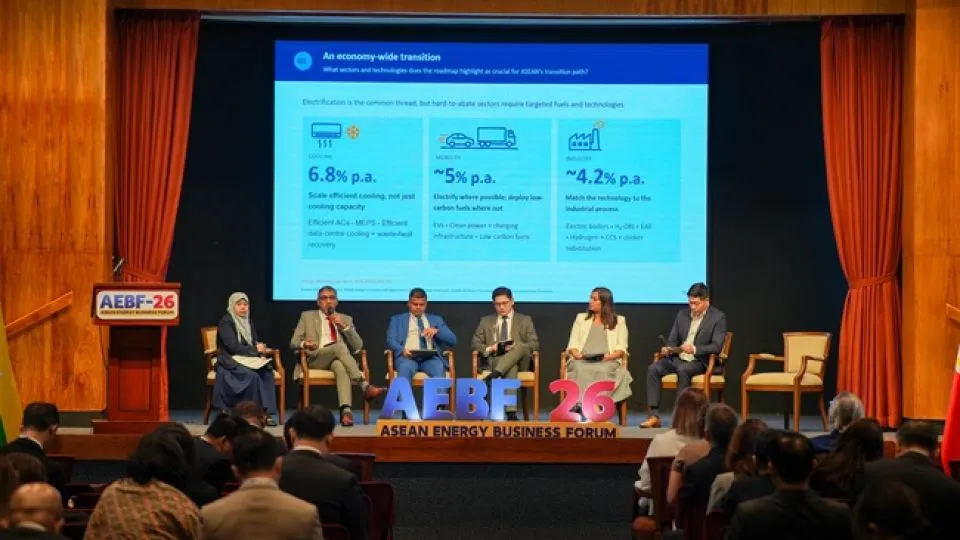
Released at the 26th ASEAN Energy Business Forum, held alongside the 44th ASEAN Ministers on Energy Meeting in Manila, the report examines the risks that discourage investment and the measures governments and financiers can take to address them.
The figures point to a substantial task. According to the ASEAN Energy Outlook cited in the release, regional energy demand is projected to grow by 4.2 per cent annually, reaching approximately 2,047 million tonnes of oil equivalent by 2060. Renewable energy accounted for 14.1 per cent of total primary energy supply in 2024.
Cumulative investment requirements are estimated at USD14.3 trillion by 2060, with electricity generation accounting for 80 per cent and transport for 17 per cent.
The region faces an annual investment gap of approximately USD405 billion over that period.
Yet ASEAN accounted for only around three to four per cent of global energy investment in 2025. The challenge is therefore both the volume of funding required and the conditions under which that funding becomes available.
For a lender, an energy project’s prospects depend on questions that extend beyond its technology.
Will regulations remain consistent? Will the electricity buyer honour its commitments? Can revenue support repayments throughout the life of the loan? Uncertainty carries a price. The report finds that financing costs for clean energy projects in ASEAN are at least twice those in advanced economies, largely because of political, regulatory and electricity purchase risks.
Higher financing costs make projects harder to justify commercially. They can also complicate efforts to provide affordable energy, placing governments in the difficult position of pursuing cleaner supply while managing the costs borne by consumers and businesses.
The report proposes a sequence of measures, beginning with policy and regulatory reform and stronger project fundamentals. This places responsibility on governments to establish conditions in which investors can assess a project with reasonable confidence. The second step concerns contractual risk-sharing through robust power purchase agreements. These contracts matter because the promise of future electricity sales must be sufficiently dependable to support investment today.
Financial measures follow, including guarantees, political risk insurance, currency hedging, credit enhancement and blended finance. The proposed order suggests that these instruments work best when the underlying policy and contractual problems have been addressed. Financial protection alone cannot settle every uncertainty surrounding a project.
ACE Executive Director Dato’ Ir Ts Razib Dawood said the report examines how ASEAN can secure investment to strengthen energy security, resilience and connectivity while supporting its energy transition. He linked the findings to the ASEAN Plan of Action on Energy Cooperation 2026–2030. For governments, the recommendations raise questions about how risks should be shared. Guarantees and other support can encourage private investment, but decisions about their use also require scrutiny of the obligations public institutions accept.
For investors, clearer rules and credible contracts could improve confidence. For the public, the eventual test will be whether the projects financed deliver dependable energy at an acceptable cost.
ASEAN’s growing demand leaves little room for prolonged delays. But attracting capital requires patient work on regulations, contracts and project preparation. The report’s central argument is that the region’s energy ambitions will depend on how convincingly that work answers the concerns of those being asked to invest.