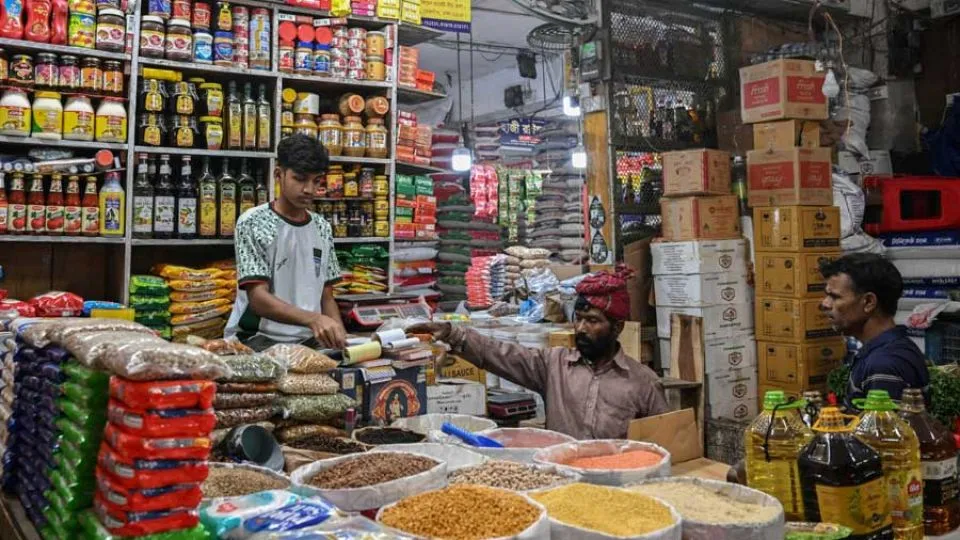
Arya News - Economists blame Bangladesh`s deeper labour market problems: widespread informality, weak bargaining power, more jobseekers than jobs, and stagnant investment.
DHAKA – Inflation has outpaced wage growth for 56 consecutive months, government data show, leaving wage earners with less to spend on food, healthcare, education and other essentials.
In September, wage growth fell to 7.9 percent from 8.05 percent in August, according to the Wage Rate Index (WRI) of the Bangladesh Bureau of Statistics (BBS). The index tracks monthly wages of low-paid skilled and unskilled workers across 63 occupations in agriculture, industry and services.
Wage-earning households continued to face pressure on their real purchasing power in August, the General Economic Division (GED) said in its monthly update.
Whether that pressure eases will depend on the movement of wages and inflation, the GED said, particularly whether the recent moderation in food prices holds while non-food inflation stays elevated.
Economists blame deeper labour market problems: widespread informality, weak bargaining power, more jobseekers than jobs, and stagnant investment.
INVESTMENT AND JOBS
Hossain Zillur Rahman, executive chairperson of the Power and Participation Research Centre (PPRC), said the long gap between wages and inflation reflects economic stagnation and a shortage of productive employment.
“Wage growth is not increasing because investment is not taking place, and employment opportunities are not being created. We are not seeing productive employment,” he said.
Pay rises are not set by market forces alone, he noted.
“It is not simply a question of supply and demand. It is also a question of institutional bargaining power,” he said, adding that workers’ leverage is weakened by an abundant labour supply and by state repression of collective organising.
Prolonged erosion of real wages could push more people into poverty, he warned.
“There is also a growing risk that people who were previously above the poverty line could fall back into poverty,” he said.
NO SYSTEM TO PROTECT WAGES
Sayema Haque Bidisha, a professor of economics at the University of Dhaka, said the problem starts with the absence of a wage protection system.
“Overall, the main issue is the absence of a system for minimum-wage legislation and regular wage adjustments,” she said.
“Informality often means workers lack bargaining power,” she said. A union need not be formally registered, but workers need some platform to raise concerns collectively, and that is often missing.
The slowdown has made things worse. “When demand weakens, workers have less bargaining power,” she said.
The market is also oversupplied, she said. New entrants each year are joined by earlier jobseekers who found no adequate work and by the underemployed.
“If we consider all these groups, labour supply is substantially greater than the demand for labour,” she said.
Demand is weakening too. “Moreover, demand is weakening because employment elasticity is low, particularly in the manufacturing sector,” she said.
WHAT THE DATA MAY MISS
Bidisha cautioned that official figures may not show the full picture. The WRI mainly tracks daily wage workers, and while their pay may be rising, others may be doing worse.
“But if we consider the labour market as a whole, wages may actually be declining in many places,” she said.
“There may be groups of workers whose wages are actually declining, but we do not necessarily know whether or to what extent this is happening because the available data do not capture the entire labour market.”
“INDIVIDUAL CHANGES, REMUNERATION DOES NOT”
Wage stagnation is particularly pronounced in the informal sector, where workers often receive no pay increase even when they change jobs, a BBS official said.
“The individual changes, but the remuneration does not,” the official said, pointing to brick kilns, poultry farms and other labour-intensive sectors where employers can readily replace workers without raising wages.
Some daily labourers receive fixed weekly or monthly payments, which can leave them earning less than they would under a daily payment arrangement, the official said. Workers who seek higher wages or leave over mistreatment can be replaced by others willing to accept the same pay.
Garment workers have a formal wage structure, but many in agriculture, poultry and other sectors lack similar protections, the official said.
More women are also taking up farm work as some men move into other jobs, including driving auto-rickshaws, but women are often paid less.
“If you look at places where men previously accounted for perhaps even 80% of the workforce, that proportion is declining. Women are increasingly taking up those agricultural jobs, but their wages are lower than men’s,” the official said.
Available data do not show where workers go when they leave agriculture, whether to industry or services, and that needs further research, the official said.