Arya News - The worsening gas crisis is disrupting factories, transport and households, while a power shortfall of more than 3,000MW is intensifying the strain. Industries are cutting production, delaying shipments and turning to costly alternatives as gas and electricity supplies remain unreliable.
DHAKA – Bangladesh’s worsening gas crisis is now disrupting economic activity well beyond the power and energy sector, with factories cutting or halting production, CNG filling stations struggling with near-zero gas pressure, and homes facing severe gas shortages.
The power crisis has deteriorated sharply, with the electricity generation shortfall exceeding 3,000 megawatts (MW) throughout much of yesterday, according to Power Grid Bangladesh data. This forced distribution companies to extend load-shedding across the country.
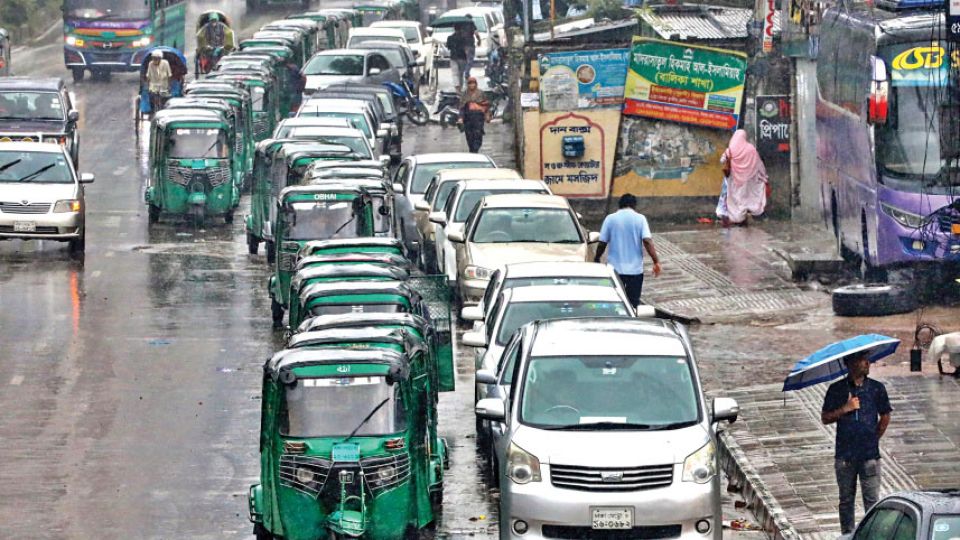
The gas shortage has also left CNG filling stations receiving little or no gas. Operators across the country said pressure has fallen to around 0-1 psi (pound per square inch) from 7-8 psi, causing queues of vehicles to grow longer as stations struggle to refuel vehicles.
Most CNG filling stations had long queues of cars and CNG-run autorickshaws throughout the day and night. On visits to at least seven stations in the Tejgaon area yesterday, these correspondents found long queues in all of them.
Although the main road from Moghbazar to Mohakhali was relatively quiet around noon, traffic congestion was visible in several Tejgaon side streets. The queue at Super CNG station on Love Road stretched beyond Begunbari.
Autorickshaw driver Abdul Mannan could refuel after waiting in the queue for 16 hours since 4:00am.
But he received just Tk 120 worth of gas, as the pressure was low.
“I will need to wait in the same queue after making two or three trips. If we have to spend most of our time in queues, how will we earn? Moreover, I will not be able to pay the deposit money [to the owner] with such a small number of trips,” he added.
The squeeze is particularly severe for industries that depend on gas for both production and power generation. Factory operators said inadequate gas pressure is forcing them to reduce operating hours, cut production or temporarily shut down units.
The worsening power supply is adding another layer of disruption.
When inadequate gas supply reduces generation from captive power plants, factories normally depend more on grid electricity.
But prolonged load-shedding is now making that alternative increasingly unreliable, industrialists said.
The gas crisis has severely disrupted industrial production across Narayanganj, particularly in the dyeing and garment sectors, said Md Morshed Sarwar, senior vice-president of the Narayanganj Chamber of Commerce and Industry.
At least 85 dyeing and 65 garment factories have been directly affected, with many receiving no gas at all and others operating with only 2-4 psi, which is far below the pressure required for normal production, he said.
The inadequate supply has forced many factories to rely on costly alternatives such as CNG or diesel, while production losses have ranged from 40 percent to as high as 80-90 percent.
Although some factories continue limited operations to meet urgent export orders, they are unable to maintain normal production levels.
Critical processes such as double dyeing and finishing require much higher gas pressure and, in many cases, have come to a halt, Sarwar said.
As a result, unfinished goods are piling up, delivery schedules are being disrupted and financial losses are mounting throughout the textile and garment supply chain, he said.
The garment industry is currently operating at around 40 percent of its normal production capacity because of the gas supply crisis, said Mahmud Hasan Khan, president of the Bangladesh Garment Manufacturers and Exporters Association.
While some factories have experienced production declines of up to 60 percent, others have seen losses of 10-20 percent.
The industry’s greatest concern is not the temporary increase in production costs but the risk of delayed shipments and the potential loss of buyers’ confidence, Khan said.
Although the additional costs incurred during the disruption may eventually be recovered, damaged business relationships and missed delivery deadlines could have longer-term consequences for Bangladesh’s apparel export sector, he said.
Mostafa Kamal, chairman of Meghna Group of Industries, said many of the conglomerate’s manufacturing units were operating at only one-third of their normal capacities or remaining idle.
The gas and power disruption has also affected the production of essential commodities.
The impact is particularly severe at the group’s cement plant, which has a production capacity of 30,000 tonnes a day but is currently producing less than 5,000 tonnes because of power shortages.
Its chemical plant is also operating at a minimal level, disrupting the production of PVC and soda despite strong domestic demand and export orders, Kamal said.
The Bangladesh Ceramic Manufacturers and Exporters Association has also written to Titas Gas Transmission and Distribution seeking uninterrupted gas supply, saying around 20 ceramic factories in Dhaka, Narayanganj, Gazipur, Narsingdi and Mymensingh are facing severe disruption.
In the letter dated July 29, the association said factories requiring around 15 psi of gas pressure were sometimes receiving 0-3 psi.
As ceramic production depends on a continuous gas supply to operate kilns, the disruption is halting production and causing damage to products and machinery, the association said.
The association of 70 factories warned that international buyers had already started cancelling orders because manufacturers could not guarantee timely delivery.
The problem is not limited to large manufacturers; small and medium businesses are also struggling as unreliable gas and electricity supplies reduce operating hours and increase their dependence on costly alternatives.
The crisis is also hitting homes, particularly in areas where piped-gas pressure has become too weak for cooking.
Many families are being forced to rely on LPG as an alternative or electric burners, adding to their energy costs at a time when electricity outages are also becoming more frequent.
Read More:
Failures over decades fuel Bangladesh’s energy crisis: analyst
Bangladesh’s gas crunch deepens, factories bear brunt
Bangladesh’s gas crisis hits factories, homes and transport