Arya News - With job prospects, income and social status heavily influenced by the “rank” of one’s academic records, South Korean parents are putting increasing pressure on their children.
SEOUL – “Private education,” or sending children to cram schools from an early age, is intensifying in South Korea. With job prospects, income and social status heavily influenced by the “rank” of one’s academic records, South Korean parents are putting increasing pressure on their children. This has led to social issues including medications for attention deficit hyperactivity disorder (ADHD) being misused as “concentration-boosting drugs.”
English-language kindergartens
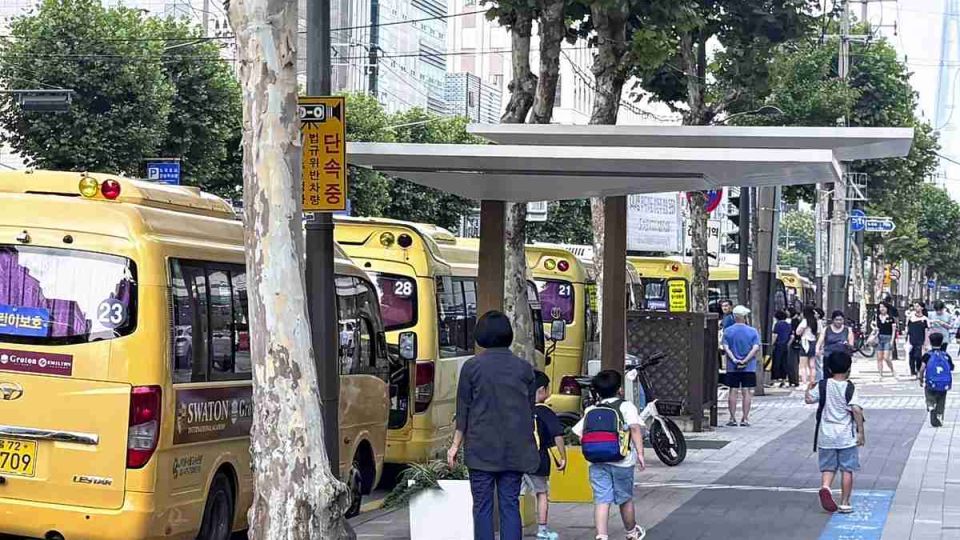
A street known as “Daechidong Academy Street” in the Gangnam district in southern Seoul has numerous cram schools specializing in English. On the evening of July 3, several yellow school buses lined the road and children entered the buildings while chatting in English with friends and teachers.
In South Korea, major family-owned conglomerates, known as “chaebol,” form the core of the economy. The wage gap and differences in social status compared to small and medium-sized enterprises are significant. However, positions at conglomerates are extremely competitive, driving parents to seek to secure places for their children at all costs. This determination underscores the popularity of the country’s most elite universities, known as “SKY”: Seoul National University, Korea University and Yonsei University.
The College Scholastic Ability Test — the equivalent of Japan’s Common Test for University Admissions — is said to determine one’s entire future. It is considered standard practice for the entire country to support test-takers: Police vehicles escort students who are running late, and aircraft takeoffs and landings are generally prohibited during the English listening section.
To succeed in this fierce competition, exam preparation is starting at an increasingly younger age. The number of English learning schools for preschoolers, known as English kindergartens, increased from 615 in 2019 to 814 in 2025. Despite an average monthly cost of about ¥170,000, there is no shortage of applicants.
“By mastering English early, children can focus on other subjects after entering elementary school,” says a 43-year-old woman from Seoul, emphasizing the benefits of sending her son to an English kindergarten that costs about ¥200,000 per month.
Several adults taught a small number of preschoolers at the English kindergarten where her son attended. His classes lasted about 5 to 6 hours a day, half of which were conducted in English. He also completed 30 minutes to 1 hour of English vocabulary memorization homework daily. She says her son was able to acquire basic reading, writing and conversational English skills before entering elementary school. Children from the families who own chaebol and of major corporate executives also attend these schools.
“The potential for these connections to last into adulthood is another benefit. English kindergartens are not just an option, but a necessity,” the woman said.
South Korea has a fervent commitment to early childhood education. According to the South Korean Education Ministry, the participation rate in private education, including English kindergartens, for 5-year-olds was 81.2% in 2024. In Japan, only about 20% of kindergarteners’ parents spent money on cram schools in fiscal 2023, according to a survey conducted by Japan’s Education, Culture, Sports, Science and Technology Ministry. The figure stands in stark contrast to South Korea’s.
Rising mental health issues
However, issues such as developmental setbacks caused by excessive early education and intense competition are emerging.
The South Korean Education Ministry has expressed strong concern, stating that “there are even signs of child abuse.” A survey indicates that the number of patients with mental disorders aged 0 to 12 increased from approximately 105,000 in 2020 to about 183,000 in 2024.
A major issue is the widespread use of ADHD medications. Leading drug Concerta works by regulating neurotransmitter levels and is effective in improving focus and reducing restlessness. Despite side effects such as insomnia and the potential adverse impact on a child’s development, it is improperly prescribed as parents seek it out as a study-enhancing drug that improves concentration.
According to the South Korean Food and Drug Safety Ministry and other sources, about 8.4 million ADHD medication tablets were prescribed for children under 10 in 2022. In just two years, this number rose to about 13.1 million in 2024. It is highly likely that these medications were also prescribed to children who had not been diagnosed with ADHD.
The rising cost of private education is also a contributing factor to the declining birth rate, due to the significant burden placed on household finances. South Korea’s total fertility rate for 2025 was 0.80, marking a continued critical state wherein the rate remains below 1.
In an effort to curb excessive private education, the South Korean Education Ministry announced measures to address private education for infants and toddlers in April. The measures ban cram-style education for children under 3 years old, and limit such education for preschoolers aged 3 and older to no more than 3 hours per day. This includes practices such as making children recite English vocabulary repeatedly or requiring them to complete a set amount of writing exercises every day.
The measures also include a ban on so-called comparison and ranking, such as administering tests and notifying parents of rankings and results. It includes a provision to offer a reward of up to 2 million won (about ¥220,000) to parents who report violations. The ministry aims to implement these measures by autumn 2027.