Arya News - Young Lahoris are risking it all just to feel something.
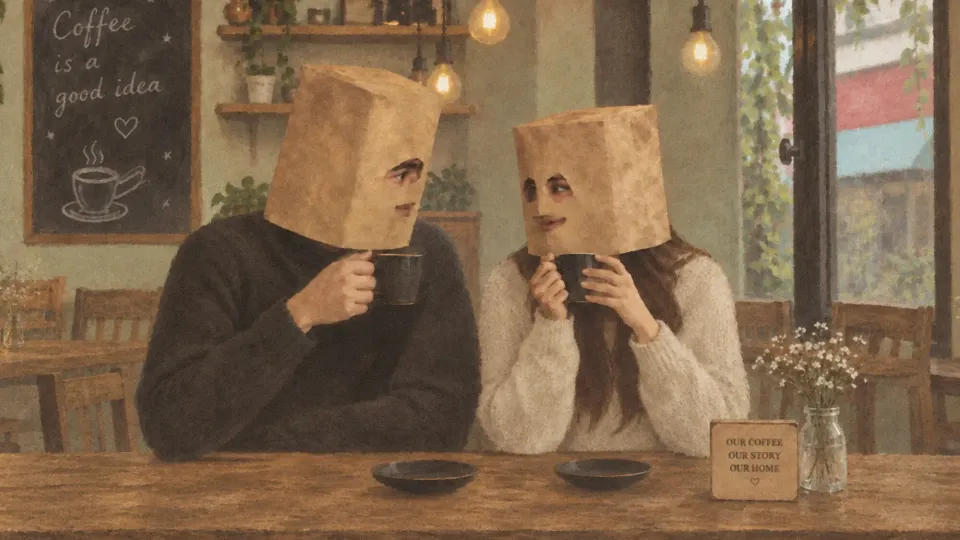
LAHORE – Dating in Lahore is an entire sport in itself. You have to pick the right coffee shop, the right corner, the right time of day, preferably somewhere your mother’s friend is unlikely to walk in, and pray the weather doesn’t ruin the outfit you spent an hour choosing.
Step inside any air-conditioned hipster café and you’ll spot them immediately. At least three couples tucked into corner booths, oblivious to the September heat, holding hands, or spoon-feeding each other tres leches cake while the staff desperately looks anywhere else.
Psychiatrist John Bowlby noted in his work on attachment theory that our drive for deep intimacy is a lot more than a nice-to-have. It’s an instinctual imperative. He observed that most intense human emotions are sparked during the formation, maintenance, and disruption of romantic bonds.
But it’s no secret that in Pakistan, instinctual imperative collides with cultural veto. Outside of a few ultra cosmopolitan bubble zones in Lahore, dating is policed by a rigid mix of religious norms and cultural scrutiny for consenting young adults.
To explore this weird, wonderful, and deeply neurotic dynamic, I polled 34 anonymous Lahoris navigating the city’s covert romance scene. I asked them two simple questions:
Is dating in Lahore difficult? Why? How do you deal with the weight of secrecy, guilt, conservative judgment, or moral hesitation that may come with it? Despite growing up on Bollywood’s grand declarations of love, rewatching all seasons of Friends, listening to Atif Aslam’s heartbreak anthems in a loop, and memorising Jaun Elia’s most devastating couplets, young Lahoris seem remarkably unprepared for romance in real life.
My anonymous survey confirmed it. Gen Z and millennials alike are largely paralysed by the prospect of modern romance.
A familiar tension kept surfacing across the responses I received. The inclination to date existed alongside a palpable fear of judgement and social consequences. Online discourse was cited as evidence; posts and reels on Instagram about dating can quickly become battlegrounds over what constitutes acceptable behaviour, with some commenters not merely disapproving of dating but calling for stricter boundaries in the name of moral values and “purity”. On the other side are those who defend the right to date, though often with a disclaimer attached: adults should be free to make their own choices, provided nobody is harmed. Even the defence of dating, then, is frequently framed as a case for personal freedom as opposed to an embrace of romance.
The Gen Z and millennials have been subjected to relentless messaging from both progressive and traditional benches, which puts dating at an intriguing intersection of two irreconcilable realities. Modern psychology and liberal education tells them to set boundaries and be the CEO of their own love life. Pakistani family culture tells them those boundaries are a sin. Caught in the crossfire, Lahoris are perpetually oscillating between self-actualisation and filial duty, paying the emotional tax of whichever voice screams the loudest.
To the traditionalists, any line crossed between men and women—whether a fleeting friendship or a casual date (what some would call a situationship these days)—is tagged as a moral liability. According to them, the rise in domestic violence, messy divorces, and infidelity traces straight back to liberal schooling, the lawless noise of social media, and the erasure of gender boundaries.
Flip the coin, and the progressives see the exact same horrors. The abuse, the fractured marriages, the betrayal, and the senseless murder of women, as the grim byproduct of missing liberal values and a culture that starves men and women of normal, healthy dialogue.
But even in the polished pockets of Lahore where dating is rather normalised, the reality on the ground isn’t as straightforward. Anonymised accounts from those who have dated/are currently dating in the city, noted a sense of inherent paranoia. On the streets, it’s a constant dodge of prying eyes and predatory police. Inside the hip cafes, the romantic mood competes with the cold sting of overpriced Spanish lattes and fettuccine.
The anxieties of modern dating take different shapes depending on who you ask. For women, the stakes scale up drastically. A single slip-up, a spotted outing by a relative, jeopardises their access to education, career, and in many cases, basic mobility. One woman shared her fear of being doxxed wherein her intimate photos and private texts could be weaponised across social media. Another admitted to fearing that a bitter ex might resurface after marriage to destroy her future. A segment of women answered that they constantly grapple with ingrained religious guilt. For most though, the core fear was far more immediate. It was confronting the entrenched patriarchal mindsets of their own families, where dating risked public dishonour.
For young couples, a simple moment of holding hands in a parked car carries the threat of police shakedowns and extortion. Worse still, the constant stream of news headlines reporting violence against dating partners leaves many terrified of the very people they are meeting. When things turn dangerous, the closeted nature of these relationships cuts off all escape routes.
As always, the heaviest burden falls on women, who face a court of public opinion and a legal apparatus far quicker to condemn a female victim than her male counterpart, a double standard laid bare on social feeds after every fresh report of abuse or femicide.
And yet, across Lahore, people continue to risk their safety, reputations, and futures for love, intimacy, or basic connection. Whatever one’s moral stance on the practice, dating in this context is a privilege for a few, a calculated risk for many, and an outright liability for most. Still, against all odds and taboos, the daring spirit for human attachment remains.
The views expressed in Prism Reflections are those of the author and do not necessarily reflect the editorial policy of Dawn.